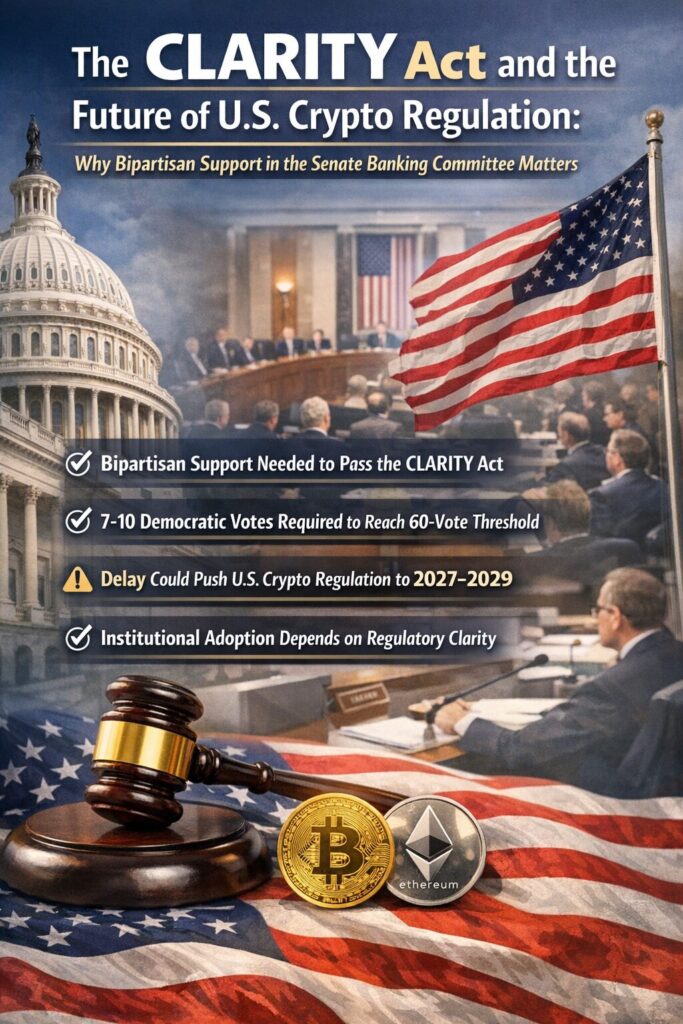
Key Takeaways :
- The passage of the CLARITY Act hinges on bipartisan support within the U.S. Senate Banking Committee.
- At least 7–10 Democratic votes will be required in the Senate to overcome the 60-vote threshold.
- Strong committee-level bipartisan approval could unlock broader Democratic backing, similar to the GENIUS stablecoin bill.
- Failure to advance the bill in early 2026 may delay comprehensive U.S. crypto regulation until 2027–2029.
- Institutional crypto adoption remains closely tied to regulatory clarity rather than technological readiness alone.
Introduction: A Defining Moment for U.S. Crypto Policy
The United States stands at a critical crossroads in its approach to digital asset regulation. While innovation in blockchain, decentralized finance (DeFi), and tokenized assets continues to accelerate globally, U.S. regulatory uncertainty remains a structural bottleneck—particularly for institutional investors, banks, and large enterprises.
At the center of this moment is the Digital Asset Market Clarity Act, commonly referred to as the CLARITY Act. According to Alex Thorn, Head of Research at Galaxy Digital, the bill’s fate depends less on ideological alignment and more on tactical bipartisan cooperation—especially within the Senate Banking Committee.
This article examines why that committee vote is so critical, what is at stake for crypto markets, how recent legislative trends like the GENIUS Act shape expectations, and what different political outcomes could mean for investors and builders looking toward 2026 and beyond.
The CLARITY Act: What It Seeks to Achieve
The CLARITY Act is designed to establish a unified regulatory framework for digital assets in the United States. Its core objectives include:
- Defining jurisdictional boundaries between the SEC and CFTC
- Clarifying when a digital asset is considered a security versus a commodity
- Providing compliance-safe pathways for exchanges, custodians, and issuers
- Reducing regulatory enforcement via ambiguity and retroactive interpretation
For years, U.S. crypto firms have operated under a fragmented regime, often learning compliance expectations only after enforcement actions are taken. This has driven innovation offshore and deterred large-scale institutional participation.
The CLARITY Act aims to replace this uncertainty with statutory definitions and predictable oversight.
Why the Senate Banking Committee Is the Decisive Arena
Alex Thorn emphasizes that Senate dynamics—not House approval—are the primary hurdle. Under Senate rules, most legislation requires 60 votes to advance, meaning Republicans must secure 7–10 Democratic votes.
Crucially, Thorn notes that if four Democratic members of the Senate Banking Committee support the CLARITY Act, it could trigger a cascade effect. Specifically, the 17 Democrats who previously supported the GENIUS Act, a bipartisan stablecoin framework, may be inclined to back CLARITY as well.
This makes the Banking Committee vote a de facto signal to the broader Senate.
【“Senate Voting Thresholds for Crypto Legislation”】
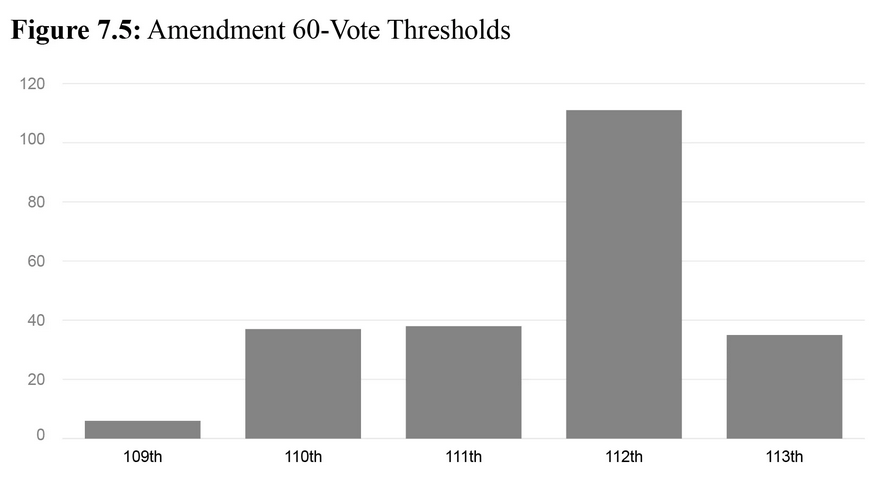
(Visual: Senate seat distribution, 60-vote threshold line, highlighted swing votes)
Lessons from the GENIUS Act: A Blueprint for Bipartisan Crypto Policy
The GENIUS Act, which focuses on stablecoin regulation, demonstrated that bipartisan agreement on crypto is possible when legislation is framed around:
- Consumer protection
- Financial stability
- Dollar competitiveness in global payments
The success of GENIUS reshaped expectations for CLARITY. Lawmakers now see digital asset regulation not as a partisan issue, but as infrastructure policy—similar to internet or payment system regulation in prior decades.
If CLARITY follows this path, it could normalize crypto as a regulated financial sector rather than a speculative fringe.
Institutional Adoption Depends on Regulatory Certainty, Not Demand
Thorn argues that institutional interest in crypto is already strong. What’s missing is regulatory durability.
Large asset managers, pension funds, and banks are less concerned about short-term price volatility than about:
- Retroactive enforcement risk
- Sudden rule reversals after elections
- Conflicting guidance between agencies
Even a modestly restrictive but stable regulatory framework would unlock broader adoption.
【“Institutional Barriers to Crypto Adoption”】
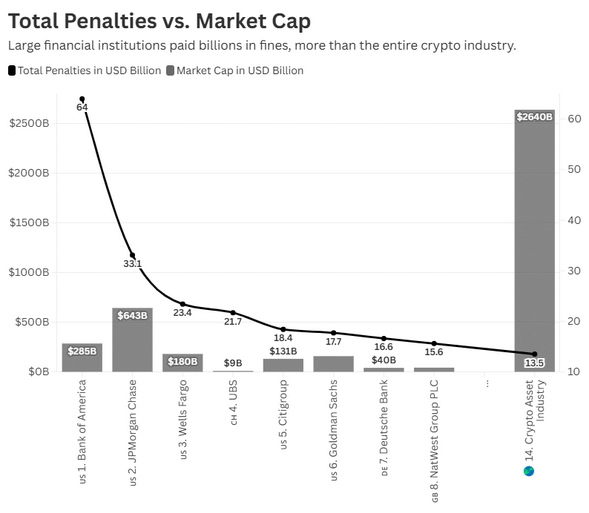
(Visual: Bar chart showing regulatory risk vs. technology, liquidity, and custody)
If the CLARITY Act Fails: Limited Structural Damage, Significant Psychological Impact
Interestingly, Thorn downplays the immediate structural impact if the bill fails. The crypto industry has already achieved several policy wins, including:
- More crypto-friendly regulatory rhetoric
- ETF approvals and expanded derivatives access
- Judicial limits on aggressive agency overreach
However, the short-term market impact could be meaningful. Investor sentiment is highly sensitive to political signals, especially ahead of the 2026 U.S. midterm elections.
If the bill does not advance by January 15, 2026, the likelihood of another vote that year drops sharply.
Political Timing Risk: The Midterm Election Overhang
Investment bank TD Cowen has warned that if Democrats regain control of either chamber after the midterms, CLARITY could be delayed until 2027, with implementation potentially pushed to 2029.
This creates a narrow legislative window. Builders, investors, and institutions must plan around two scenarios:
- Accelerated clarity (2026–2027)
- Prolonged uncertainty (2027–2029)
【“U.S. Congressional Power Balance Scenarios”】

(Visual: Timeline with election outcomes and regulatory implications)
Broader Implications: Crypto, AI, and the Regulatory Cycle
Hedge fund manager Ray Dalio has added another dimension to the debate. He warns that a shift in congressional control could lead to the rollback of pro-technology policies affecting not just crypto, but also AI and advanced computing sectors.
This places crypto regulation within a broader technological and geopolitical competition, particularly against jurisdictions like the EU, Singapore, and the UAE.
What This Means for Investors and Builders
For readers seeking new digital assets, revenue opportunities, or practical blockchain use cases, the takeaway is clear:
- Regulatory clarity is a catalyst, not a constraint
- Early positioning before clarity arrives carries higher risk—but potentially higher upside
- Infrastructure-focused projects (custody, compliance, payments, tokenization) stand to benefit most
Rather than betting on speculative narratives alone, sophisticated market participants are increasingly aligning portfolios with regulatory trajectories.
Conclusion: CLARITY as a Signal, Not Just a Law
The CLARITY Act is more than a piece of legislation. It is a signal of whether the United States intends to integrate digital assets into its financial system or continue governing them through ambiguity.
Bipartisan support in the Senate Banking Committee may determine not only the bill’s fate, but also the pace at which the next generation of financial infrastructure is built in—or outside—the United States.
For crypto markets, 2026 may not be about technological breakthroughs, but about political ones.