Main Takeaways :
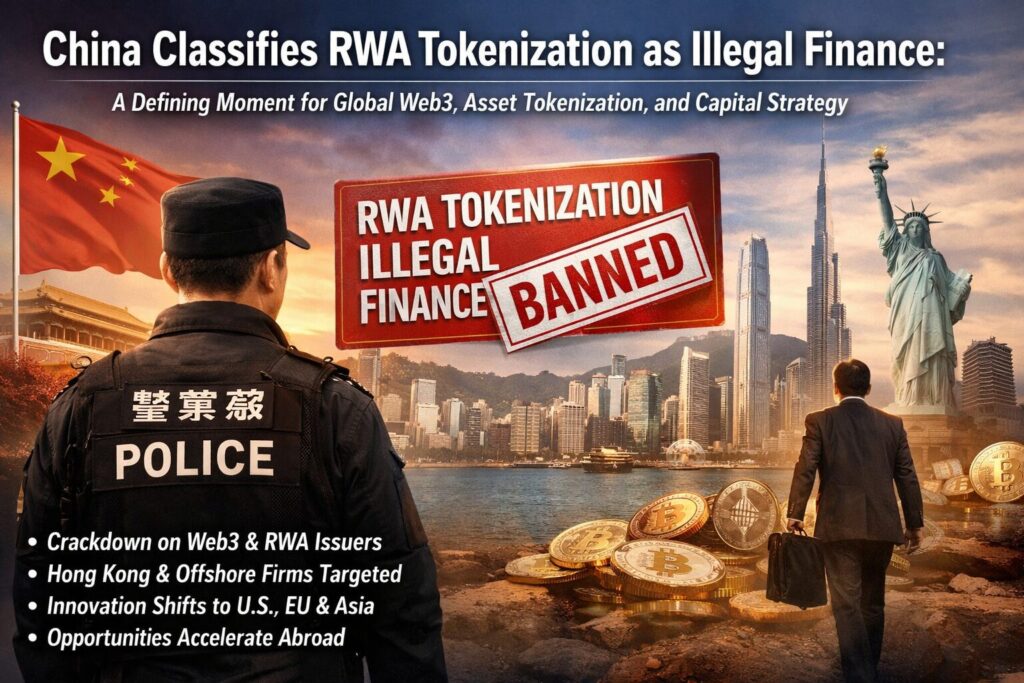
- China has officially classified Real World Asset (RWA) tokenization as illegal financial activity, closing the door to pilot programs or conditional legalization.
- The regulatory warning applies not only to issuers but to entire Web3 service chains, including developers, consultants, marketers, and influencers.
- Offshore and Hong Kong-based structures are explicitly targeted, signaling that regulatory arbitrage will not be tolerated.
- This move reshapes the global competitive landscape for RWA, pushing innovation toward jurisdictions like the U.S., EU, Middle East, and Southeast Asia.
- For investors and builders, the crackdown clarifies where RWA is impossible — and where opportunity is accelerating.
1. China’s Definitive Rejection of RWA Tokenization
China has taken one of its clearest and most decisive stances yet against Web3-related financial innovation. In a joint announcement, seven major Chinese financial industry associations declared that RWA tokenization constitutes illegal financial activity under Chinese law, placing it in the same prohibited category as cryptocurrencies, stablecoins, and crypto mining.
The announcement was jointly issued by:
- China Internet Finance Association
- China Banking Association
- China Securities Association
- China Asset Management Association
- China Futures Association
- China Association for Public Companies
- China Payment & Clearing Association
This coordination alone signals the seriousness of the policy. It leaves no ambiguity, no regulatory gray zone, and no future pilot pathway for RWA tokenization within mainland China.
Crucially, authorities explicitly rejected claims that RWA tokenization might be “in testing,” “awaiting registration,” or “pending regulatory clarification.” China is not a jurisdiction waiting for rules — it has already decided.
2. What China Means by “RWA Tokenization”
Chinese regulators provided a precise and expansive definition of RWA activities.
RWA, in this context, does not refer to the physical asset itself (such as real estate, bonds, commodities, or invoices). Instead, it refers to:
The issuance of tokens or token-like rights, claims, or debt instruments based on real-world assets, used for fundraising, trading, or circulation.
This definition intentionally covers a wide range of common Web3 structures, including:
- Tokenized real estate shares
- Asset-backed tokens
- Yield-bearing RWA protocols
- Tokenized debt or receivables
- On-chain representations of off-chain assets
The regulators argue that these structures introduce multiple systemic risks, including:
- Circulation of fictitious or unverifiable assets
- Failure of project operators and asset custodians
- Speculative hype and misleading marketing
- Loss of investor protection and redemption certainty
Even projects claiming collateralization, transparency, or asset backing are considered fundamentally unsafe under Chinese law.
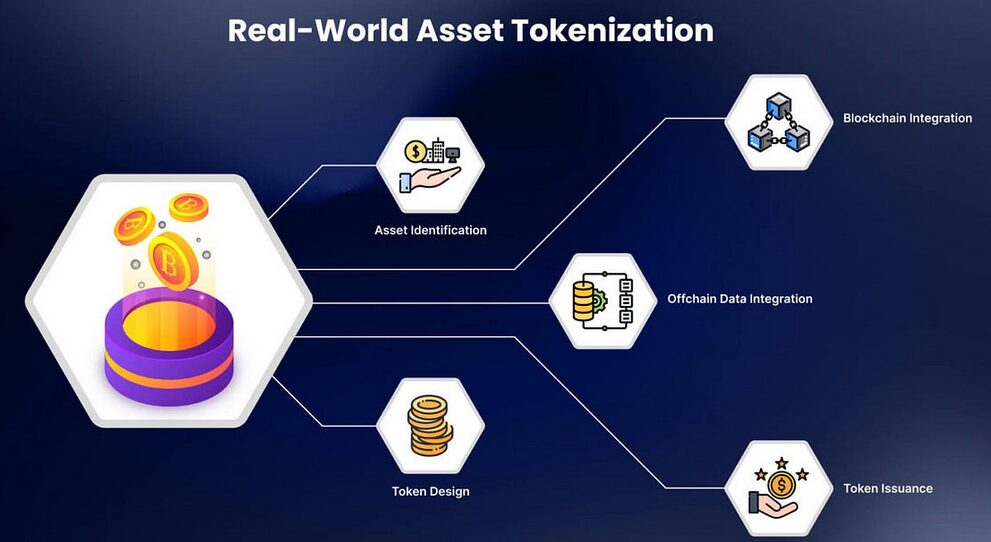
【RWA Structure & Risk Diagram】
3. Legal Violations: Where RWA Crosses Criminal Law
The notice goes beyond policy guidance and directly links RWA activities to potential criminal and securities law violations.
Key legal risks include:
Illegal Fundraising
Issuing tokens to the general public for capital raising may constitute illegal fundraising under China’s criminal law.
Unauthorized Securities Offering
Promoting, distributing, or trading tokens without approval may be deemed an unauthorized public offering of securities.
Illegal Futures or Gambling Activities
Token structures involving leverage, derivatives, or speculative mechanisms may qualify as illegal futures trading or gambling.
Importantly, regulators emphasize that token holders are not legally guaranteed ownership rights, redemption rights, or enforceable claims to underlying assets — regardless of project marketing.
4. Responsibility Extends Across the Entire Web3 Value Chain
One of the most consequential elements of the announcement is its scope of liability.
The warning applies not only to token issuers, but also to:
- Project consultants
- Technical developers and outsourcing firms
- Marketing agencies and KOLs
- Influencers and promoters
- Payment processors and integrators
Any individual or entity supporting or facilitating RWA projects targeting Chinese users may be held accountable.
Even more striking is the standard applied:
Actual knowledge of illegality is not required.
If a party should have known based on their professional position, liability may still apply.
This effectively dismantles any China-based RWA Web3 business model.
5. Offshore and Hong Kong Structures Are No Safe Haven
China has also moved to close off regulatory escape routes.
Domestic securities firms have reportedly been instructed to cease involvement in RWA tokenization activities in Hong Kong. Projects registered overseas but operating with:
- Mainland Chinese staff
- Development teams
- Marketing operations
- User targeting
may still be considered as providing services within China.
This marks a clear rejection of the “offshore compliance” narrative previously used by many Web3 projects.
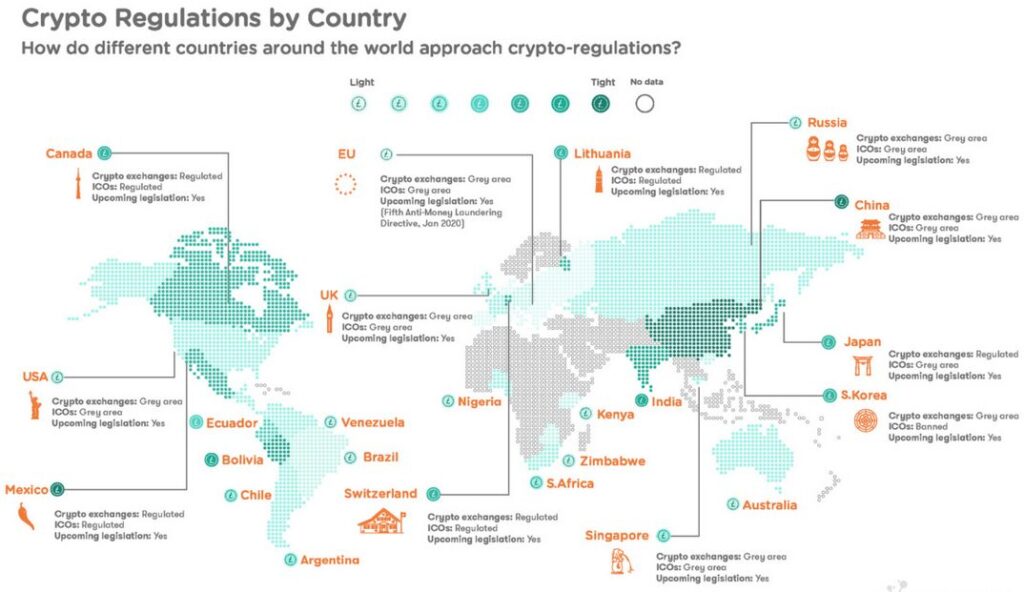
【Global RWA Regulatory Landscape Map】
6. Strategic Context: Digital Yuan and Monetary Control
This crackdown aligns with China’s broader financial strategy.
By eliminating private digital asset issuance, China reinforces:
- State control over currency issuance
- Financial system stability
- The international positioning of the digital yuan (e-CNY)
Authorities also highlighted the rise of RWA-labeled scams, pyramid schemes, and fraudulent fundraising, reinforcing the political legitimacy of the crackdown.
7. Global Implications: Where Opportunity Shifts
While China exits the RWA arena entirely, other regions are moving in the opposite direction.
Jurisdictions actively developing RWA frameworks include:
- United States (tokenized treasuries, funds)
- European Union (MiCA-aligned tokenization)
- Middle East (real estate and bond tokenization)
- Singapore and Hong Kong (regulated pilots outside mainland China)
For builders and investors, China’s decision removes uncertainty. Capital, talent, and innovation will consolidate elsewhere.
8. What This Means for Investors and Web3 Builders
For readers seeking new crypto assets, revenue streams, and practical blockchain use cases, the lesson is clear:
- RWA is not a global monolith — jurisdiction matters more than technology.
- Regulatory clarity, even when restrictive, helps markets reprice risk.
- The future of RWA lies in compliant, institutionally aligned ecosystems, not regulatory gray zones.
Conclusion: A Line Drawn in the Sand
China’s classification of RWA tokenization as illegal finance is not a temporary policy swing. It is a structural decision reflecting the country’s vision of financial sovereignty, monetary control, and digital currency dominance.
For the global Web3 industry, this moment marks a geographic and philosophical bifurcation:
- One path prioritizes decentralization, asset liquidity, and global capital markets.
- The other prioritizes state authority, centralized monetary issuance, and controlled innovation.
Understanding which side of that divide your project or portfolio belongs to is now more important than ever.