
Main Points :
- The Crypto-Asset Reporting Framework (CARF) officially took effect in Japan on January 1, 2026, marking a major shift in global crypto taxation.
- CARF is an OECD-led international standard designed to enable automatic exchange of crypto transaction data among tax authorities.
- Japanese crypto exchanges, starting with Coincheck, are now legally required to collect tax residency information from all users.
- Failure to submit accurate information may result in penalties under domestic tax law.
- CARF fundamentally changes the risk profile of offshore crypto usage, while also pushing the industry toward greater institutional legitimacy.
- For investors and builders, CARF accelerates the transition from speculative anonymity to regulated, infrastructure-grade crypto markets.
1. What Is CARF and Why It Matters Now
On January 1, 2026, Japan officially implemented the Crypto-Asset Reporting Framework (CARF), a global tax transparency regime developed by the Organisation for Economic Co-operation and Development (OECD).
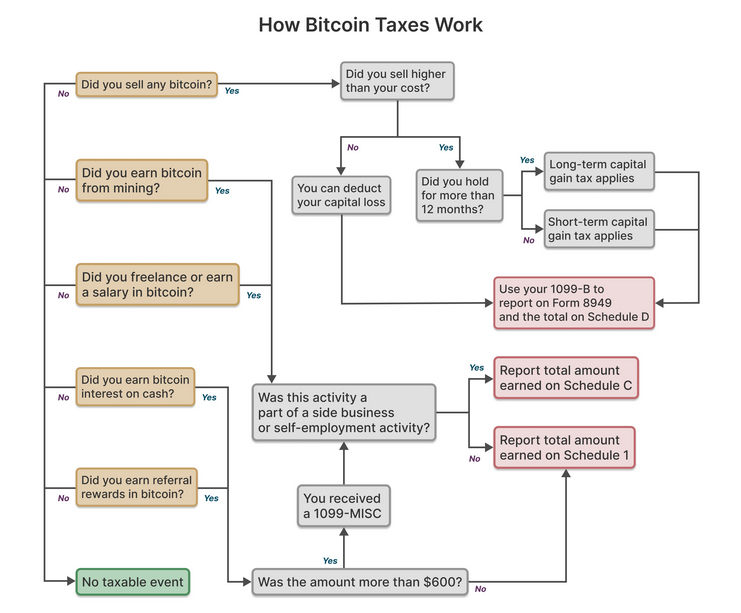
CARF represents the most significant overhaul of crypto-related tax reporting since the emergence of digital assets. Its objective is straightforward but far-reaching: to prevent tax evasion through cross-border crypto transactions by enabling automatic information exchange among national tax authorities.
Until now, cryptocurrencies occupied a gray zone between financial innovation and regulatory blind spots. While banks and securities firms have long been subject to international reporting standards such as CRS (Common Reporting Standard), crypto assets largely escaped equivalent scrutiny. CARF closes that gap.
Under CARF, crypto exchanges and certain wallet providers are required to:
- Identify users’ tax residency
- Collect personal identification data
- Report transaction information to domestic tax authorities
- Enable onward sharing of that data with foreign tax agencies
This marks a decisive shift: crypto is no longer treated as a fringe asset class, but as a fully reportable component of global financial infrastructure.
2. Japan as an Early Implementer
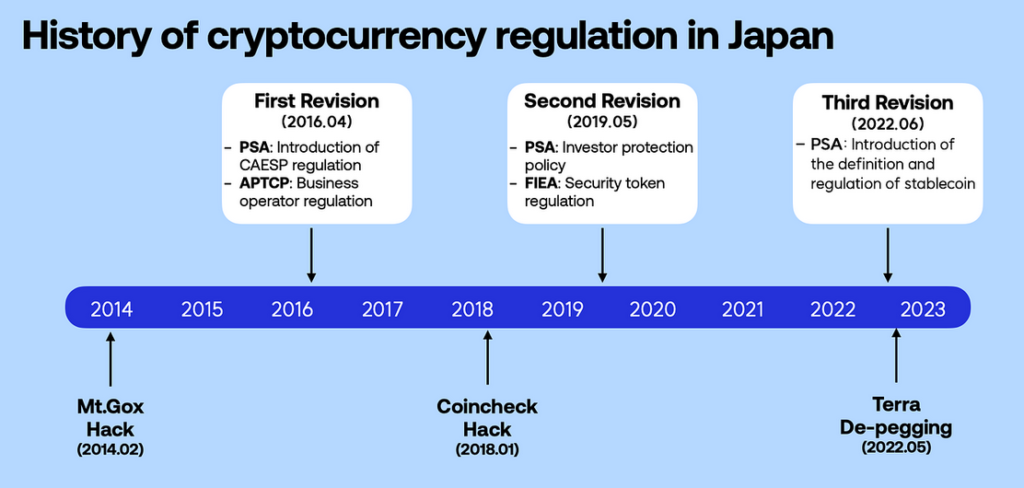
Japan has positioned itself among the early adopters of CARF. Following tax law amendments approved in previous years, the National Tax Agency (NTA) finalized implementation at the start of 2026.
In December 2025, the NTA released public guidance explaining how crypto exchanges would collect and manage user information. That guidance is now operational.
On January 6, 2026, Coincheck, one of Japan’s largest crypto exchanges, formally notified all users that they must submit information regarding their tax residence country.
This notification effectively marks the first large-scale, user-facing enforcement of CARF in Japan.
3. What Information Users Must Submit
Under CARF-aligned domestic rules, users are required to submit the following information:
- Full legal name
- Residential address
- Date of birth
- Country (or countries) of tax residence
For users who are tax residents only in Japan, the process is relatively straightforward:
- Declare Japan as the sole tax residence
- No MyNumber submission is required at this stage
However, users who:
- Reside abroad
- Maintain tax residency in multiple countries
- Are non-Japanese residents
must also provide:
- Foreign taxpayer identification numbers (TINs)
- Relevant jurisdictional details
This distinction reflects CARF’s core focus: cross-border tax exposure.
4. Deadlines and Compliance Timelines
CARF compliance applies to both existing and new users, but timelines differ:
- Existing users (accounts opened on or before December 31, 2025):
Must submit required information by December 31, 2026 - New users (accounts opened on or after January 1, 2026):
Must complete tax residency declaration during account onboarding
Failure to comply by the deadline may result in:
- Account restrictions
- Mandatory reporting based on available data
- Potential penalties under Japanese tax law
Coincheck explicitly warned that false declarations or non-submission could lead to legal sanctions.
5. Legal Consequences and Risk Repricing
One of the most significant implications of CARF is the repricing of compliance risk.
Historically, many crypto users assumed that:
- Offshore exchanges
- Self-custody wallets
- Jurisdictional arbitrage
provided effective insulation from tax authorities. CARF directly undermines that assumption.
Under the framework:
- Domestic tax authorities can receive crypto transaction data from foreign counterparts
- Inconsistencies between declared income and reported transactions become easier to detect
- “Silent non-compliance” becomes increasingly risky
For individuals, this means higher enforcement certainty.
For institutions, it means lower regulatory ambiguity, which paradoxically improves long-term investability.
6. Impact on Crypto Exchanges and Infrastructure
From an operational perspective, CARF significantly increases compliance burdens on exchanges:
- Enhanced KYC and AML integration
- Tax residency classification systems
- Secure data retention and reporting pipelines
- Legal accountability for incorrect or missing reports
While costly, this also accelerates the institutionalization of crypto exchanges, aligning them more closely with banks and brokerages.
Over time, this may:
- Reduce regulatory arbitrage
- Increase trust from traditional financial institutions
- Enable deeper integration with payment systems and custodians
In effect, CARF acts as a filter, pushing under-compliant platforms out while strengthening regulated players.
7. Market Implications: From Anonymity to Legitimacy
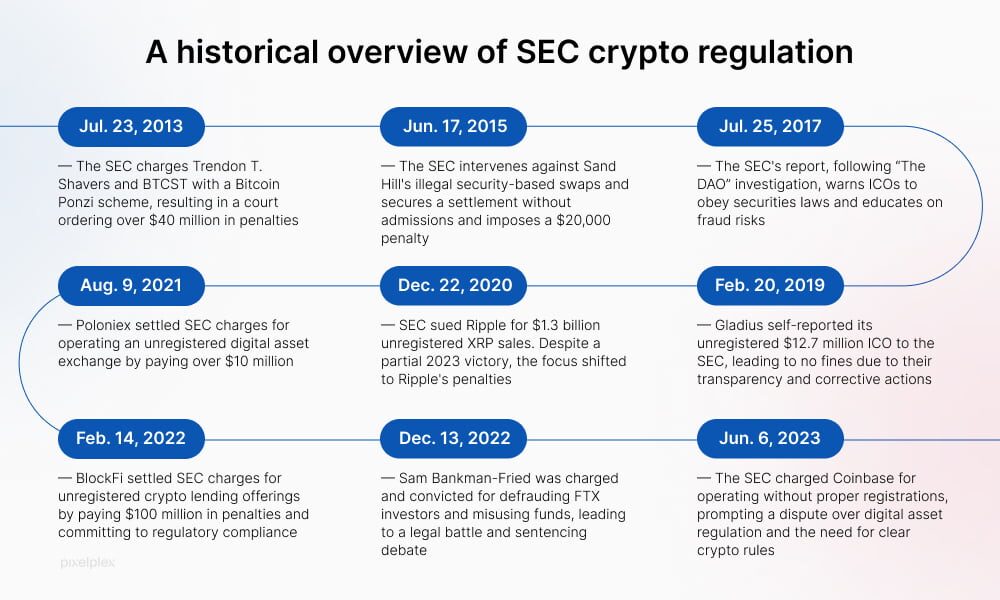
CARF does not merely change tax reporting—it reshapes crypto’s market structure.
Short-Term Effects
- Increased user friction during onboarding
- Potential outflows from non-compliant users
- Higher legal and operational costs for exchanges
Medium- to Long-Term Effects
- Greater acceptance by institutional investors
- Expansion of compliant crypto-based financial products
- Reduced perception of crypto as a tax-evasion tool
For builders focused on real-world blockchain applications, CARF removes a major reputational obstacle.
8. Strategic Implications for Investors and Entrepreneurs
For readers seeking new crypto assets, revenue models, or practical blockchain use cases, CARF sends a clear signal:
- Sustainable growth lies in compliant, transparent structures
- Projects designed to integrate with existing financial systems gain an edge
- “Jurisdiction hopping” becomes less effective as a strategy
This favors:
- Infrastructure tokens
- Regulated DeFi primitives
- Compliance-friendly wallets and middleware
- Cross-border settlement solutions that embrace reporting standards
9. Conclusion: CARF as a Turning Point for Crypto
The launch of CARF in Japan marks more than a regulatory update—it represents a structural turning point in the evolution of crypto markets.
By embedding crypto assets into the global tax transparency framework, governments signal that digital assets are no longer experimental outliers, but permanent components of the financial system.
For users, this demands greater awareness and responsibility.
For exchanges, it imposes higher standards and costs.
For the industry as a whole, it unlocks long-term legitimacy.
Crypto’s future growth will not be driven by opacity, but by integration, compliance, and real-world utility. CARF is the clearest indication yet that this transition is already underway.