
Main Points :
- JPMorgan Chase has launched its first Ethereum-based tokenized money market fund, marking a major institutional commitment to public blockchain infrastructure.
- Tokenized money market funds combine traditional cash-management stability with blockchain-native settlement, programmability, and transparency.
- Fundstrat’s Tom Lee argues that Ethereum stands to benefit disproportionately from the global adoption of tokenized real-world assets (RWAs).
- Data shows that over 70% of tokenized RWAs are already issued on Ethereum and its Layer-2 ecosystem.
- While bullish long-term fundamentals are strengthening, analysts remain divided on the timing and magnitude of a near-term ETH price breakout.
1. JPMorgan’s Strategic Bet on Ethereum
According to reporting by The Wall Street Journal, JPMorgan Chase has officially entered the on-chain asset management space by launching its first tokenized money market fund built on Ethereum.
The fund, internally referred to as the On-Chain Net Yield Fund, was initially seeded with $100 million of JPMorgan’s own capital before being opened to external investors. Eligibility requirements reportedly include individuals with at least $5 million in investable assets and institutions with a minimum of $25 million.
This initiative is not a retail experiment. It represents a deliberate move by one of the world’s largest asset managers to operationalize blockchain technology in a core financial product traditionally associated with safety, liquidity, and regulatory compliance.
Tokenized money market funds aim to preserve the familiar characteristics of conventional cash-management vehicles—capital stability and yield—while introducing blockchain-native advantages such as near-instant settlement, composability with other on-chain financial instruments, and improved operational transparency.
JPMorgan executives have emphasized that demand for tokenized financial products has accelerated as regulatory clarity improves. John Donohue, Global Head of Liquidity at JPMorgan Asset Management, noted that client interest in tokenization has become “substantial,” particularly among institutional allocators seeking operational efficiency rather than speculative exposure.
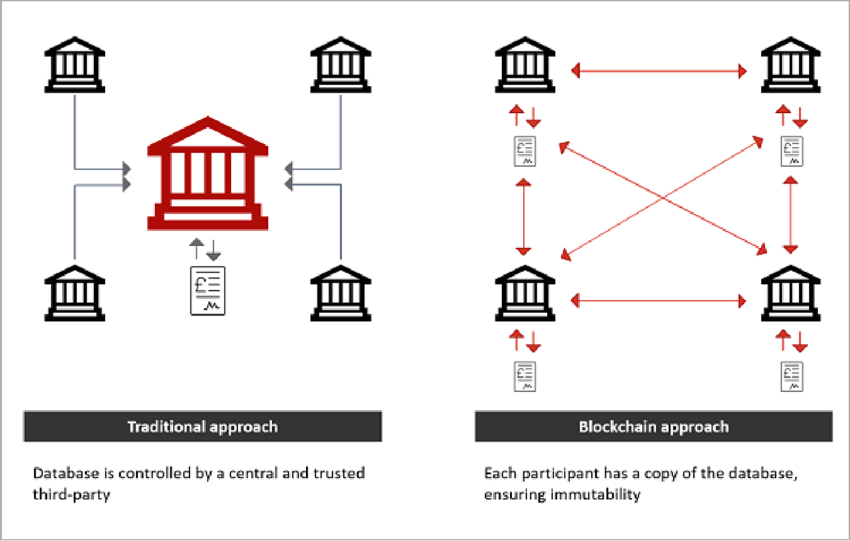
Title: Traditional Money Market Funds vs Tokenized Money Market Funds
Description:
A side-by-side visual comparison showing settlement speed, transparency, operational costs, and composability.
Image suggestion: “tokenized money market fund diagram”, “traditional vs blockchain finance chart”
2. Why Tokenization Matters Beyond Hype
Tokenization of real-world assets (RWAs) is increasingly viewed as one of the most credible bridges between traditional finance and public blockchains. Unlike NFTs or meme-driven assets, tokenized funds and securities directly map to existing legal, accounting, and regulatory frameworks.
For asset managers, the appeal is practical:
- Faster settlement reduces counterparty and liquidity risk.
- Programmable compliance enables automated enforcement of eligibility rules.
- Operational efficiency lowers reconciliation and custody costs.
For blockchains, the implication is profound. Tokenized RWAs generate sustained transaction activity, demand for block space, and long-term network usage—very different from cyclical retail trading volumes.
JPMorgan’s choice of Ethereum is therefore not incidental. Despite the proliferation of alternative Layer-1 networks, Ethereum remains the dominant settlement layer for regulated, institution-facing tokenization projects.
3. Tom Lee’s Ethereum Thesis: Infrastructure, Not Speculation
The timing of JPMorgan’s announcement aligns closely with the bullish thesis articulated by Tom Lee, Managing Partner at Fundstrat.
Speaking at a recent blockchain conference hosted by Binance in Dubai, Lee argued that Ethereum is uniquely positioned to capture outsized value from the institutional adoption of tokenized securities.
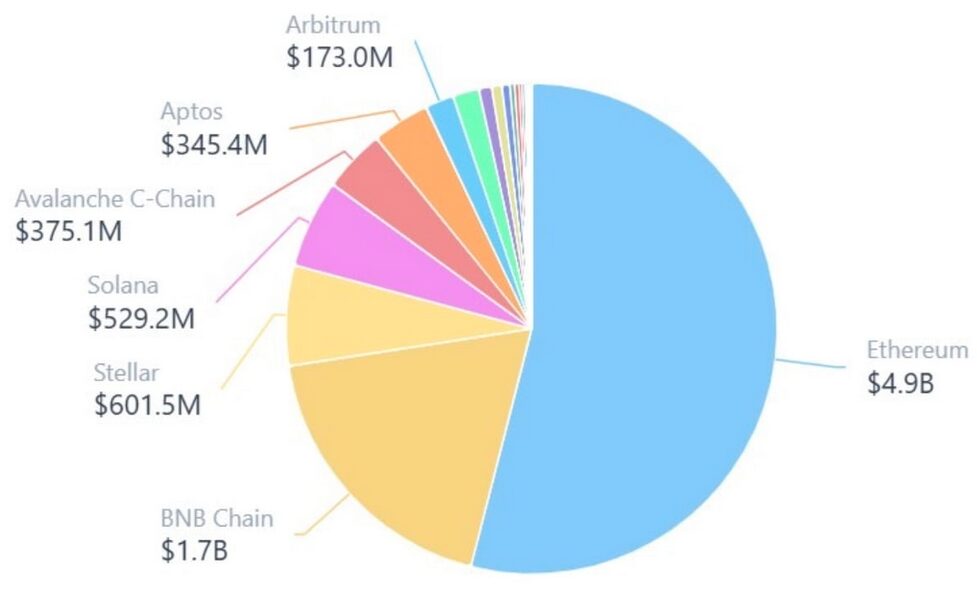
According to Lee, the majority of tokenization initiatives by banks, asset managers, and fintech firms are being built on Ethereum or its Layer-2 networks. Data from RWA tracking platforms indicates that over 70% of all tokenized real-world asset value currently resides within the Ethereum ecosystem, even after accounting for scaling solutions.
Lee also reiterated his view that the traditional four-year crypto market cycle—historically driven by Bitcoin halvings—is breaking down. In his framework, macro liquidity, institutional flows, and financial infrastructure adoption now play a more decisive role.
“The bigger the base, the bigger the breakout,” Lee noted, suggesting that Ethereum’s expanding institutional foundation could precede a structurally significant repricing.
Title: Share of Tokenized Real-World Assets by Blockchain
Description:
A pie or bar chart showing Ethereum (including Layer-2s) at ~70%, with other chains making up the remainder.
Image suggestion: “RWA tokenization blockchain market share chart”
4. Price Targets: From Narrative to Numbers
Lee’s outlook extends beyond infrastructure adoption to price implications. He has suggested that Bitcoin could track the performance of the S&P 500, potentially reaching $300,000 and setting new highs by early 2026.
If that scenario materializes, Lee argues that Ethereum could outperform on a relative basis, with ETH exceeding $20,000 within the next year.
The logic is internally consistent: if Bitcoin functions as a macro liquidity proxy, Ethereum becomes the settlement and productivity layer for tokenized finance. In such a model, ETH accrues value not only as a store of value but as a yield-bearing, utility-driven asset underpinning financial infrastructure.
5. Skepticism from Technical Analysts
Not all analysts share Lee’s conviction regarding the timing or scale of Ethereum’s potential breakout.
CCN technical analyst Valdrin Tahiri has acknowledged that recent price action suggests Ethereum may outperform Bitcoin on a relative basis. However, he argues that the technical evidence does not support the extreme price targets currently being discussed.
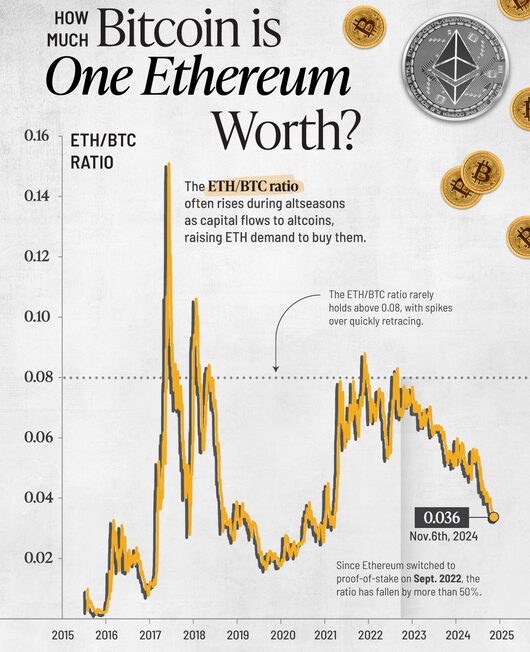
Specifically, Tahiri notes that scenarios implying Ethereum trading at one-quarter the value of Bitcoin lack historical and technical precedent. In his assessment, broader market structure and momentum indicators do not yet align with such aggressive projections.
That said, even skeptical analysts tend to agree on one point: the long-term case for Ethereum, driven by tokenization and institutional adoption, remains structurally sound. The debate centers not on whether Ethereum benefits, but when those benefits are fully reflected in price.
Title: ETH/BTC Relative Performance (Conceptual Outlook)
Description:
A conceptual chart illustrating potential relative outperformance scenarios without asserting precise price levels.
Image suggestion: “ETH BTC relative performance chart”
6. Implications for Investors and Builders
For investors seeking new revenue opportunities, the takeaway is nuanced. Ethereum’s institutional narrative is strengthening, supported by real capital deployment rather than speculative rhetoric. However, entry timing and risk management remain critical.
For builders and operators, the signal is clearer. Public blockchains—Ethereum in particular—are increasingly being validated as production-grade financial infrastructure. Tokenization is moving from pilot programs to balance-sheet-level deployments.
This shift creates downstream opportunities across custody, compliance automation, identity, analytics, and settlement tooling—areas where practical blockchain expertise matters more than token price speculation.
Final Summary
JPMorgan’s launch of an Ethereum-based tokenized money market fund represents more than a single product announcement. It is a structural signal that major financial institutions are beginning to treat public blockchains as viable, regulated infrastructure for core financial operations.
Tom Lee’s bullish Ethereum thesis gains credibility in this context, grounded not in hype cycles but in the steady expansion of tokenized real-world assets. While near-term price forecasts remain contentious, the long-term trajectory of Ethereum as the settlement layer for tokenized finance appears increasingly difficult to ignore.
For those focused on sustainable value creation in crypto—whether as investors, operators, or builders—the convergence of institutional capital, regulatory clarity, and blockchain infrastructure may mark the beginning of Ethereum’s most consequential phase yet.