
Main Points :
- On December 31, 2025, a major market maker transferred over 1,200 BTC net to Binance during one of the lowest-liquidity periods of the year.
- Over three days, total net transfers to Binance exceeded 2,650 BTC, coinciding with a Bitcoin price drop from $92,000 to below $90,000.
- Contrary to market rumors, on-chain data does not support claims of panic buybacks ahead of a January 2 Federal Reserve announcement.
- Hourly flow analysis shows net inventory reduction, not accumulation.
- The case highlights how on-chain transparency can refute narrative-driven market speculation and why such analysis is essential for professional crypto investors.
Introduction: When On-Chain Data Challenges Market Narratives
In late December 2025, the cryptocurrency market found itself gripped by speculation surrounding unusual Bitcoin movements by one of the industry’s most influential market makers, Wintermute.
As Bitcoin’s price slipped sharply during the final hours of the year, on-chain analysts and traders quickly pointed to a series of large transfers from Wintermute to Binance, fueling accusations of deliberate market manipulation.
Social media narratives soon escalated: Wintermute allegedly sold aggressively during illiquid hours to push prices down, then rushed to buy back Bitcoin ahead of a key Federal Reserve announcement on January 2.
But when examined closely, blockchain data tells a far more nuanced—and less sensational—story.
This article reconstructs the events using on-chain evidence, places them in the broader context of professional market making, and explains why such episodes matter for investors seeking new digital assets, sustainable yield opportunities, and real-world blockchain applications.
The Transfers: What Actually Happened on December 31
On December 31, 2025, Wintermute executed a series of Bitcoin transfers to Binance resulting in a net inflow of 1,213 BTC to the exchange.
This timing is critical.
The transfers occurred during a period when:
- US and European financial markets were effectively closed
- Asian trading desks were operating at reduced capacity
- Overall market liquidity was unusually thin
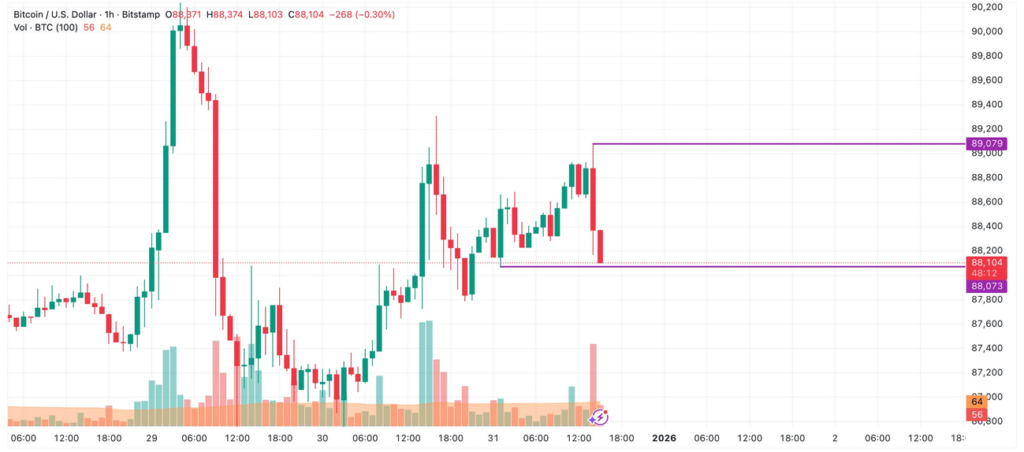
At the same time, Bitcoin’s spot price fell from approximately $92,000 to below $90,000, intensifying suspicion that the transfers contributed directly to selling pressure.
Bitcoin price movement during December 31, 2025 (USD)
Three Days of Pressure: Extending Beyond a Single Event
Importantly, the December 31 activity was not an isolated incident.
On-chain records show that from December 31 through January 2, Wintermute sent a total net amount of approximately 2,654 BTC to Binance.
From a market-structure perspective, this pattern suggests:
- Sustained positioning rather than a single trade
- Increased exchange-side liquidity supply
- Potential facilitation of large counterparties’ execution
While this undeniably added sell-side pressure, the data alone does not indicate intent. In professional crypto markets, exchange transfers are not synonymous with immediate selling.
Understanding Market Makers: Why Transfers Are Not Trades
To understand why assumptions of manipulation can be misleading, one must understand the role of a market maker.
Market makers like Wintermute:
- Provide bid-ask liquidity across venues
- Hedge inventory across spot, derivatives, and OTC desks
- Rebalance assets between cold wallets, hot wallets, and exchanges
- Act as intermediaries for institutional block trades
A transfer to an exchange can serve multiple purposes:
- Liquidity provisioning for large OTC counterparties
- Inventory rebalancing across venues
- Derivatives hedging using futures or options
- Cross-exchange arbitrage preparation
Without corresponding execution data, a wallet transfer alone cannot confirm a sale.
The Buyback Rumor: What the Blockchain Actually Shows
The most persistent rumor claimed that Wintermute hurriedly repurchased Bitcoin on January 2 ahead of a Federal Reserve announcement, fearing a sudden market rally.
However, on-chain data directly contradicts this narrative.
On January 2:
- Wintermute did receive Bitcoin from external addresses
- But it sent out more BTC than it received
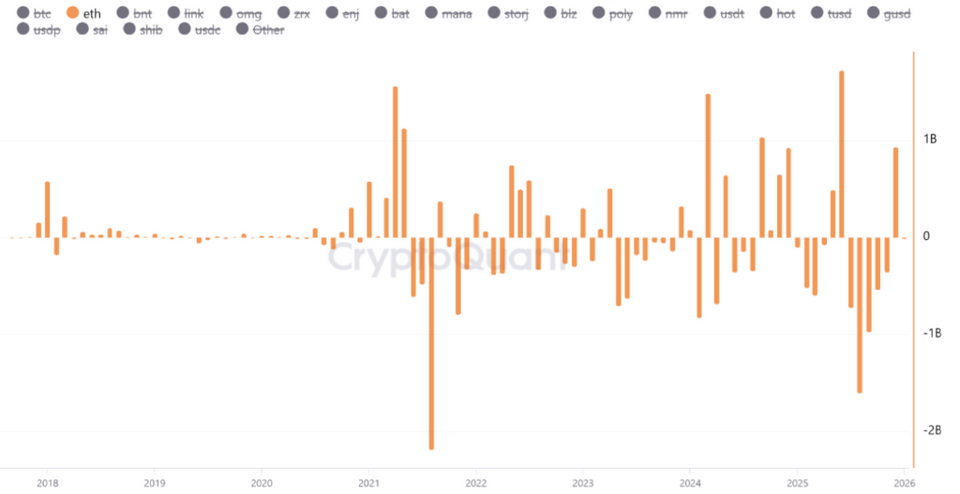
- Net inventory decreased by approximately 418 BTC
If panic buying had occurred, the opposite pattern—sharp net inflows—would be evident.
Net Bitcoin flow showing inventory reduction (USD equivalent)
Hourly Flow Analysis: No Signs of Accumulation
A closer look at hourly transfer data further undermines the buyback theory.
Typical accumulation patterns include:
- Rapid, clustered inflows
- Sustained net positive balance changes
- Reduced outflows during key windows
None of these were observed.
Instead, Wintermute’s wallets displayed:
- Balanced inflows and outflows
- Gradual net reduction over time
- No sudden spikes consistent with aggressive accumulation
From an analytical standpoint, the behavior aligns with inventory trimming, not emergency repositioning.
Was This Market Manipulation?
The answer depends heavily on definitions.
What On-Chain Data Confirms
- Wintermute increased exchange-side BTC supply during a low-liquidity period
- This coincided with a measurable price decline
What On-Chain Data Does NOT Confirm
- Coordinated wash trading
- Spoofing or layering
- Panic buybacks or deceptive round-trip trading
In traditional finance, intent and coordination are key elements of manipulation. On-chain data alone cannot establish intent—only behavior.
Broader Implications for Crypto Investors
This episode offers several important lessons for professional and semi-professional investors.
1. Narratives Move Faster Than Data
Social media speculation often precedes verification. Investors relying solely on narratives risk reacting to false signals.
2. On-Chain Analysis Is a Competitive Advantage
Understanding wallet flows, net inventory changes, and timing provides insight unavailable in traditional markets.
3. Market Makers Are Not Directional Traders
Their primary objective is liquidity and risk management, not price prediction.
4. Low Liquidity Amplifies Normal Activity
Actions that would be inconsequential during peak trading hours can move prices dramatically during holidays.
Practical Takeaways for Yield Seekers and Builders
For readers interested in new crypto assets, yield opportunities, or blockchain’s real-world utility:
- Volatility events often reveal structural liquidity gaps—opportunities for arbitrage and market-neutral strategies
- Transparent blockchains reduce information asymmetry, rewarding those who invest in analytical capability
- Infrastructure providers, not just tokens, can be alpha sources
Conclusion: Data Over Drama
The Wintermute Bitcoin transfer controversy illustrates a fundamental truth of crypto markets:
on-chain data is the ultimate arbiter of reality.
While Wintermute clearly contributed to sell-side pressure during a thin market, claims of panic buying and manipulative round-tripping are not supported by the blockchain record.
For serious participants in the digital asset economy, this case reinforces the need to move beyond headlines and toward disciplined, data-driven analysis—an approach that will only grow more valuable as institutional participation deepens.