Main Points :
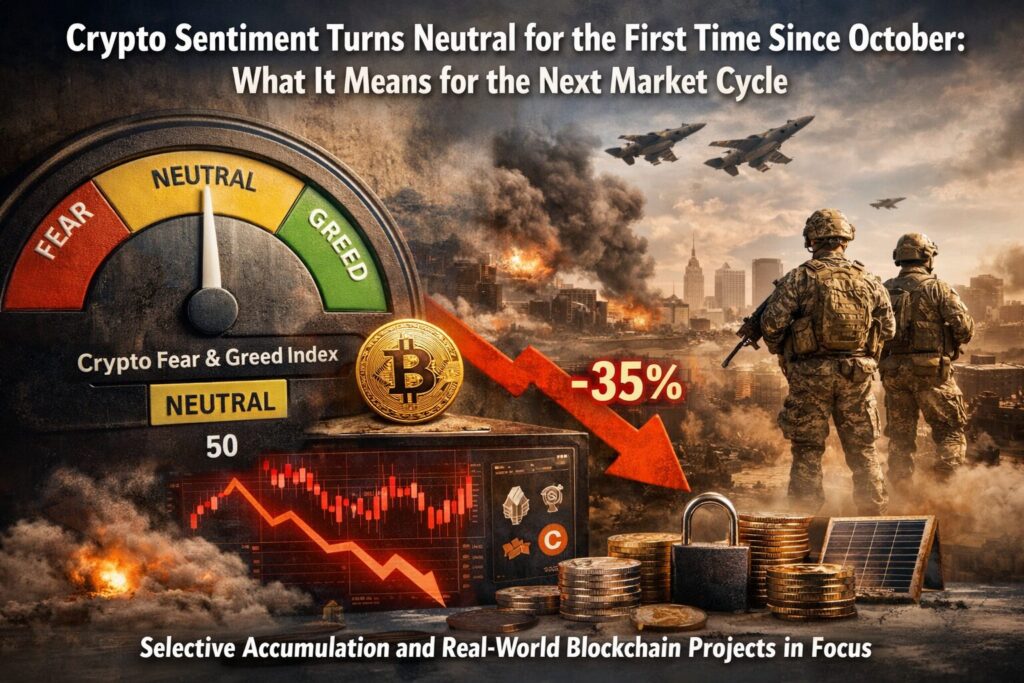
- The Crypto Fear and Greed Index has returned to “Neutral” territory for the first time since October, signaling a psychological shift among investors.
- This change follows one of the sharpest market corrections in recent crypto history, including a 35% Bitcoin drawdown and severe altcoin losses.
- Despite geopolitical shocks, including a major U.S. military action in Venezuela, Bitcoin has shown unexpected resilience.
- While fear has subsided, structural headwinds such as low retail participation and global political instability remain.
- The current environment may favor selective accumulation, infrastructure-focused tokens, and real-use blockchain projects rather than speculative excess.
1. From Extreme Fear to Neutral: A Psychological Turning Point
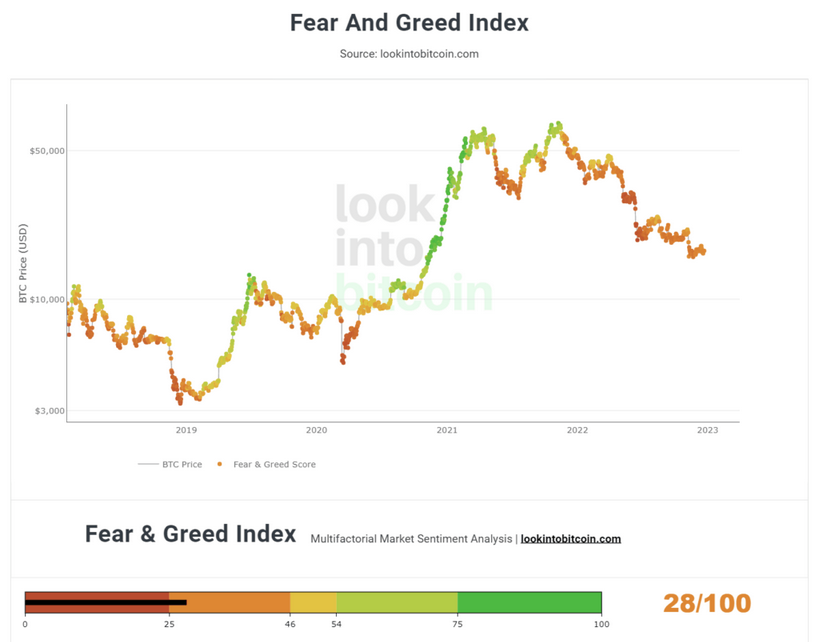
For the first time since October, the Crypto Fear and Greed Index published by CoinMarketCap has returned to “Neutral” territory, registering a reading of 40. This marks a notable improvement from November, when the index plunged to 10, a level categorized as “Extreme Fear” and the lowest point recorded in 2025.
The Fear and Greed Index aggregates multiple inputs—including volatility, trading volume, social media sentiment, and market momentum—to quantify the emotional state of crypto investors. A neutral reading does not imply bullish enthusiasm, but rather indicates that panic-driven selling has largely subsided.
In previous cycles, similar transitions from extreme fear to neutrality have often preceded periods of market stabilization. However, neutrality should not be confused with optimism. Investors are no longer dominated by fear, yet they remain cautious, capital-conscious, and highly selective.
2. The October Crash: How Confidence Was Broken
The current sentiment recovery cannot be understood without revisiting the October market crash that abruptly ended the prior bull phase.
Just days before the collapse, Bitcoin had surged past $125,000, reaching a new all-time high. What followed was a rapid and violent correction: Bitcoin fell to approximately $80,000, representing a 35% decline in a matter of weeks.
Altcoins suffered even more severe damage. The combined market capitalization of non-Bitcoin assets—including Ethereum—fell by roughly 33% in a single day. Many mid- and small-cap tokens lost the majority of their value almost overnight, triggering forced liquidations and eroding confidence among retail participants.
This event was not merely a price correction; it was a psychological rupture. The assumption that institutional adoption alone would smooth volatility was challenged, reminding investors that crypto remains a reflexive and sentiment-driven market.
3. What “Neutral” Really Means for Crypto Investors
A neutral Fear and Greed Index reading reflects a market in transition. The emotional extremes that characterize capitulation phases are gone, but conviction has not yet returned.
From a behavioral finance perspective, this phase is often marked by:
- Reduced leverage and speculative trading
- Lower but more stable trading volumes
- Increased interest in yield-bearing or utility-driven crypto assets
- A shift from narrative-driven investing to fundamentals and cash flow
For builders, institutions, and long-term allocators, neutrality can be a constructive environment. It allows capital to be deployed without the distortion of euphoria or panic. Historically, some of the most successful infrastructure projects and protocol upgrades have emerged during such psychologically quiet periods.
4. Bitcoin’s Resilience Amid Geopolitical Shock
Over the weekend, global financial headlines were dominated by a dramatic geopolitical event: a U.S. military attack on Venezuela. Former President Donald Trump announced that U.S. forces had successfully carried out a large-scale operation, resulting in the arrest and removal of Venezuelan President Nicolás Maduro and his spouse.
In traditional markets, such events typically trigger risk-off behavior. Equities sell off, volatility spikes, and capital flows toward perceived safe havens. Bitcoin, however, behaved differently.
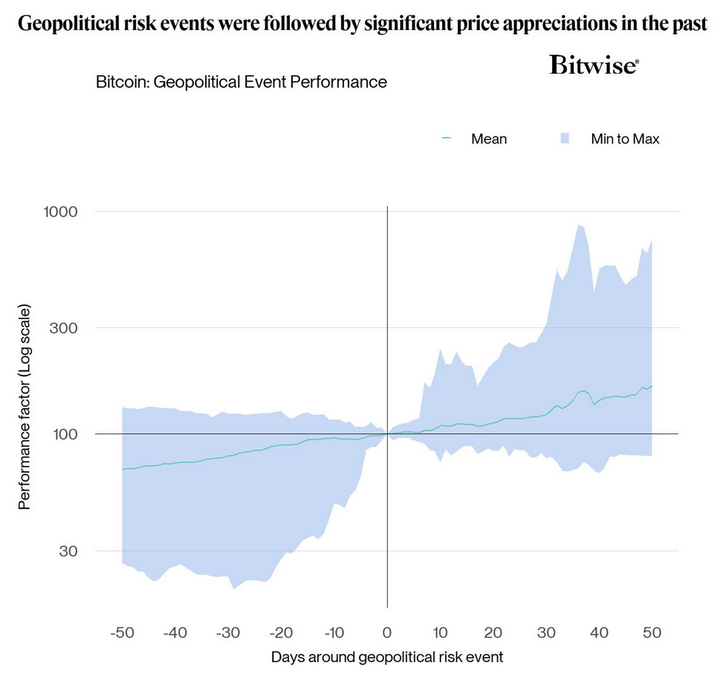
Despite the geopolitical shock, Bitcoin prices remained resilient and even reclaimed levels above $91,000 shortly after the news broke. This response surprised many analysts, as cryptocurrencies have historically traded in tandem with high-risk assets.
The episode adds weight to the argument that Bitcoin is gradually decoupling from pure “risk-on” classification, instead occupying a hybrid role: part speculative asset, part geopolitical hedge, and part alternative monetary network.
5. Diverging Views: Temporary Calm or Structural Shift?
Market analysts remain divided on the implications of this resilience.
One camp argues that the muted reaction simply reflects thin holiday liquidity and delayed responses from traditional financial markets, which were closed at the time of the announcement. According to this view, broader risk assets—including crypto—could still face volatility once U.S. equity markets fully digest the event.
Another camp sees deeper significance. They argue that Bitcoin’s performance reflects growing recognition of its role as a non-sovereign, censorship-resistant asset—particularly relevant during geopolitical crises involving sanctions, capital controls, or regime change.
If this interpretation proves correct, future geopolitical shocks may not uniformly pressure crypto markets as they once did.
6. Headwinds for 2026: What Could Go Wrong?
Despite improving sentiment, several challenges remain as the market enters 2026.
First, retail participation remains subdued. On-chain activity, app downloads, and social media engagement are still well below prior bull-market peaks. Without renewed retail inflows, explosive upside may be limited.
Second, geopolitical risk is rising, not falling. Conflicts, sanctions, and trade fragmentation increase macro uncertainty and can disrupt liquidity conditions across all asset classes.
Third, regulatory divergence between jurisdictions continues. While some regions are embracing crypto infrastructure, others are tightening controls, creating compliance complexity for global platforms.
Together, these factors suggest that the next phase of the crypto market is unlikely to resemble previous speculative manias. Instead, it may reward patience, operational discipline, and real-world utility.
7. Strategic Implications: Where Opportunities May Emerge
In a neutral-sentiment environment, opportunity often shifts away from hype and toward execution.
Areas that may benefit include:
- Blockchain-based payment rails and stablecoin infrastructure
- Tokenized real-world assets (RWA) with clear legal frameworks
- Yield-generating protocols with transparent risk models
- Interoperability and settlement-layer technologies
For investors seeking new income streams rather than pure price appreciation, this phase may favor platforms that integrate crypto into everyday financial workflows—payments, remittances, treasury management, and compliance-friendly DeFi.
Conclusion: Neutral Is Not Boring—It Is Informative
The return of the Crypto Fear and Greed Index to neutral territory marks more than a statistical milestone. It reflects a market that has absorbed shock, recalibrated expectations, and begun searching for a more sustainable equilibrium.
Fear has eased, but complacency has not set in. For serious participants—investors, builders, and institutions alike—this environment offers clarity. It strips away noise and highlights what truly matters: resilience, utility, and long-term alignment with real economic activity.
In crypto, neutrality is often where the next cycle quietly begins.