
Main Points :
- Coordinated whale selling appears to be the primary driver behind Bitcoin’s sudden drop ahead of the FOMC meeting.
- BTC and ETH sit at decisive technical inflection points with the potential to define market direction into early 2026.
- XRP is actively testing the $2.00 support line, a psychologically critical threshold for investors.
- Ripple executed an extraordinary $520 million equity raise with a guaranteed 10% annual return, signaling deep corporate confidence and aggressive expansion plans.
- The current macro–crypto interaction indicates that digital assets have become fully integrated with global liquidity cycles—not decoupled.
- This environment presents both high risk and exceptional opportunity for investors searching for new assets, yield strategies, and practical blockchain applications.
1. Pre-FOMC Volatility: What Really Triggered Bitcoin’s Sudden Drop?
In the days leading into the Federal Open Market Committee (FOMC) meeting, Bitcoin experienced an abrupt and sharp decline that rippled across the broader crypto market. While retail traders initially attributed the move to routine pre-event uncertainty, deeper liquidity analysis from several trading desks points to a different culprit: coordinated selling by large whale entities.
This pattern—characterized by synchronized sell orders across multiple exchanges within tight time windows—suggests intentional positioning rather than random volatility. In highly liquid markets like Bitcoin, whale-driven flows can create cascading order-book reactions that amplify downside pressure, especially when retail stop-losses are triggered sequentially.
The timing of this coordinated sell-off matters. FOMC meetings influence:
- Dollar liquidity
- Interest-rate expectations
- Risk-asset demand
- Institutional inflows into BTC-linked products
When large investors anticipate high volatility or hawkish policy language, they often reduce exposure to secure liquidity and reposition after the macro event. This creates price instability that is less about fundamentals and more about macro-hedging behavior.
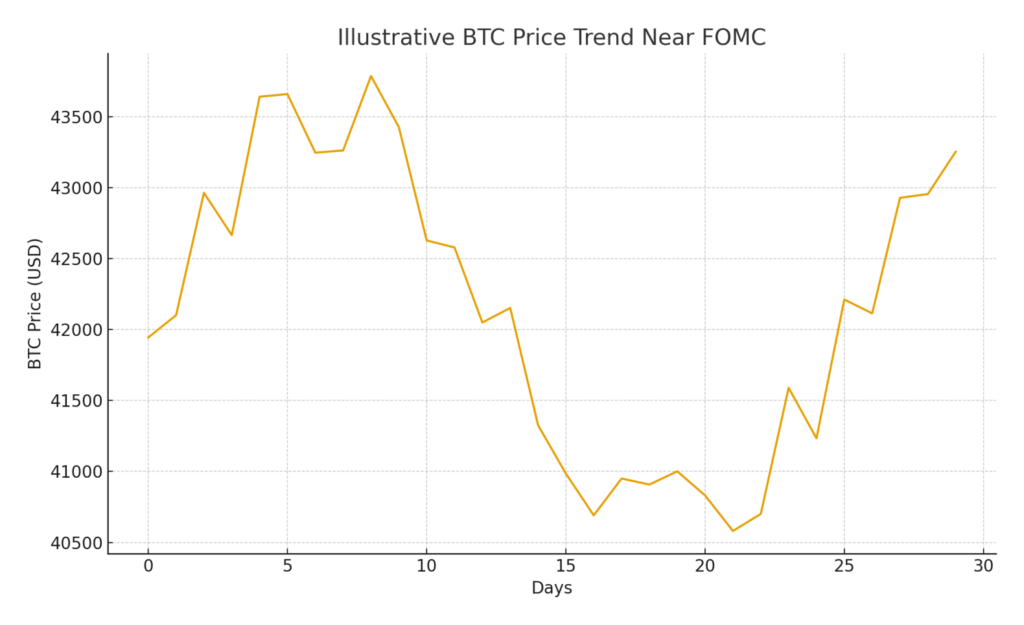
Despite this sharp decline, long-term investors see the drop differently. Many view coordinated selling as a temporary liquidity event, not a structural trend reversal. Historically, pre-FOMC dips often become opportunity zones:
- Traders exit risky positions → prices fall
- FOMC announcement removes uncertainty → buyers re-enter aggressively
This duality reinforces the idea that crypto markets behave increasingly like traditional financial markets, responding sensitively to macroeconomic catalysts.
2. A Market at a Crossroads: BTC, ETH, and XRP Reach Critical Technical Levels
Both Bitcoin (BTC) and Ethereum (ETH) are now positioned at major inflection points, forming technical structures that typically precede large moves—either bullish breakouts or bearish continuation trends.
For BTC, traders are watching whether the price can reclaim resistance at previous weekly highs. Momentum above that threshold has historically led to strong rallies driven by algorithmic trend-followers and institutional desks.
ETH, meanwhile, faces a similar dynamic as it attempts to sustain recovery above its tightening consolidation band. The asset has underperformed BTC in recent months, but a breakout could trigger a catch-up rotation—particularly as staking yields, ETF flows, and L2 ecosystem growth continue accelerating.
XRP presents a more dramatic narrative. The asset is now testing the $2.00 support, a psychological barrier that has repeatedly defined bullish or bearish sentiment in prior cycles. A sustained hold above this line would reinforce investor optimism and invite capital inflows, especially amid Ripple’s aggressive corporate developments.
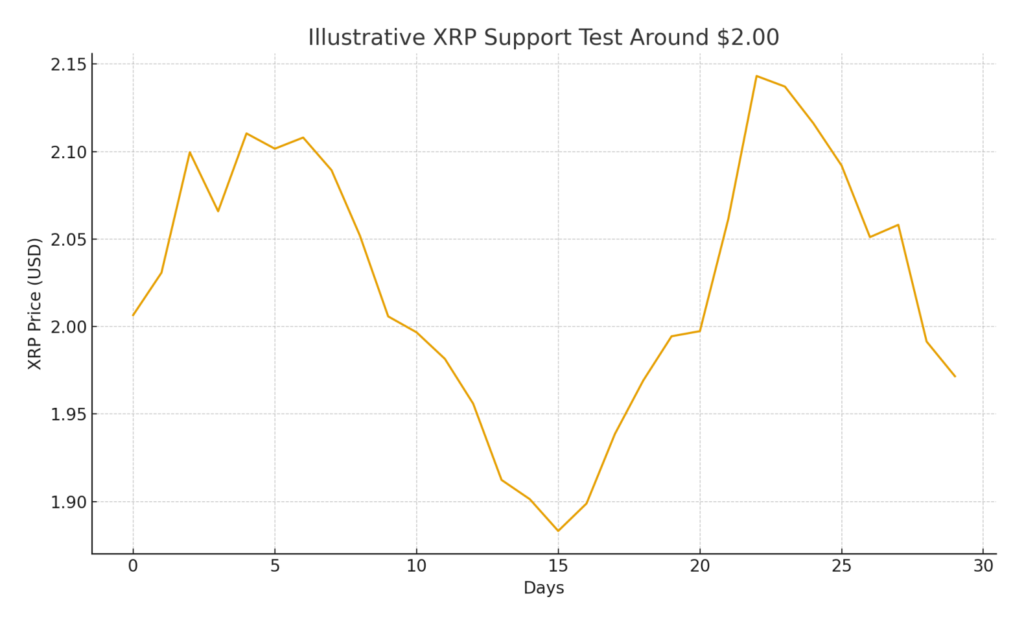
At these levels, the market is in a state of tension. Small deviations around support and resistance zones may trigger:
- Volatility spikes
- Liquidation cascades
- Market-wide rotation flows
For investors searching for new opportunities, this is a moment that requires discipline, careful observation, and tactical risk management—not emotional trading.
3. Ripple’s Extraordinary $520 Million Fundraise With a Guaranteed 10% Annual Return
Perhaps the most surprising development is Ripple’s recent decision to execute a ¥78 billion / $520 million equity sale that includes a guaranteed 10% annual return to participating investors. This move is unusual—even aggressive—within both crypto and traditional finance.
Why Offer a Guaranteed 10% Return?
A guaranteed yield on equity resembles hybrid financing used by high-growth companies aiming to:
- Reduce perceived investor risk
- Secure large commitments
- Accelerate long-term capital expansion
Such a structure indicates strong internal confidence. Ripple is effectively telling investors:
“We are so confident in our long-term profitability that we will guarantee returns—even in equity form.”
This level of commitment is rare in the digital-asset industry and signals both ambition and operational strength.
How Will Ripple Use This Capital?
Analysts believe the funds support several initiatives:
- Global expansion of cross-border payment infrastructure
- Institutional adoption of RippleNet and ODL (On-Demand Liquidity)
- Development of new blockchain-based financial products
- Strategic acquisitions in regulatory-friendly jurisdictions
Such a large capital infusion suggests Ripple is preparing to move aggressively in markets where regulatory clarity is improving—especially in Asia-Pacific, the Middle East, and parts of Europe.
A New Model for Crypto Company Funding
Ripple’s strategy could become a template for other blockchain companies seeking capital from traditional financial institutions. Offering structured returns reduces perceived risk and encourages deeper institutional participation.
This is especially powerful in a market where:
- IPO windows remain tight
- Venture capital funding has slowed
- Institutional investors want clearer risk-adjusted profiles
Ripple has opened the door to a new hybrid financing model—one that could reshape crypto-native capital formation going forward.
4. Macro Trends Reinforcing the Crypto Narrative
Beyond the specific events analyzed, several broader trends are strengthening the case for digital assets amid global uncertainty:
1. Liquidity Cycles Are Turning
Central banks globally are preparing for a shift toward lower interest rates in 2026, which historically increases demand for risk assets—including crypto.
2. Institutional Adoption Continues
Spot ETFs, staking products, tokenization pilots, and infrastructure partnerships have moved crypto into mainstream portfolios.
3. Corporate Blockchain Projects Are Accelerating
Enterprises are adopting:
- Real-world asset (RWA) tokenization
- Cross-border payment solutions
- On-chain compliance systems
These advances support long-term demand for blockchain infrastructure.
4. Retail Interest in New Assets Is Rising Again
Search trends and exchange volumes show renewed enthusiasm for:
- Altcoins
- Yield-bearing tokens
- Layer-2 ecosystems
- Real-world-integrated tokens
For readers seeking the “next opportunity,” this macro backdrop is especially relevant.
Conclusion: A Moment of Risk, But Also Exceptional Opportunity
The current market sits at a pivotal turning point. Pre-FOMC volatility has shaken weak hands, but whales and institutions appear to be positioning strategically. BTC, ETH, and XRP are aligned at technical levels that will define the next major trend.
Ripple’s bold $520 million capital raise adds another layer of complexity—illustrating how blockchain companies are evolving into globally competitive financial entities.
For investors searching for the next growth asset, yield source, or real-world blockchain opportunity, this period may represent one of the most important windows of positioning leading into 2026.
The message is clear:
- Risk is elevated.
- Volatility is increasing.
- But transformative opportunities are emerging for those who understand the macro-crypto relationship and act strategically.


