Main Points :
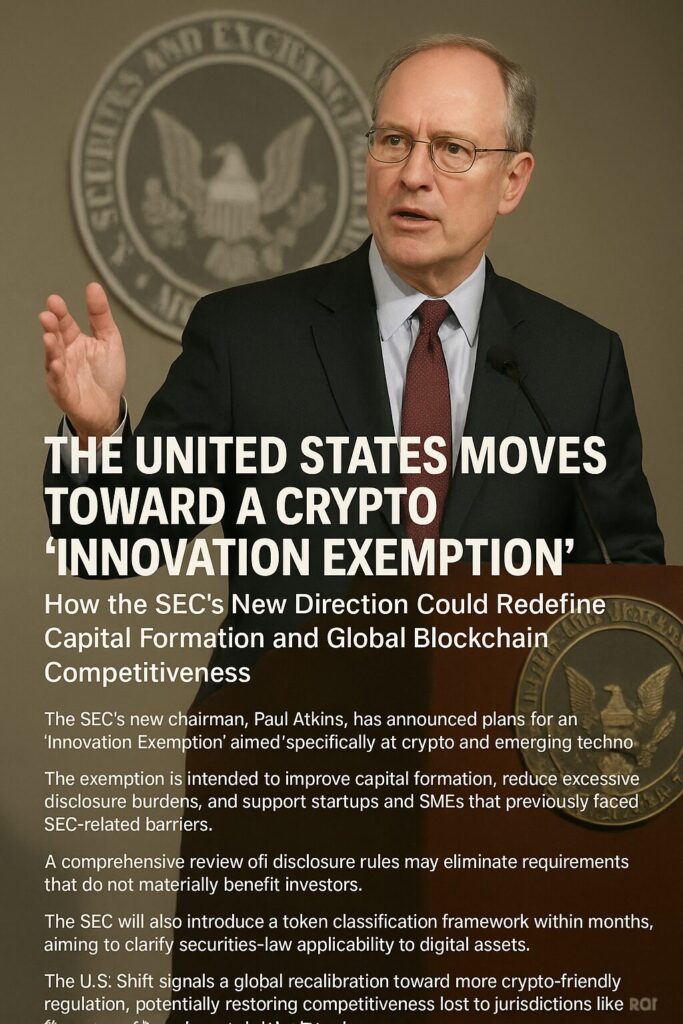
- The SEC’s new chairman, Paul Atkins, has announced plans for an “Innovation Exemption” aimed specifically at crypto and emerging technologies.
- The exemption is intended to improve capital formation, reduce excessive disclosure burdens, and support startups and SMEs that previously faced SEC-related barriers.
- A comprehensive review of disclosure rules may eliminate requirements that do not materially benefit investors.
- The SEC will also introduce a token classification framework within months, aiming to clarify securities-law applicability to digital assets.
- The U.S. shift signals a global recalibration toward more crypto-friendly regulation, potentially restoring competitiveness lost to jurisdictions like Singapore, Hong Kong, and the EU.
- This change may unlock new investment opportunities, utility-token markets, and institutional on-ramps, reshaping crypto’s next growth cycle.
1. Introduction: A Regulatory Turning Point for U.S. Crypto Policy
In a development that could reshape the global cryptocurrency landscape, U.S. Securities and Exchange Commission (SEC) Chairman Paul Atkins announced that the SEC is preparing to introduce an “Innovation Exemption”, designed specifically to support emerging sectors such as blockchain, tokenized assets, and next-generation fintech models. In a CNBC interview on December 2, Atkins emphasized that the goal is not simply deregulation but a shift toward modernized, relevance-based oversight that both protects investors and supports innovation-driven capital formation.
Atkins argued that the United States has “rejected” innovation for many years, allowing other nations to take the lead in crypto-native regulatory frameworks and decentralized finance ecosystems. His proposed exemption would allow the SEC to create a more flexible regulatory environment without requiring Congress to pass new legislation, signaling a major pivot in administrative strategy.
This announcement comes at a time when U.S. market competitiveness has sharply declined. The number of U.S. listed companies has fallen to half of what it was 30 years ago, with emerging tech companies often choosing foreign jurisdictions to avoid regulatory friction. The “Innovation Exemption” represents the SEC’s attempt to reverse this long-term decline and recapture early-stage market leadership.
2. Why the SEC Now Seeks an Innovation Exemption
The SEC has historically maintained a strict enforcement-driven posture toward cryptocurrency, arguing that investor protection requires treating most tokens as securities. Critics, however, have long argued that such rigidity has cost the United States crucial opportunities in the global digital-asset ecosystem.
Atkins’ rationale for the exemption focuses on three urgent needs:
2.1. Improving capital formation for startups and SMEs
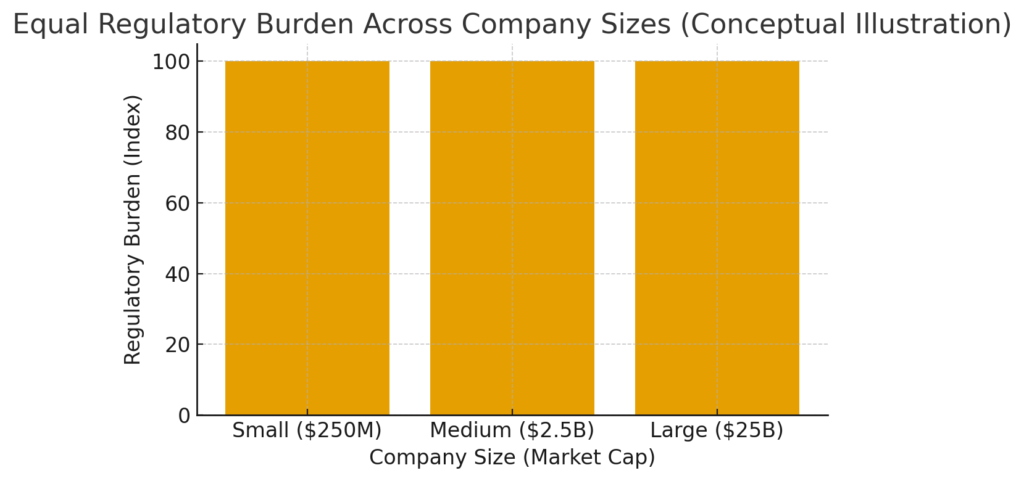
Atkins emphasized that small companies—often with market capitalizations around $250 million (≈$250M)—face the same disclosure burdens as companies 100 times larger. This regulatory mismatch discourages U.S.-based innovation, especially in high-growth fields like blockchain infrastructure, decentralized data storage, digital identity, AI-integrated ledgers, and tokenized financial products.
2.2. Reducing non-material disclosure burdens
Atkins criticized the SEC’s existing disclosure framework as having been “captured” by interests demanding information that does not materially benefit investors. He called for a root-and-branch reform of disclosure rules so that only genuinely relevant information is required, a move that could dramatically reduce compliance costs for innovators.
2.3. Supporting blockchain innovation without awaiting new legislation
The chairman stated directly that the SEC already possesses the authority to introduce exemptions supporting innovation, meaning regulatory reform can advance despite slow congressional action.
This is significant: regulatory gridlock has been one of the largest obstacles to U.S. participation in the global crypto economy.
3. Token Classification Framework: A Long-Awaited Pivot
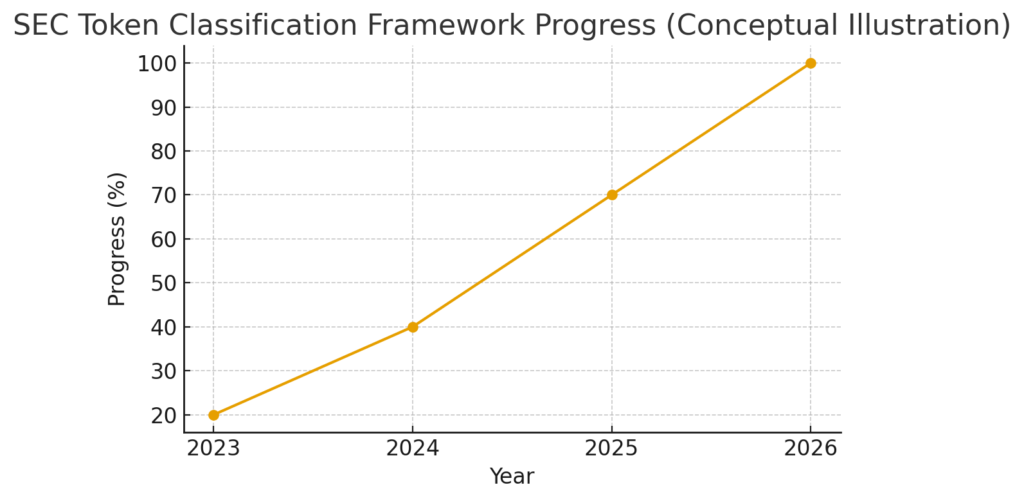
On November 13 at a Federal Reserve fintech conference, Chairman Atkins announced that the SEC will finalize a token classification system within the next few months. This system will likely:
- Define which tokens are securities, commodities, or utility assets
- Differentiate between payment tokens, governance tokens, NFT categories, and tokenized financial instruments
- Provide clarity for centralized exchanges, decentralized protocols, custody providers, and stablecoin issuers
Such a framework could resolve years of uncertainty caused by case-by-case enforcement rather than proactive rulemaking.
For VASPs, exchanges, institutional allocators, and non-custodial wallet developers, this could be the most significant regulatory change since the early 2010s.
4. Global Trend: The U.S. Rejoins the Crypto Innovation Race
The U.S. is not acting in isolation. Worldwide, regulators have begun outlining comprehensive digital-asset frameworks:
4.1. Europe: MiCA Implementation (2024–2026)
The EU’s landmark MiCA regime has created clear rules for stablecoins, exchanges, custodians, and token issuers. Europe is now attracting capital that previously would have gone to Silicon Valley.
4.2. Asia: Hong Kong, Singapore, and Japan
- Hong Kong has accelerated licensing for crypto trading and tokenized securities.
- Singapore maintains a rigorous but innovation-friendly framework under MAS.
- Japan is one of the first countries to allow stablecoins backed by foreign institutions.
4.3. Middle East: UAE and Saudi Arabia
Dubai continues to position itself as a crypto capital through VARA, emphasizing compliance but encouraging institutional participation.
The U.S. has appeared increasingly isolated—but the Innovation Exemption signals a return to leadership.
5. Impact on Capital Markets and Token Issuance
5.1. Potential for regulated tokenized IPOs
With reduced disclosure burdens and clearer token classification, companies could use blockchain-based issuance models within regulatory boundaries. This could enable:
- Tokenized equity
- Tokenized debt products
- Hybrid models involving governance and utility elements
5.2. Easier early-stage fundraising in the U.S.
Startups may no longer feel compelled to incorporate in Singapore or Dubai for token issuance. The U.S. may become competitive again for:
- Seed-stage token raises
- Community rounds
- On-chain governance launches
5.3. Institutional capital entry points
A clearer classification system lowers compliance risk for banks, hedge funds, and fintech lenders deploying capital into crypto networks.
6. Market Implications: What Crypto Investors Should Watch
6.1. Valuation shifts toward utility and compliance-enabled assets
Tokens that demonstrate real-world use cases—payments, tokenized real-world assets, DEX infrastructure, cross-border settlements—may enter a new growth phase.
6.2. Exchange tokens and stablecoins may benefit
Both categories are heavily impacted by regulatory clarity. Stablecoins in particular could see expanded bank participation.
6.3. U.S.-favored crypto categories
Regulatory signals suggest likely support for:
- Payment networks
- Enterprise blockchains
- Tokenized treasury products
- Interoperability assets
- Compliance-integrated protocols
7. Recent Market Developments Referenced from Other Sources
Using information from late-2024 to 2025 market analyses:
- Institutional adoption of tokenized U.S. Treasuries is accelerating, now exceeding $1.8B in circulating supply.
- U.S. banks are exploring blockchain settlement rails to reduce SWIFT costs.
- Stablecoin regulation bills in the U.S. Congress remain slow, making SEC policy even more important.
- Crypto venture funding rebounded in 2025 due to AI-crypto convergence.
- Layer-2 networks on Ethereum have begun integrating compliance modules for enterprise use.
These trends mean an Innovation Exemption could trigger a new bull cycle driven by real-world utility rather than speculation.
8. Conclusion
The SEC’s plan for an Innovation Exemption represents a watershed moment for the U.S. crypto industry. For the first time in years, the United States is moving from enforcement-only regulation to proactive, innovation-friendly policy. If implemented correctly, it could revitalize U.S. capital markets, clarify token issuance rules, and bring institutional legitimacy to digital-asset markets.
For investors seeking new crypto assets, emerging revenue opportunities, and practical blockchain use cases, this policy shift may be the early signal of a major transformation in global crypto economics.