Main Points :
- Bitcoin may already have formed a local bottom after its recent pullback.
- Grayscale argues that the traditional four-year halving cycle no longer defines Bitcoin’s price behavior.
- Bitcoin could break its historical cycle and reach a new all-time high in 2026.
- ETF flows, futures open interest, and long-term holder selling remain the major short-term catalysts.
- U.S. monetary policy and upcoming digital asset legislation could significantly shape the market in 2026.
- Institutional adoption is expected to accelerate as the Digital Asset Market Structure bill progresses.
Introduction: Bitcoin at a Turning Point
Bitcoin is once again entering a defining moment in its market history. After a sharp 32% correction, many retail investors fear the beginning of another prolonged downturn. Yet, according to asset manager Grayscale, the recent pullback might not be the beginning of a multi-year bear market, but rather the final stage of a structural reset. Their latest research suggests that Bitcoin may be breaking away from the traditional four-year halving cycle, setting the stage for a potential new all-time high (ATH) in 2026.
To understand why the next two years could mark a historic inflection point for Bitcoin, it is essential to look at sentiment indicators, ETF behavior, U.S. interest-rate policy, and advancing cryptocurrency legislation. Across multiple signals, the data points to a market that is resetting leverage, not collapsing in sentiment. And that difference may prove critical for long-term investors seeking new opportunities in crypto assets.
1. Short-Term Weakness, Long-Term Strength: Understanding the Pullback
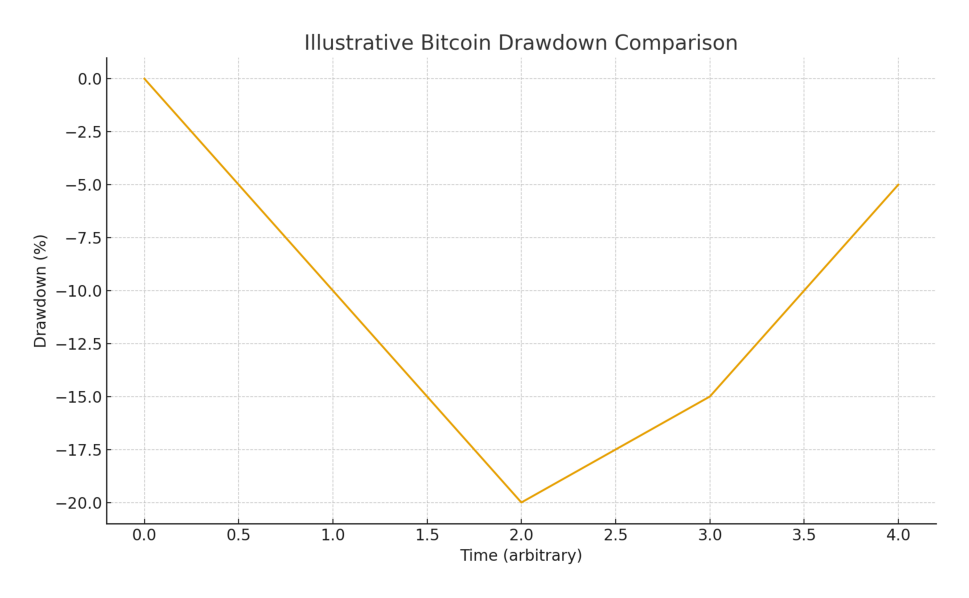
Bitcoin’s recent downturn has created anxiety among market participants, but several indicators show that the drawdown is more consistent with a local bottom than the beginning of a structural decline.
One of the most notable signals is Bitcoin’s options skew exceeding 4—an indication that investors are hedging downside risk broadly. Historically, such behavior appears near the end of corrections rather than the beginning.
Meanwhile, Grayscale’s analysis directly challenges the long-held belief that Bitcoin strictly follows a four-year halving cycle. Although the asset experienced a 32% fall, the firm argues that Bitcoin is now on a trajectory that decouples it from predictable halving-based price action. Their report goes as far as stating that the four-year cycle theory is “incorrect,” and that Bitcoin could set new highs in 2026 instead of waiting for the traditional post-halving surge.
2. ETF Flows Show Signs of Stabilization
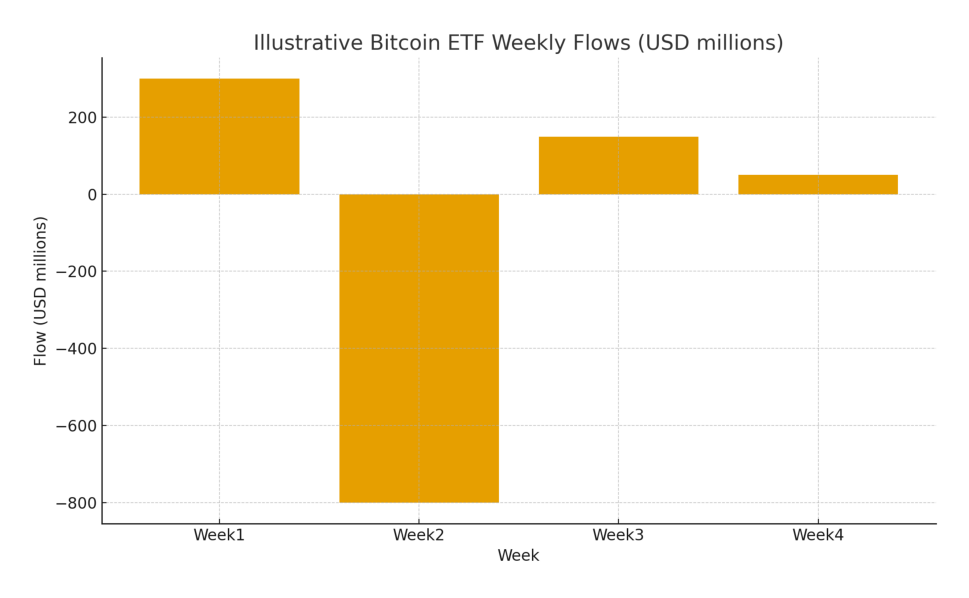
Spot Bitcoin ETFs in the United States—previously a major force behind Bitcoin’s 2025 rally—experienced a sharp reversal in November, with $3.48 billion in outflows. According to Farside Investors, this marked the second-worst month on record.
However, momentum is beginning to shift again. ETFs recorded net inflows for four consecutive trading days, suggesting that the wave of selling pressure is fading. Even a modest inflow of $8.5 million signals a potential shift in sentiment, especially after weeks of persistent outflows.
Nexo analyst Ilya Karchev explains the situation as a leverage reset, not a sentiment collapse. This distinction is critical for investors evaluating whether Bitcoin’s weakness represents a buying opportunity or a structural breakdown.
3. Identifying Bitcoin’s Critical Price Zones
According to Karchev, Bitcoin’s technical momentum now depends on whether it can reclaim the low–$90,000 range. A failure could send BTC back toward mid- to low-$80,000 support levels.
These levels will dictate whether the market transitions into a longer consolidation phase or resumes its upward trend. Historically, Bitcoin has often experienced 25–40% pullbacks during bull markets, followed by explosive recoveries once leverage clears.
4. Federal Reserve Policy: The Largest Macro Catalyst
All eyes in the global crypto market are now focused on the U.S. Federal Reserve’s December 10 interest-rate decision. According to CME Group’s FedWatch tool, the probability of a 0.25% rate cut has surged to 87%, up from 63% one month earlier.
A single rate cut can shift liquidity dynamics across global markets—but the more important factor is the Fed’s forward guidance. Should the Fed signal the start of a multi-month easing cycle, risk-on assets such as Bitcoin typically attract new inflows.
For long-term investors seeking crypto opportunities, monetary policy may create a favorable environment heading into 2026.
5. The Digital Asset Market Structure Bill: The Next Institutional Catalyst
2026 could mark a major turning point for institutional adoption. One of the most significant developments is the Digital Asset Market Structure bill, a bipartisan legislative framework designed to clarify U.S. crypto regulation.
Key elements include:
- clearer definitions for digital assets
- regulatory boundaries between the SEC and CFTC
- a compliant pathway for exchanges and custodians
- explicit rules for institutional involvement
Progress has already begun:
- The House has passed the CLARITY Act as part of a Republican “crypto week” agenda.
- The Senate leadership aims to merge the bill with the Responsible Financial Innovation Act.
- Senate Banking Chair Tim Scott has stated intentions to make the bill ready for presidential signature in early 2026.
The only condition: crypto must remain a bipartisan issue and avoid becoming overly politicized during mid-term election cycles.
If successfully passed, this would unlock far greater institutional participation, aligning the U.S. with other maturing regulatory frameworks worldwide.
6. Why 2026 Could Break Bitcoin’s All-Time-High Record
With macro conditions shifting, institutional rules advancing, and leverage cleansed from the system, Grayscale believes Bitcoin is primed for a multi-year breakout.
Three key reasons:
1. Bitcoin is no longer bound by the four-year cycle.
Historical patterns may still matter, but ETFs, global liquidity models, and institutional demand have reshaped the asset’s behavior.
2. Regulatory clarity will attract large capital.
Pension funds, sovereign wealth funds, insurance companies, and endowments require formal legislative frameworks before deploying significant crypto allocations.
3. Structural demand continues to rise.
Long-term holders, ETF issuers, and Bitcoin-native institutions increasingly absorb supply and reduce long-term selling pressure.
Taken together, these trends provide a strong foundation for Bitcoin’s first major break from historical cycles—potentially culminating in a new all-time high in 2026.
Conclusion: A Critical Moment for Crypto Investors
Bitcoin’s recent volatility has rattled short-term traders, but long-term investors should pay close attention to the deeper structural trends. From ETF stabilization to the anticipated interest-rate pivot and the rise of comprehensive U.S. digital asset legislation, the next two years could reshape the crypto landscape.
If Grayscale’s analysis is correct, Bitcoin may be transitioning from a predictable cycle asset into a macro-driven global investment instrument. And as this transition unfolds, investors seeking new crypto assets, income opportunities, and real-world blockchain applications may find themselves at the forefront of a new wave of digital-asset growth.