
Main Points :
- Strategy Inc. (formerly MicroStrategy) asserts unprecedented financial flexibility to continue accumulating Bitcoin.
- CEO Phong Le emphasizes long-term convertible debt, at-the-market equity issuance capability, and absence of short-term refinancing pressure.
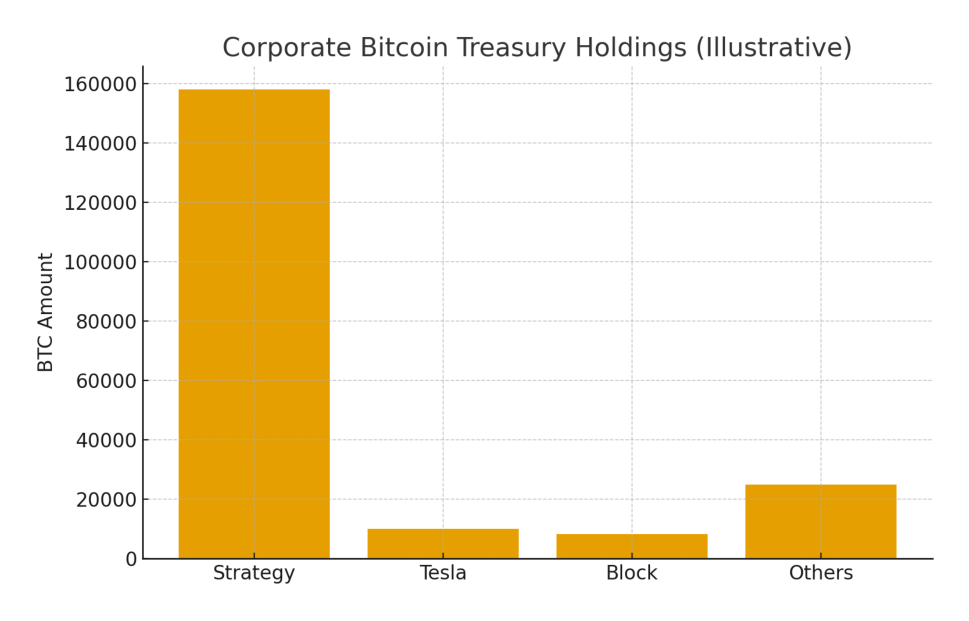
- Strategy holds over 158,000 BTC, positioning itself as the only publicly traded pure-play corporate Bitcoin treasury vehicle.
- Recent market volatility has raised concerns about valuation, yet Strategy argues that capital market access has validated its model.
- Broader market trends—soaring corporate Bitcoin adoption, ETF inflows, and the shift to Bitcoin as a “superior treasury reserve”—provide context to Strategy’s long-term conviction.
Introduction: A New Phase in Corporate Bitcoin Treasury Strategy
Corporate Bitcoin accumulation has entered a new chapter. While the early 2020–2021 wave was characterized by opportunistic purchases, today’s environment is shaped by structured financial engineering, capital markets sophistication, and expanding corporate acceptance of Bitcoin as a strategic reserve asset. Strategy Inc.—the rebranded successor to MicroStrategy—remains the most prominent example of this shift.
In a new interview on the podcast What Bitcoin Did, CEO Phong Le provides rare insight into how the company organizes its balance sheet, manages liquidity, and strategically times debt and equity issuance to sustain its Bitcoin acquisition program. His comments reveal a corporation that now views Bitcoin not merely as an investment, but as a core treasury mandate supported by institutional-grade financing tools.
To understand Strategy’s position, this article explores:
- The company’s capital structure and why it enables “unprecedented flexibility.”
- How long-term zero-coupon convertible notes mitigate short-term refinancing risk.
- Strategy’s identity shift—from software company to Bitcoin-centric hybrid model.
- Market reactions, valuation questions, and analyst perspectives.
- How broader BTC market trends in 2024–2025 contextualize Strategy’s treasury strategy.
At the end, a synthesis ties together what this means for investors seeking new crypto opportunities, treasury diversification, and blockchain utility.
Section 1 — The Capital Structure Behind Strategy’s Bitcoin Play
Phong Le begins by emphasizing one point above all:
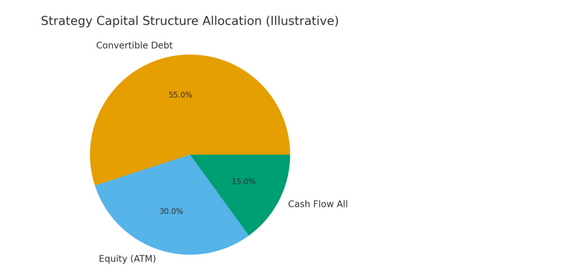
Strategy’s capital structure is intentionally engineered to maximize long-term Bitcoin accumulation while minimizing liquidity stress.
Three components are critical:
1. Long-term convertible debt
Strategy holds multiple tranches of long-dated convertible bonds—zero-coupon or low-coupon structures—meaning:
- No near-term repayment pressure until December 2025 (earliest maturity).
- Predictable balance sheet planning.
- Minimal short-term dilution risk for shareholders.
Le describes this as a “powerful source of flexibility,” because long maturity windows allow the company to deploy capital opportunistically—especially during BTC price corrections.
2. Ability to raise equity at-the-market (ATM)
ATM issuances allow Strategy to:
- Sell equity gradually into favorable market conditions.
- Avoid large, sudden dilution events.
- Scale Bitcoin accumulation with market cycles.
This capability is unavailable to most companies and directly contributes to Strategy’s continued Bitcoin treasury growth.
3. Balanced access to both stock and bond markets
Le calls this the “magic” behind Strategy’s consistent Bitcoin purchasing over multiple cycles.
The company positions itself to raise capital from either:
- Stock markets when equity valuations are attractive; or
- Bond markets when interest rates and demand create favorable conditions for new convertible notes.
This dual access is what differentiates Strategy from every other BTC-accumulating corporation.
Section 2 — 158,000+ BTC and the Shift in Corporate Identity
In early 2025, MicroStrategy officially rebranded to Strategy Inc., reflecting what had already become true in investor perception:
the company is now widely seen as a hybrid enterprise software + Bitcoin treasury vehicle.
With more than 158,000 BTC on its balance sheet, Strategy offers public market investors exposure to Bitcoin through a corporate wrapper—something especially attractive to institutions limited by ETF or direct custody constraints.
Le notes:
“Our shareholder base understands who we are. We are the only publicly traded access point to this strategy.”
This clarity of identity strengthens shareholder alignment, a key factor allowing Strategy to continue aggressive BTC accumulation even during volatile periods.
Section 3 — Responding to Valuation Concerns
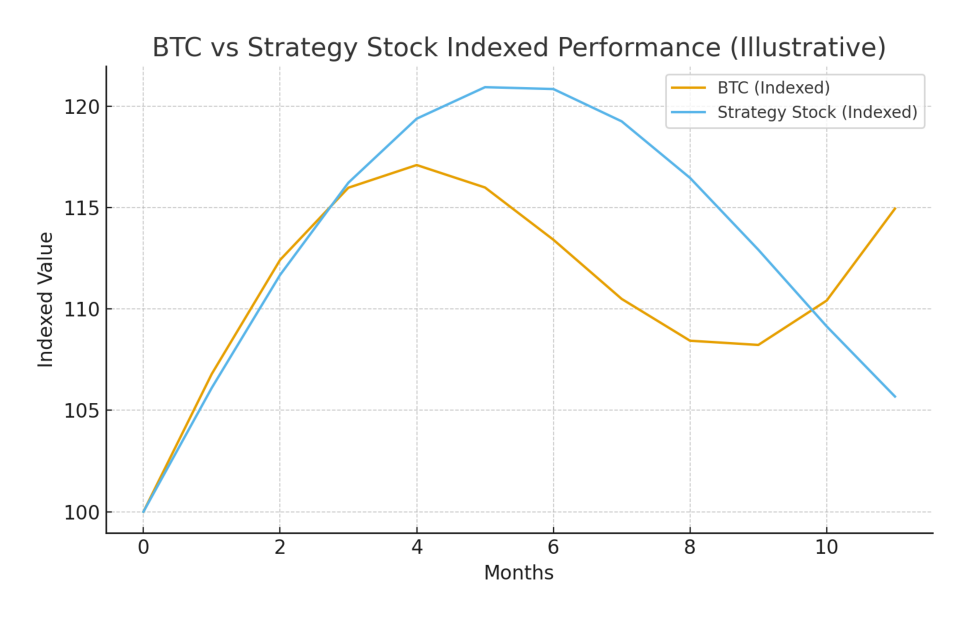
Despite BTC dropping only 3.14% year-to-date, Strategy’s Class A shares have fallen 41%, closing at $17.18 on November 28.
Critics argue that the market may be losing confidence in Strategy’s leveraged BTC strategy.
However, the company counters that:
- It has demonstrated resilience across multiple market cycles.
- Its debt structure is sound, long-dated, and strategically managed.
- It continues to raise capital on favorable terms.
Analyst James Van Straten adds nuance:
- The market may be “testing” Strategy’s enterprise value.
- Shares could even drop below the company’s BTC cost basis.
- But if Strategy successfully navigates its current convertible debt structure, both BTC and Strategy shares could “rise strongly.”
This aligns with the broader thesis that Bitcoin-linked equities tend to outperform BTC itself during bull cycles—but also endure amplified drawdowns.
Section 4 — Broader Market Trends Reinforcing Strategy’s Approach
1. Corporate Bitcoin accumulation is accelerating
2024–2025 saw an uptick in firms adopting Bitcoin as a treasury asset, motivated by:
- Rising inflation hedging strategies
- Growing distrust of fiat dilution
- Institutional-grade custody improvements
- ETF-driven liquidity
2. Bitcoin ETFs normalized BTC exposure
U.S. Bitcoin ETFs now hold significant supply, creating:
- Increased institutional flows
- Reduction in free-floating BTC
- Greater liquidity transparency
This indirectly strengthens Strategy’s position as a “leveraged BTC accumulator.”
3. Bitcoin becoming a strategic reserve asset
Global macro trends—particularly widening fiscal deficits and expanding money supply—have reinforced BTC’s standing as a mathematically capped asset with high long-term scarcity value.
Strategy’s treasury strategy is effectively a corporate implementation of this thesis.
Section 5 — Why Strategy Believes Its Model Will Continue Working
Le frames the long-term thesis as a combination of:
- Software cash flows → steady, fiat-based revenue
- Bitcoin accumulation → asymmetric upside
- Capital market access → sustained funding flexibility
“As long as we operate in software, Bitcoin, and the capital markets, our story remains compelling.”
This reflects Strategy’s belief that Bitcoin is no longer a speculative asset but a core financial instrument that can be integrated into corporate treasury models.
For investors seeking exposure to BTC beyond ETFs or self-custody, Strategy functions as a hybrid vehicle—part technology company, part Bitcoin fund.
Conclusion — What This Means for Investors and Crypto Builders
Strategy’s conviction offers insights relevant to multiple audiences:
For investors seeking new crypto assets:
Corporations accumulating BTC—especially via structured financial strategies—may represent a new category of investment exposure.
For entrepreneurs and builders:
Strategy’s treasury strategy demonstrates that blockchain adoption is expanding beyond products and services into corporate finance and treasury optimization.
For the broader crypto market:
The continued expansion of corporate Bitcoin treasuries reinforces the narrative of BTC as a long-term monetary asset rather than a speculative instrument.
As the next market cycle develops, companies like Strategy may play an increasingly central role in shaping how institutions integrate Bitcoin into balance sheets—potentially accelerating mainstream adoption.