
Main Points :
- Gold prices dropped under the psychological $4,000/oz mark, signaling a sharp correction in a market previously seen as an unshakable safe haven.
- Bitcoin (BTC) is displaying relative resilience with a rally in sentiment and shift in capital flows, potentially targeting $120,000 and beyond in Q4 2025.
- The divergence between gold and Bitcoin suggests a possible rotation from traditional safe-asset allocation into digital asset exposure.
- Macro factors driving the shift include U.S.–China trade developments, expectations of central-bank policy changes, and evolving institutional adoption of crypto.
- For investors seeking new crypto assets and practical blockchain applications, the evolving narrative opens both opportunities and risks: timing, asset selection and use-case fundamentals matter.
1. The Gold Correction: Safe-Haven Under Pressure
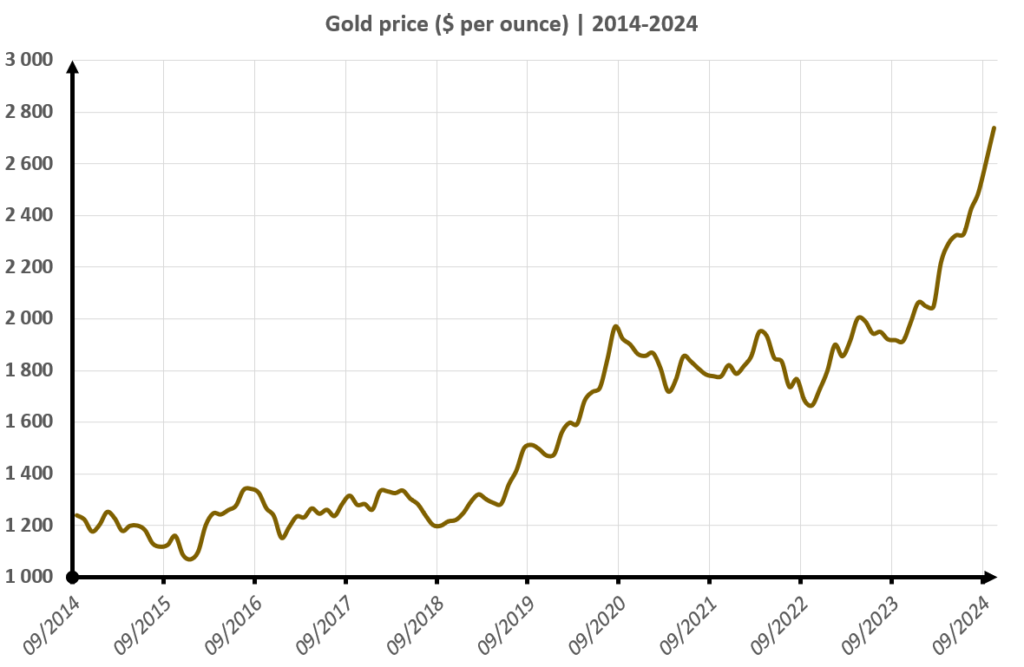
Over recent weeks, the price of gold plunged below $4,000 per troy ounce for the first time since its recent rally, representing a rapid decline from its peak above $4,300. According to a Finance Magnates report, spot gold dropped to roughly $3,963/oz on 28 October 2025.
Several triggers lie behind this sharp correction: the easing of U.S.–China trade tensions—where negotiators at the ASEAN conference framed an agreement removing the threat of 100 % tariffs—reduced the geopolitical risk premium that had fuelled the metal’s rally.
Technically, gold had tested extreme over-bought conditions, and the retreat below $4,000 opens the possibility of further correction down toward the $3,270-$3,440 support zone identified by analysts as a significant accumulation area.
Notably, one source estimated gold lost nearly $2.5 trillion in market cap over just two trading days—a figure exceeding the entire market cap of Bitcoin at the time (~$2.2 trillion).
This turn of events challenges the traditional assumption of gold as the ultra-safe, stable “store of value” and suggests the market may be rethinking risk, assets and role of alternative stores of value.
2. Bitcoin’s Strength: Digital Asset in the Spotlight
In contrast to gold’s stumble, the flagship cryptocurrency Bitcoin (BTC) is showing signs of renewed strength. According to a Brave New Coin article, one analyst projected Bitcoin could aim for $150,000-$180,000 in Q4 2025 after breaking above $112,000 resistance.
Market infrastructure for Bitcoin appears increasingly robust: floating leverage is down (futures open interest peaked around $52 billion and has since normalized to the 61st percentile) and on-chain indicators point to accumulation rather than distribution.
Crucially, Bitcoin is benefiting from the same macro tailwinds that once benefited gold—such as inflation concerns, monetary easing expectations, and global liquidity growth—but now with the added narrative of digital scarcity (21 million supply cap) and institutional adoption via ETFs and treasury holdings.
For blockchain-practical readers, Bitcoin’s resilience amid broader safe-asset turbulence underscores the rising relevance of digital assets not solely as speculative bets, but as part of structural portfolio diversification and financial infrastructure.
3. Capital Rotation: From Bars to Blocks?
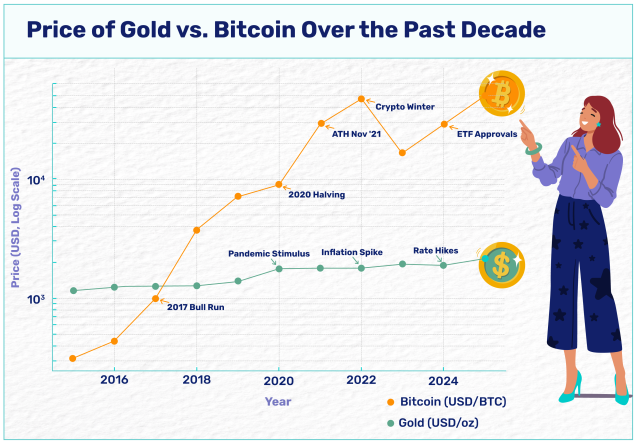
What we may be witnessing is a capital rotation: money departing from traditional safe assets (like gold) and migrating toward higher-risk / higher-reward digital alternatives (like Bitcoin). The juxtaposition is clear: gold down ~9% from peak, Bitcoin up 6.7% over the same period per one analyst’s tracking.
Institutional flows support this narrative. For example, analysis shows gold-ETF outflows (≈$3.2 billion in Q3 2025) while crypto-ETF inflows reach $15.4 billion.
The implications for investors actively seeking crypto opportunities or practical blockchain uses:
- Re-evaluate the “store of value” role of gold vs digital alternatives.
- Understand structural factors (liquidity, leverage, institutional participation) rather than only price momentum.
- Focus on assets offering clear utility or financial infrastructure relevance (not just highly speculative tokens).
- Consider timing: if rotation is underway, the early phase may still offer asymmetric upside — but it also carries elevated risk of reversals.
4. Macro Drivers and Risk Factors: What to Watch
Several macro dynamics are influencing this dual-asset divergence:
- Trade and geopolitical sentiment: The recent U.S.–China framework reduced immediate safe-haven demand for gold while simultaneously rebuilding confidence in risk assets.
- Monetary policy and liquidity: Expectations of upcoming rate cuts or easing by the Federal Reserve support risk-asset allocations, including crypto. For Bitcoin, liquidity growth continues to be a key explanatory variable.
- Institutional adoption & infrastructure: The maturation of crypto investment vehicles (ETFs, custodians), corporate treasury holdings and on-chain transparency has improved Bitcoin’s credibility.
- Technical and sentiment triggers: Gold’s sharp decline may have been prompted by margin liquidations, over-bought signals and momentum-driven selling. Bitcoin may be benefitting from a leverage “flush” and base-building — per the VanEck commentary.
Risk factors to keep in mind:
- A reversal in macro sentiment could re-ignite gold as preferred safe haven (e.g., major war, systemic banking crisis).
- Crypto remains volatile; institutional adoption is still evolving and regulation remains uncertain.
- Timing matters: entering after a sharp move may reduce upside and amplify drawdowns.
- Token-specific fundamentals matter: Bitcoin may benefit from macro tailwinds, but other crypto assets require independent analysis of utility, adoption, network health.
5. Implications for Crypto Investors & Blockchain Practitioners
For readers actively hunting new crypto assets, seeking revenue-opportunities or exploring blockchain in practical use cases, the current environment offers several take-aways:
- Bitcoin’s role may be shifting from “emerging risk asset” to more mainstream portfolio component (hedge, store of value, digital reserve). Recognising this might shift how assets are selected and managed.
- Use‐case differentiation matters more than ever. If capital is rotating for structural reasons, tokens or blockchains with actual adoption, network effects or embedded utility may outperform speculative “meme” coins.
- Infrastructure and operations matter. For example, developers building non-custodial wallets (as you said you are) should recognise that projects tied to payments, settlement, institutional flows or tokenised assets may gain traction in this evolving paradigm.
- Risk management remains critical. Even with promising narratives, the market remains nascent and volatile. Set clear investment horizon, sizing, and exit strategy.
- Timing window may be more favorable now. If the rotation is still relatively early, positioning now (with disciplined risk control) might yield better risk-adjusted returns versus entering after broad market consensus.
- Stay alert to regulatory & macro triggers. The next policy shift (e.g., Fed decision, trade surprise, bank failure) could rapidly reverse sentiment, affecting both gold and crypto.
Conclusion
The recent dramatic decline in gold’s price and the concurrent resilience of Bitcoin may mark a notable shift in how investors view stores of value and risk assets. While gold has long held the mantle of “ultimate safe haven,” its sharp correction underscores its vulnerability under a changing macro and monetary environment. Meanwhile, Bitcoin’s growing institutional support, structural infrastructure improvements and digital-scarcity narrative position it as a meaningful contender for that role in the 21st century.
For investors and practitioners in the blockchain and crypto space, this moment is more than a price story—it is a structural inflection point. Evaluating not just which assets to hold, but why, when and how they serve portfolios, financial systems or applications becomes even more important. Whether you’re seeking new crypto revenue streams, developing blockchain infrastructure, or analysing portfolio allocations, the evolving interplay between traditional safe assets and digital alternatives bears close attention.
In sum: gold may still have a role, but the increasing divergence suggests that Bitcoin (and by extension, other well-positioned digital assets) could be assuming a more central position in global asset allocation and financial architecture. The smart move: stay informed, stay selective, and recognise that the next frontier of value may increasingly run on blocks rather than bars.