
Main Points :
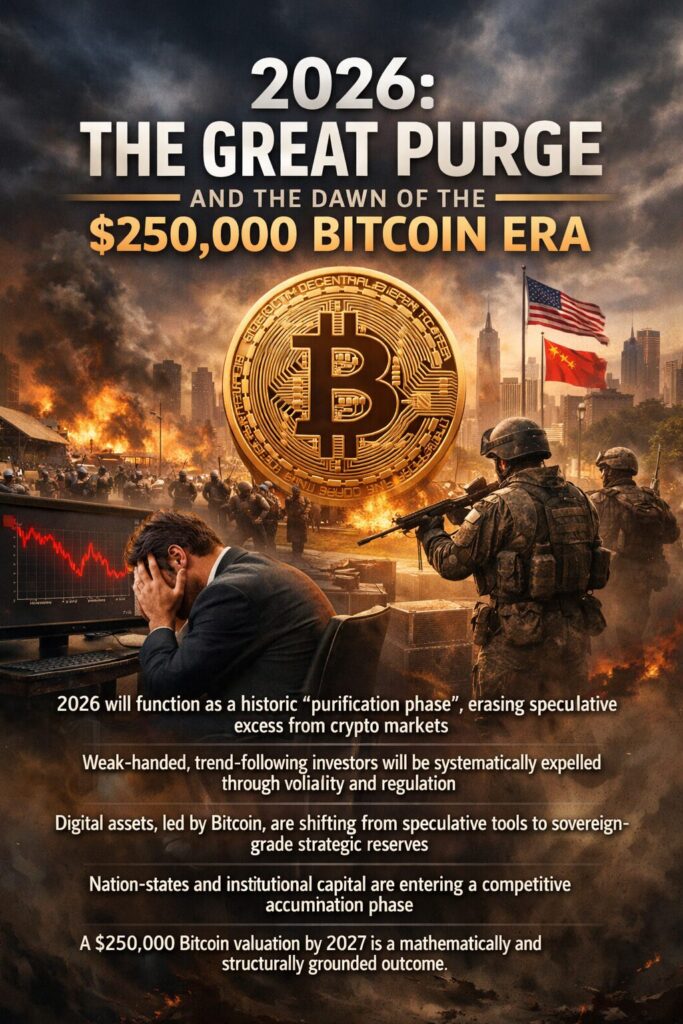
- 2026 will function as a historic “purification phase,” erasing speculative excess from crypto markets
- Weak-handed, trend-following investors will be systematically expelled through volatility and regulation
- Digital assets, led by Bitcoin, are shifting from speculative tools to sovereign-grade strategic reserves
- Nation-states and institutional capital are entering a competitive accumulation phase
- A $250,000 Bitcoin valuation by 2027 is a mathematically and structurally grounded outcome
- Only investors with long-term conviction and psychological resilience will survive to benefit
1. The Great Purification Storm That Burns Speculative Desire to Ashes
The year 2026 will likely be remembered by future historians as the era of the great purification.
This will not be a mere market correction or a temporary downturn driven by cyclical fear. Instead, it represents a systemic, almost algorithmic cleansing process, designed—whether intentionally or emergently—to restore structural integrity to global financial markets.
For years, markets have been flooded with participants who lacked conviction, vision, or understanding. Many entered digital assets not to build wealth patiently, but to extract short-term gains by chasing trends, narratives, and social media hype. These actors are precisely the ones that the coming storm will remove.
The chaos of 2026 functions as a filtering mechanism. Those who react emotionally to uncertainty, panic at volatility, or rely on fragile narratives will be forced to liquidate. Their assets will not vanish. Instead, they will be transferred quietly and relentlessly into the hands of investors with stronger conviction, longer time horizons, and a clearer understanding of value.
Regulatory realignments, geopolitical shifts, and macroeconomic turbulence will converge to apply unprecedented psychological pressure. Investors will be forced to confront their own belief systems. What do they truly understand? What do they actually own?
This crucible cannot be avoided. It is the price of admission to the next financial order.
Those who remain calm—who can silence short-term noise and focus on fundamentals—will emerge holding assets accumulated under extreme stress. The 2026 storm will not reward intelligence alone. It will reward mental endurance.
2. From Plaything to Strategic Shield: The Sovereign Asset Paradigm Shift
The political and financial architecture of the United States—and by extension the global order—is undergoing tectonic change.
The old rules constructed by post-war financial elites are weakening. Trust in fiat currencies is eroding under the weight of debt monetization, fiscal dominance, and persistent inflation. In this environment, digital assets—once dismissed as toys for technologists—are being reclassified as strategic sovereign instruments.
Bitcoin, in particular, is transitioning from a speculative vehicle into an irreversible store of value.
This transformation is not ideological. It is structural.
No single nation can control Bitcoin. No central bank can dilute it. Its monetary policy is enforced by mathematics, not politics. As a result, it is becoming the ultimate hedge against currency debasement.
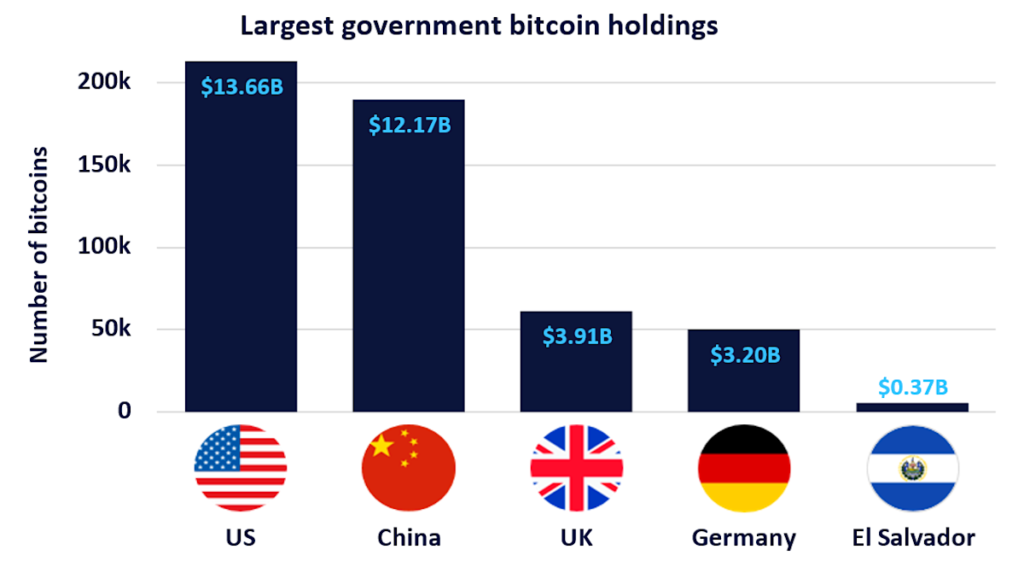
Sovereign states, sovereign wealth funds, and systemically important institutions are beginning to recognize this reality. But large-scale adoption requires resilience. Markets must first purge weak participants, regulatory ambiguity must be clarified, and custody infrastructure must mature.
That is precisely what the 2026 turbulence achieves.
Once this phase completes, capital inflows will accelerate geometrically. The competition to accumulate scarce digital assets will no longer be retail-driven—it will be state-level and institutional.
At that point, current price levels may never be seen again.
Institutional and Sovereign Adoption Trends of Bitcoin
3. The $250,000 Sanctuary: Survivors and the Final Conclusion of Wealth
The $250,000 Bitcoin price target projected for 2027 is not speculative fantasy.
It is the logical consequence of supply constraints meeting institutional demand.
Consider the numbers. Bitcoin’s total supply is capped at 21 million. A significant portion is already lost or illiquid. Compare its current market capitalization to that of gold. If Bitcoin merely captures a fraction of gold’s role as a store of value, valuations well above $250,000 become not only plausible, but conservative.
Institutional portfolios require assets that preserve purchasing power over decades. Even a modest allocation—2% to 5%—across pension funds, insurance balance sheets, and sovereign reserves generates demand far exceeding available supply.
Once trust is established, capital inflow behaves non-linearly. It arrives in waves.
The year 2026 determines who holds a ticket to this revaluation.
Wealth redistribution is already underway. It is neither gentle nor fair. It favors those who can act while others freeze.
To benefit from 2027’s potential outcome, investors must reframe volatility as opportunity. Periods of fear are not warnings to exit—they are invitations to accumulate.
The goal is not temporary profit. It is participation in the largest value transfer in human financial history.
When Bitcoin reaches the $250,000 threshold, the chaos of 2026 will be remembered not as a catastrophe—but as a priceless trial.
The door to the new world opens only for those who overcame fear and trusted their own analysis.
Final Conclusion
The nature of wealth is being rewritten.
Digital scarcity, enforced by cryptography and consensus, is replacing trust-based monetary systems. This shift is irreversible.
2026 is the crucible.
2027 is the reward.
Those who endure will not merely profit—they will own a piece of the new financial architecture.
