

Main Points :
- Barclays forecasts that crypto trading volumes will decline in 2026, with no clear short-term catalysts to reignite retail enthusiasm.
- Spot trading weakness poses revenue challenges for platforms like Coinbase and Robinhood that previously benefited from bull-market activity.
- Regulatory clarity, particularly around U.S. market structure, may act as a short-term headwind but could support long-term growth.
- Tokenization and derivatives are expanding, but their revenue impact in 2026 is expected to remain limited.
- For investors and operators, 2026 is shaping up as a transitional year, emphasizing infrastructure, compliance, and long-term positioning rather than speculative momentum.
1. A Market Entering a Low-Intensity Phase
Barclays’ latest year-end outlook paints a restrained picture of the cryptocurrency market in 2026. According to the bank, the sector is likely to experience a noticeable decline in trading volumes, driven by fading retail participation and the absence of clear macro or narrative-driven catalysts. Unlike previous cycles, where sudden political shifts, new financial products, or technological breakthroughs sparked renewed interest, 2026 appears set to lack such momentum.
This assessment reflects a broader market reality. Over the past decade, crypto markets have tended to move in sharp, event-driven bursts. Periods of consolidation are not new, but the scale of institutional integration achieved by 2025 means that a slowdown now carries different implications. A quieter market no longer signals existential risk; instead, it suggests maturation and recalibration.
2. The Decline of Spot Trading and Its Revenue Impact
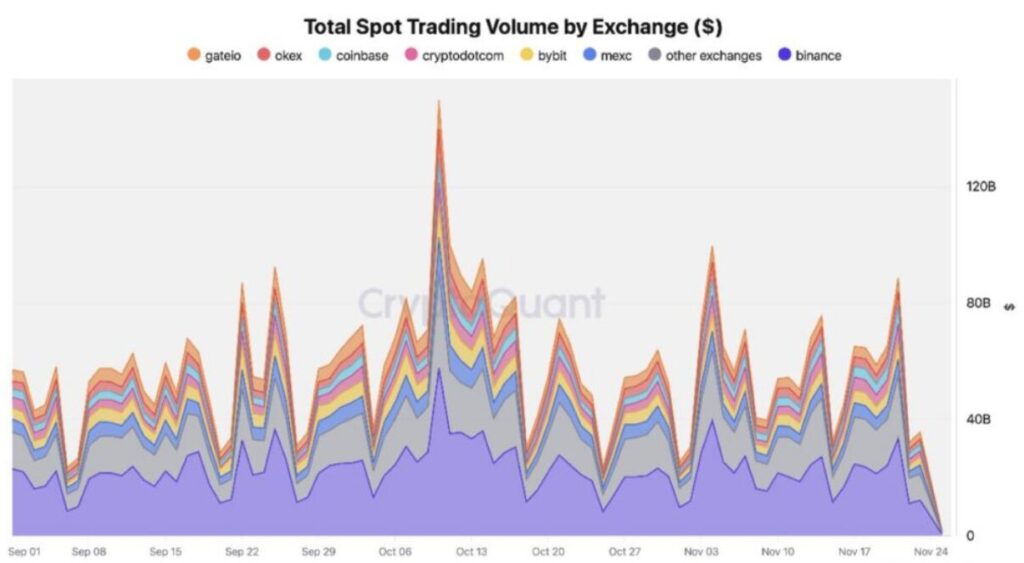
One of Barclays’ central concerns is the deterioration of spot trading volumes. Retail-driven spot markets were a primary revenue engine during the last bull cycle, especially for consumer-facing platforms such as Coinbase and Robinhood. As volatility compresses and speculative appetite wanes, transaction frequency declines accordingly.
This trend presents a structural challenge. Spot trading revenues are highly sensitive to user engagement, and without dramatic price movements, even large user bases may generate limited fee income. Barclays notes that, in the absence of a renewed catalyst, this subdued environment could persist throughout 2026.
[Historical Spot Trading Volume vs. Market Cycles (USD)]
3. Lessons from Past Catalysts: Why 2026 Looks Different
The contrast with recent years is striking. In early 2024, U.S. spot Bitcoin ETFs attracted significant inflows, providing a powerful legitimacy signal and fueling renewed optimism. Later that year, political developments supportive of digital assets further boosted sentiment. These events triggered sharp but temporary spikes in activity.
Barclays argues that such catalysts are inherently episodic. Once absorbed by the market, their effects fade. By late 2025, much of this optimism had already been priced in. Without a comparable shock in 2026, organic growth alone may be insufficient to drive another surge in participation.
4. Regulatory Clarity: Short-Term Friction, Long-Term Structure
Regulation remains one of the most consequential variables. Barclays highlights the proposed CLARITY Act in the United States, which aims to define the boundary between digital commodities and securities and clarify the respective roles of the SEC and the CFTC.
In the short term, regulatory clarification can weigh on sentiment. Compliance costs rise, experimentation slows, and certain business models may become unviable. However, Barclays emphasizes that long-term market health depends on precisely this kind of clarity. Clear jurisdictional boundaries reduce operational uncertainty and enable more confident capital allocation.
For tokenized assets in particular, regulatory certainty could unlock more standardized product launches. While this may not materially boost revenues in 2026, it lays the groundwork for scalable growth beyond that horizon.
5. Coinbase as a Case Study in Strategic Transition
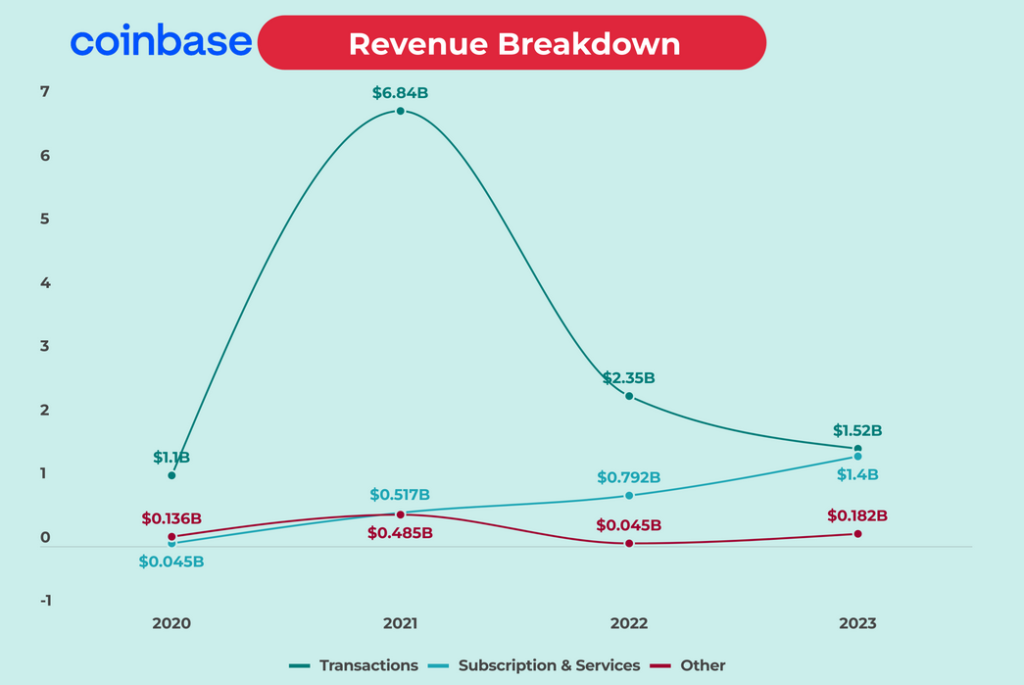
Coinbase occupies a central role in Barclays’ analysis. The exchange has actively diversified, expanding into derivatives trading and experimenting with tokenized equities. These initiatives signal a shift away from reliance on pure spot trading.
Nevertheless, Barclays remains cautious. Declining spot volumes and rising operational costs create near-term pressure. Reflecting this outlook, the bank revised its target price for Coinbase shares downward to $291. This adjustment does not imply pessimism about Coinbase’s long-term prospects, but rather a recognition that its growth initiatives may take time to materially impact earnings.
[Coinbase Revenue Composition and Stock Performance (USD)]
6. Tokenization: High Expectations, Slow Monetization
Tokenization continues to attract attention from both crypto-native firms and traditional financial institutions. Asset managers like BlackRock, along with platforms such as Robinhood, are piloting tokenized funds, equities, and settlement mechanisms.
Despite the enthusiasm, Barclays cautions against overstating near-term financial impact. Most tokenization projects remain experimental, with limited scale and unclear revenue models. In 2026, they are more likely to represent strategic investments than meaningful profit drivers.
This distinction matters for investors seeking new income opportunities. Tokenization’s promise lies in efficiency and accessibility, but its monetization curve is likely to be gradual rather than explosive.
7. Political Tailwinds Are Already Priced In
The political environment in the United States has become more favorable toward digital assets following recent elections. While this shift reduces existential regulatory risk, Barclays argues that markets have largely discounted these developments.
Legislative progress, including the CLARITY Act, must still navigate congressional approval and potential legal challenges. Only once these hurdles are cleared will tangible effects materialize. Until then, political optimism alone is unlikely to drive sustained market expansion.
8. What 2026 Means for Investors and Builders
For investors, 2026 may feel underwhelming compared with prior boom years. However, lower-volatility environments can offer strategic advantages. Valuations stabilize, speculative noise diminishes, and fundamentally sound projects have room to differentiate themselves.
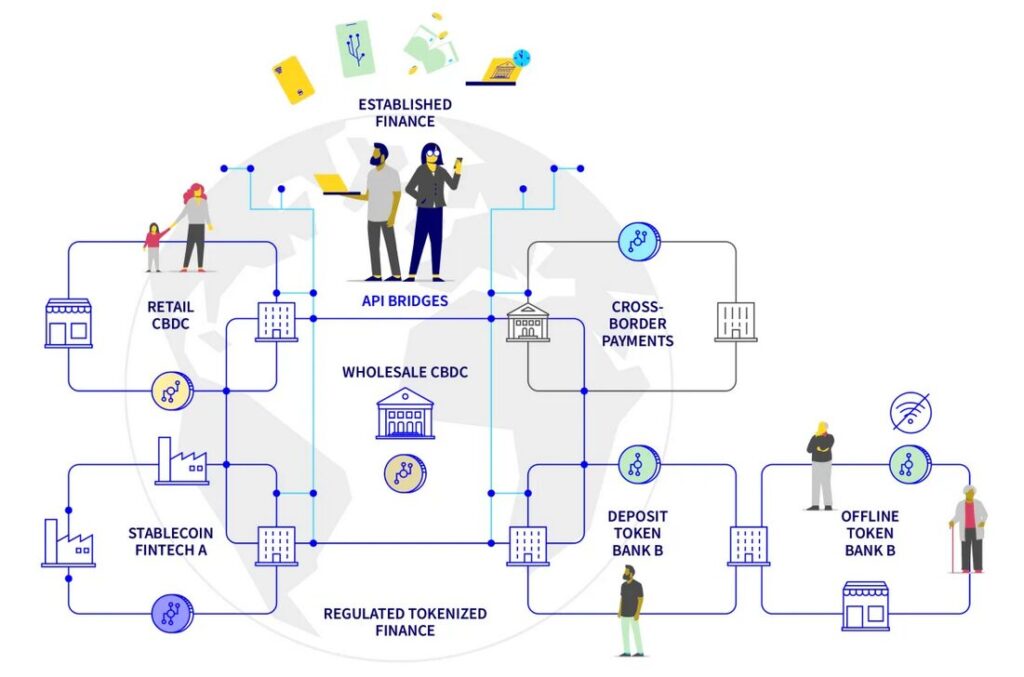
For builders and operators, the message is clear: focus on infrastructure, compliance, and real-world integration. Payment systems, custody solutions, tokenized settlement layers, and regulatory technology may not generate immediate hype, but they form the backbone of the next growth phase.
[Crypto Market Cycles and Infrastructure Focus (USD)]
9. Conclusion: A Necessary Pause Before the Next Phase
In summary, Barclays’ outlook frames 2026 not as a failure, but as a consolidation year. Retail trading activity is expected to remain subdued, and the absence of major catalysts limits speculative upside. At the same time, regulatory clarification and institutional experimentation continue quietly in the background.
For those seeking quick gains, this environment may be challenging. For those building durable systems and positioning for the next cycle, however, 2026 could prove foundational. The crypto market’s evolution increasingly resembles that of traditional finance: progress is slower, but potentially more sustainable.
