

Key Takeaways :
- In 2025, global crypto regulation shifted from uncertainty to clarity, accelerating—not restraining—market growth.
- Stablecoins emerged as the central policy focus, evolving into real payment and settlement infrastructure.
- Clear regulatory frameworks directly correlated with increased institutional participation.
- Regulated intermediaries showed significantly lower illicit activity, reinforcing compliance as a growth enabler.
- Cross-border regulatory gaps remain the largest systemic risk, as highlighted by major hacking incidents.
1. 2025 as a Structural Turning Point for Crypto Policy
For more than a decade, the global crypto market existed in a regulatory gray zone. Innovation advanced rapidly, but uncertainty around legality, licensing, and compliance consistently discouraged long-term capital and real-world integration.
According to the 2025 global policy review by TRM Labs, this era effectively ended in 2025.
Analyzing 30 jurisdictions representing over 70% of global crypto exposure, TRM Labs reached a clear conclusion: regulation did not slow crypto markets—it accelerated them. The year marked a decisive transition from debating whether crypto should be regulated to determining how regulation and markets can coexist productively.
Rather than suppressing innovation, regulatory clarity provided the foundation for maturity, risk management, and institutional confidence.
2. Stablecoins Take Center Stage in Global Policy
No digital asset category received more regulatory attention in 2025 than stablecoins.
More than 70% of jurisdictions studied by TRM Labs advanced stablecoin-specific regulatory frameworks. Policymakers increasingly recognized that stablecoins are no longer speculative instruments but functional payment rails operating on public blockchains.
Key developments included:
- The United States passing the GENIUS Act, establishing federal standards for issuance and reserves
- The European Union implementing MiCA, providing legal certainty across member states
- Parallel regulatory progress in Japan, Hong Kong, Singapore, and the UAE
These frameworks converged on three pillars:
- Issuer authorization and supervision
- High-quality reserve asset requirements
- Guaranteed redemption and transparency
Stablecoins became the preferred on-ramp for institutions because they combine price stability with blockchain efficiency, enabling cross-border payments, real-time settlement, and programmable finance.
[Global Stablecoin Regulatory Progress & Use Cases]
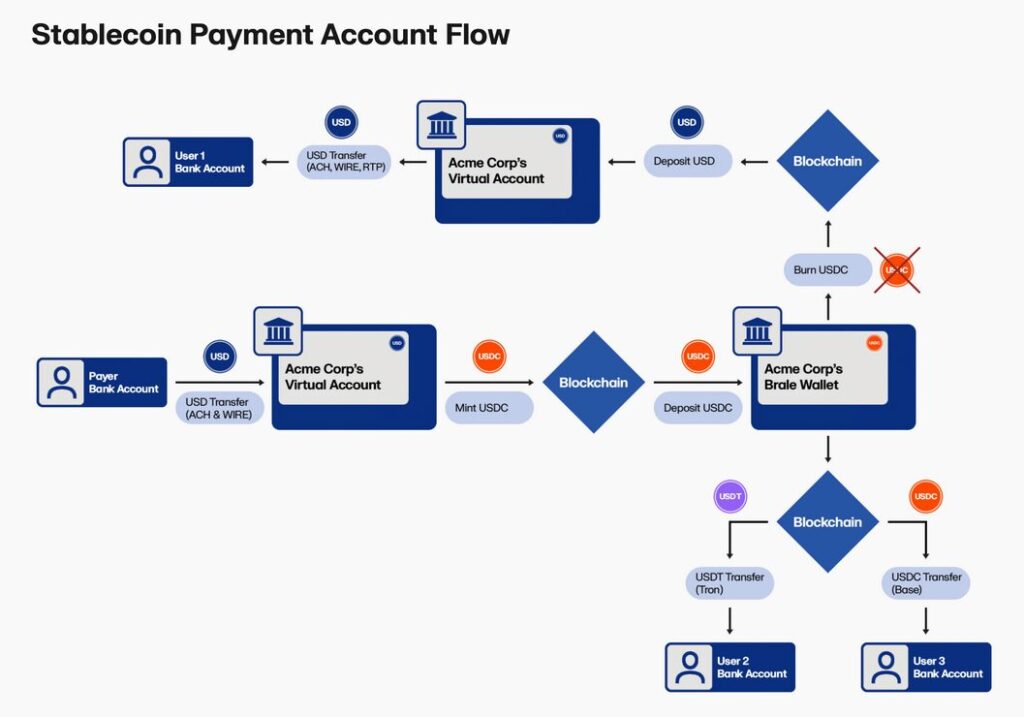
3. Regulatory Clarity Unlocks Institutional Capital
One of the most measurable outcomes of clearer regulation in 2025 was the scale of institutional entry.
TRM Labs found that nearly 80% of analyzed jurisdictions saw banks, asset managers, or payment firms announce new digital asset initiatives. Capital flowed disproportionately toward regions offering:
- Clear licensing regimes
- Predictable compliance expectations
- Permissioned yet innovation-friendly rules
The contrast was stark. Jurisdictions that restricted or ambiguously regulated crypto activity saw institutions delay or avoid entry altogether.
A symbolic shift occurred at the level of global banking standards. The Basel Committee on Banking Supervision initially planned to impose strict capital charges on crypto holdings starting January 2026. However, amid rapid stablecoin growth and resistance from major economies such as the U.S. and U.K., regulators accelerated a review of these rules.
This reconsideration signaled a broader policy realization: treating all crypto exposure as uniformly high-risk no longer reflects market reality.
4. Does Regulation Actually Reduce Illicit Activity?
One of the strongest arguments in favor of regulation comes from TRM Labs’ empirical findings.
Highly regulated Virtual Asset Service Providers (VASPs) demonstrated significantly lower rates of illicit transaction volume compared to the broader ecosystem. Rather than being sources of risk, compliant intermediaries increasingly functioned as enforcement allies.
Regulators began repositioning licensed VASPs as frontline partners in combating financial crime, leading to the expansion of real-time intelligence-sharing initiatives.
A flagship example is the Beacon Network, which by 2025 connected:
- VASPs representing over 75% of global crypto trading volume
- More than 60 law enforcement agencies across 15 countries
This model marked a departure from adversarial oversight toward collaborative compliance infrastructure.
[Regulated VASPs and Financial Crime Reduction]

5. The Persistent Challenge of Borderless Assets
Despite progress, 2025 also exposed the limits of national regulation in a borderless financial system.
International bodies such as Financial Action Task Force and Financial Stability Board warned that inconsistent regulatory coverage continues to create exploitable gaps.
This risk became tangible during the early-2025 Bybit hacking incident. Approximately $1.5 billion worth of Ethereum was stolen by North Korea–linked actors and laundered through:
- Unlicensed OTC brokers
- Cross-chain bridges
- Decentralized exchanges operating outside regulatory reach
The incident underscored a critical weakness: regulated on-ramps are no longer the weakest link—unregulated infrastructure is.
6. What 2025 Ultimately Represents
The defining question of 2025 was no longer whether crypto should be regulated. Instead, policymakers focused on how to regulate without extinguishing innovation.
The answer, as evidenced by market outcomes, became clear:
- Regulatory clarity attracts capital
- Compliance infrastructure reduces systemic risk
- Stablecoins bridge traditional finance and blockchain networks
- Institutions follow rules, not hype
Rather than constraining growth, well-designed regulation enabled crypto to move closer to its long-promised role as global financial infrastructure.
Conclusion: From Speculation to Financial Plumbing
2025 will likely be remembered as the year crypto policy matured.
The industry did not lose momentum under regulation—it gained direction. Stablecoins evolved into payment infrastructure, institutions entered with conviction, and regulators shifted from gatekeepers to system architects.
The unresolved challenge remains global coordination. Until regulatory coverage extends to all critical infrastructure layers, risks will persist. Yet the trajectory is unmistakable: crypto has entered its regulated, institutional, and operational era.
