

Main Points :
- Bitcoin’s drop below $80,000 was not triggered by a single shock, but by a delayed macro risk-off reaction combined with forced deleveraging.
- Over $2.5 billion in liquidations marked one of the largest liquidation events in crypto history, concentrated during low-liquidity weekend trading.
- Three macro factors converged:
(1) weakening confidence in the AI-led tech narrative,
(2) uncertainty over future Federal Reserve leadership, and
(3) violent unwinding of speculative positions in precious metals. - Despite bearish conditions, this cycle differs fundamentally from 2022: no structural failures, no major insolvencies, and far stronger market infrastructure.
- If macro clarity returns, late 2026 may mark a renewed phase of institutional engagement and price discovery.
Introduction: A Crash Without a Single Villain
In early February 2026, Bitcoin fell below $80,000 for the first time since the April 2025 “Trump tariff shock.”
Within days, the crypto market experienced $2.55 billion in liquidations, ranking among the top ten largest forced unwind events in crypto history.
According to leading crypto market maker Wintermute, this was not a panic-driven collapse caused by a single headline. Instead, it was the result of a “delayed risk-off” process, where multiple macroeconomic stressors accumulated quietly before detonating through leverage.
For investors seeking new digital assets, yield opportunities, or practical blockchain applications, understanding this distinction is critical. Markets driven by structural failure behave very differently from markets undergoing organic deleveraging.
Section 1: The Scale of the Liquidation Event
Bitcoin’s decline triggered a wave of forced liquidations totaling approximately $2.55 billion, primarily in perpetual futures and leveraged derivatives
[Bitcoin Liquidations by Time and Volume (USD)]
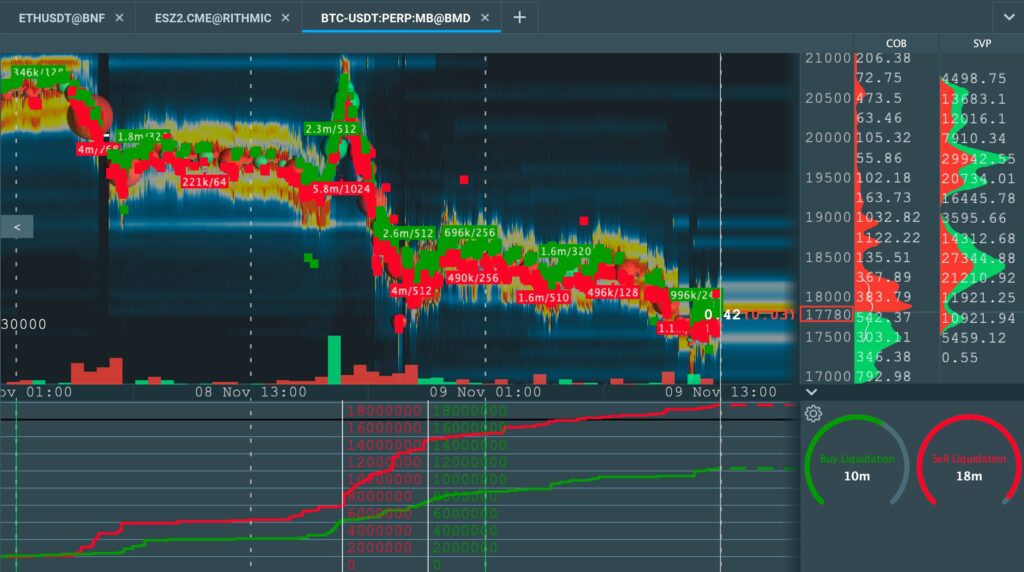
Wintermute emphasizes that the timing mattered as much as the magnitude.
Because macro signals emerged gradually during the week, actual selling pressure was delayed until the weekend, when market depth was thinner and order books more fragile.
This liquidity asymmetry amplified price impact, turning what might have been an orderly correction into a violent cascade.
Section 2: Macro Factor One – The Cracks in the AI Narrative
The first pillar to crack was the global AI-driven growth narrative, symbolized by the underperformance of the so-called “Magnificent Seven” U.S. technology stocks.
As equity markets began to question AI-related earnings expectations, global risk appetite deteriorated. Crypto, still widely treated as a high-beta risk-on asset, absorbed the shock disproportionately.
This matters because Bitcoin’s recent valuation premium had increasingly relied on:
- institutional correlation with tech equities,
- AI-linked infrastructure narratives (data centers, energy, compute),
- and speculative positioning aligned with growth expectations.
Once that story weakened, leverage built on top of it became unstable.
Section 3: Macro Factor Two – Federal Reserve Leadership Uncertainty
The second destabilizing force came from Washington.
Markets were caught off guard by the unexpected nomination of Kevin Warsh as the next Federal Reserve Chair. Regardless of one’s view on his policy stance, the key issue was uncertainty.
For leveraged markets, uncertainty is toxic.
Crypto traders, already exposed through futures and options, began to reduce risk. However, much of this repositioning happened synthetically at first—through hedging and derivatives—before spilling into spot markets later.
This lag explains why price action felt sudden, even though stress had been building for days.
Section 4: Macro Factor Three – The Precious Metals Flash Crash
Perhaps the most overlooked catalyst was the dramatic unwind in precious metals.
Silver plunged as much as 26% intraday, while gold also suffered sharp losses. At one point, COMEX circuit breakers were triggered following a 10% price move within an hour.
[Gold & Silver Intraday Volatility vs Bitcoin]
Wintermute argues this was not a collapse of the “currency debasement” thesis, but rather a margin-call-driven liquidation of excessively crowded speculative positions.
As traders scrambled to meet margin requirements, capital was pulled from all liquid markets—including crypto—regardless of long-term conviction.
Section 5: Why This Is a Bear Market — But Not a Structural One
Wintermute openly describes the current environment as a bear market, citing:
- persistently weak altcoin performance,
- narrow and short-lived rallies,
- deteriorating sentiment across social platforms,
- and underperformance relative to other asset classes in both up and down markets.
However, the firm stresses a crucial distinction.
This is not comparable to 2022, which was driven by:
- catastrophic counterparty failures,
- insolvencies (FTX, Terra/Luna, Three Arrows Capital),
- and broken financial plumbing.
Instead, today’s downturn reflects:
- macro regime shifts,
- changing investment narratives,
- and voluntary leverage reduction, not forced bankruptcy.
Section 6: Market Structure Has Quietly Improved
Behind the price action, the crypto ecosystem looks fundamentally stronger than in previous cycles:
- Stablecoin adoption continues to expand.
- Custody, settlement, and compliance infrastructure is more robust.
- Institutional participation has paused, not vanished.
Order-book data observed by Wintermute suggests that institutional buyers stepped back, but did not exit permanently. At current price levels, new marginal buyers are scarce, yet forced sellers have largely been cleared.
This creates the conditions for a prolonged price discovery phase, rather than systemic collapse.
Section 7: Implications for Builders and Yield Seekers
For readers interested in practical blockchain use, this phase matters more than hype cycles.
Historically, periods of low conviction and compressed volatility have been when:
- infrastructure companies were built,
- real yield protocols gained traction,
- and non-speculative use cases quietly matured.
For yield-focused participants, leverage compression often:
- reduces unsustainable yields,
- but improves counterparty quality,
- and highlights genuinely productive on-chain activity.
Section 8: Outlook – Why Late 2026 Matters
Wintermute’s base case assumes that once:
- macro uncertainty fades,
- Federal Reserve policy direction becomes clearer,
- and capital markets stabilize,
institutional interest could return rapidly in late 2026.
Crucially, because market structure remains intact, any renewed uptrend may produce a cleaner and more decisive breakout than post-2022 recoveries.
Conclusion: A Reset, Not a Ruin
The February 2026 Bitcoin crash was dramatic, but not destructive.
It marked:
- the unwinding of excess leverage,
- the end of a fragile narrative stack,
- and the transition into a more sober phase of price discovery.
For investors, builders, and operators focused on long-term value and real utility, this environment is less a warning—and more an invitation.
