

Main Points :
- Expectations of a Bank of Japan (BoJ) interest rate hike are strengthening the USD and weighing on global risk assets, including cryptocurrencies.
- Bitcoin, Ethereum, XRP, and Solana are all showing technically fragile structures, with bearish momentum dominating in the short term.
- Key moving averages (20-day EMA, 50-day SMA) are acting as critical inflection points for trend continuation or reversal.
- Despite near-term weakness, long-term adoption narratives and institutional infrastructure remain intact, offering selective opportunities for strategic accumulation.
1. Macro Backdrop: Why the Bank of Japan Matters to Crypto Markets
The Bank of Japan’s gradual shift away from ultra-loose monetary policy has become one of the most closely watched macro themes in global markets. For years, Japan served as an anchor of global liquidity through yield curve control and near-zero interest rates. As speculation grows around further rate hikes, capital is increasingly repatriated into yen-denominated assets, strengthening the yen and pressuring dollar-denominated risk assets.
For cryptocurrencies—still largely treated as high-beta risk assets—this environment is particularly challenging. Rising real yields globally reduce the relative attractiveness of non-yielding assets like Bitcoin, while tighter liquidity conditions suppress speculative flows into altcoins.
Importantly, this is not merely a Japan-specific issue. The BoJ’s shift reinforces a broader global narrative: the era of synchronized monetary easing is over, and crypto markets must now operate in a world of selective, conditional liquidity.
2. Bitcoin (BTC): Testing the Limits of the Uptrend
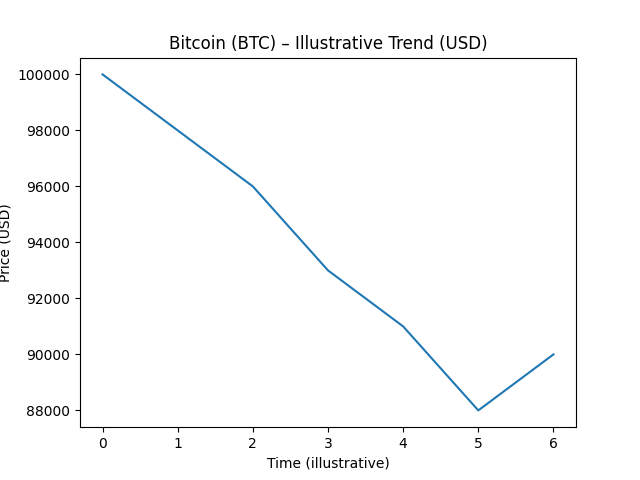
Bitcoin (BTC) recently bounced from an ascending trendline, but bulls failed to reclaim the 20-day exponential moving average (EMA) at approximately $90,720. This failure is technically significant.
The 20-day EMA has begun to slope downward, and the Relative Strength Index (RSI) remains in negative territory, indicating that bearish momentum is strengthening. If BTC closes below the rising trendline, a sharp drop toward $84,000 becomes likely, followed by a potential retest of the November 21 low near $80,600.
On the upside, a strong rebound that pushes BTC above the 20-day EMA would suggest aggressive dip-buying. In that case, price could advance toward the 50-day simple moving average (SMA) around $95,985. However, the zone between $96,000 and $100,000 is expected to attract heavy selling pressure. A decisive breakout above this zone would signal the end of the corrective phase and a possible resumption of the broader bull trend.
From a structural perspective, Bitcoin remains fundamentally strong. Institutional custody solutions, spot ETFs, and sovereign-level discussions around Bitcoin reserves continue to develop. However, price action suggests patience is required in the near term.
3. Ethereum (ETH): Sellers Defend the High Ground
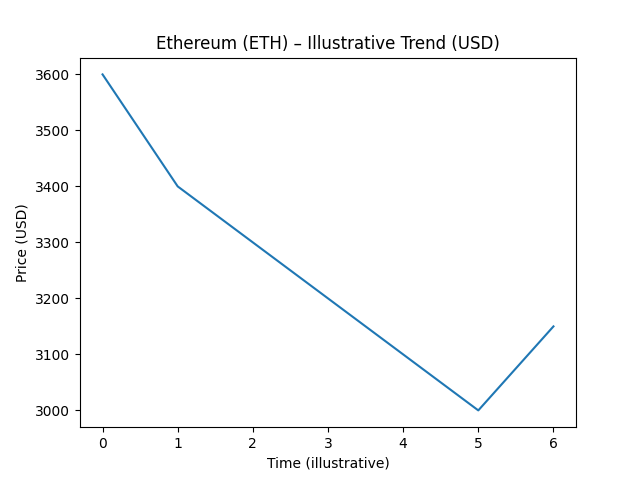
Ethereum (ETH) briefly moved above its 20-day EMA at approximately $3,106, but long upper wicks on the candlesticks reveal persistent selling pressure at higher levels.
Bears are now attempting to push ETH toward $2,907, a level that serves as immediate support. A breakdown below this level could send ETH into a deeper support zone between $2,716 and $2,623. This range is critical, as it represents a confluence of prior consolidation and longer-term moving averages.
The bearish outlook would be invalidated in the short term if ETH rebounds sharply and reclaims $3,350, a key breakdown level. Such a move would suggest a local bottom and open the door for a rally toward $3,658, followed by $3,918.
Beyond price action, Ethereum’s long-term narrative remains compelling. The continued growth of Layer 2 networks, real-world asset (RWA) tokenization, and institutional staking frameworks suggests that ETH’s utility-driven demand may reassert itself once macro pressure eases.
4. XRP: Weak Momentum Inside a Descending Channel
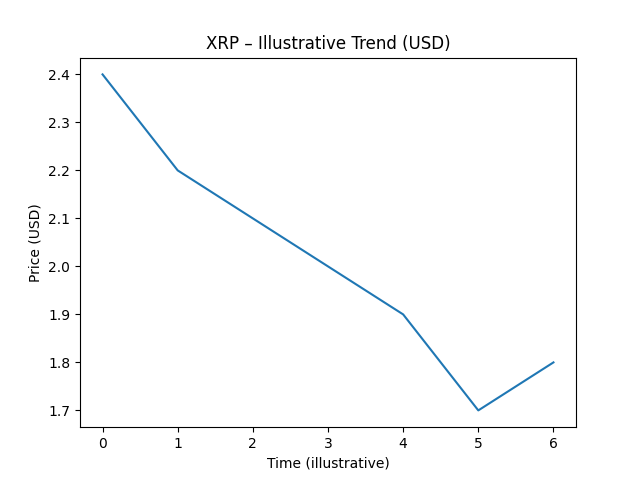
XRP continues to trade below its 20-day EMA at approximately $2.06, signaling a lack of aggressive buying interest. The asset remains confined within a descending channel, with bears maintaining control.
A move toward the channel’s support line appears likely, with $1.61 emerging as a critical level where buyers are expected to defend aggressively. If this level fails, XRP could slide toward its October 10 low near $1.25.
For bullish momentum to return, XRP must reclaim the 50-day SMA at around $2.21. Such a move could trigger a rally toward the descending trendline, though selling pressure is expected to re-emerge there.
From a strategic standpoint, XRP’s appeal lies less in short-term technicals and more in cross-border payment infrastructure and regulatory clarity developments. As real-world adoption expands, volatility-driven drawdowns may present asymmetric long-term opportunities.
5. Solana (SOL): Compression Before Expansion
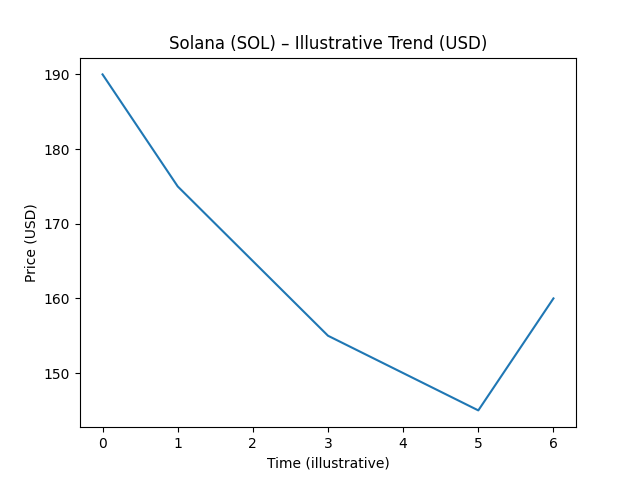
Solana (SOL) is currently forming a symmetrical triangle pattern, reflecting indecision between buyers and sellers. Such patterns typically precede sharp directional moves.
If price breaks below the triangle’s support line, bears would seize control, potentially driving SOL down toward the strong support near $95. This level is psychologically and structurally significant.
Conversely, a breakout above the triangle’s resistance line would signal a bullish reversal attempt. In that case, SOL could rally toward $172, with a further upside target near $189.
Solana’s ecosystem strength—particularly in DeFi, NFTs, and high-throughput consumer applications—continues to attract developers. However, technical confirmation is required before positioning aggressively.
6. Strategic Implications for Crypto Investors and Builders
For readers seeking new crypto assets, revenue opportunities, or practical blockchain applications, the current environment demands selectivity and discipline.
Short-term traders should respect bearish technical signals and manage risk carefully. Medium- to long-term participants may view these pullbacks as structured accumulation phases, particularly for assets with strong developer activity and institutional alignment.
From a business perspective, tightening monetary conditions reinforce the importance of real utility, sustainable token economics, and compliance-ready infrastructure. Projects that rely purely on speculative liquidity will struggle, while those solving real-world problems may quietly strengthen their foundations.
7. Conclusion: Volatility as a Filter, Not a Failure
The prospect of further Bank of Japan rate hikes adds another layer of complexity to an already challenging macro environment. In the short term, this pressure is likely to reinforce downside risks across major cryptocurrencies.
Yet, volatility should not be mistaken for structural weakness. On the contrary, periods like this often act as filters—removing excess speculation while leaving behind stronger, more resilient networks.
For investors, builders, and institutions alike, the message is clear: the next phase of crypto growth will favor patience, quality, and real-world integration.
