

Key Takeaways :
- Short-term Bitcoin price pressure is driven by rising whale activity and increased exchange inflows
- Corporate accumulation—led by MicroStrategy—is structurally absorbing supply
- ETF flows remain weak, with rotation (e.g., Grayscale → BlackRock) dominating over net inflows
- The market is fragmented: retail investors selling, corporations accumulating, institutions neutral
- Bitcoin is not “weak”—it is transitioning into a new ownership and supply regime
1. A Market That Refuses to Break Out
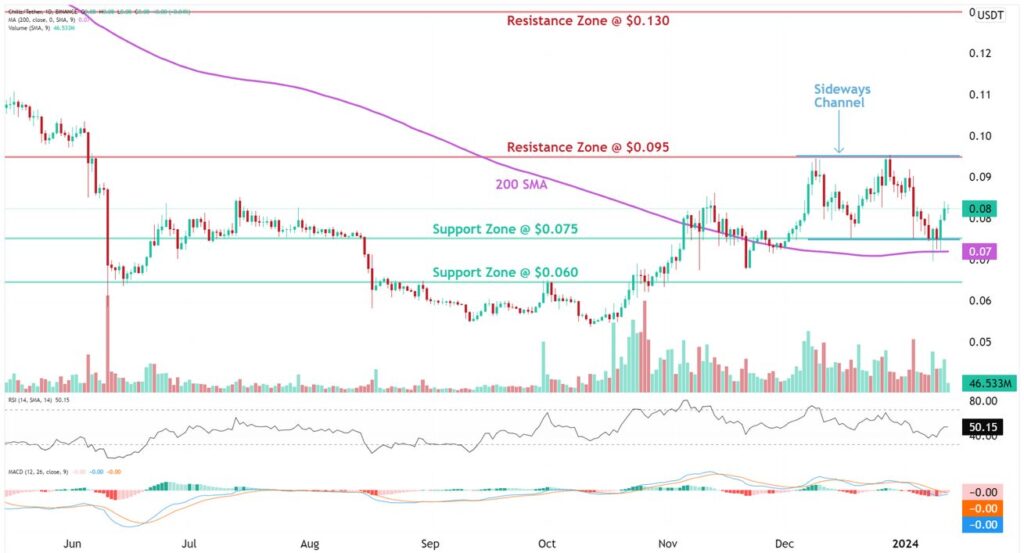
At first glance, the Bitcoin market appears stagnant. Prices hovering around the $70,000 level suggest hesitation, if not outright weakness. Despite repeated attempts to break higher, Bitcoin has struggled to establish a clear upward trend.
This stagnation is not accidental. It reflects a deeper imbalance in short-term supply and demand. Market participants observing only price action may conclude that bullish momentum has faded. However, such a conclusion overlooks the structural changes unfolding beneath the surface.
The current phase resembles a compression zone—where opposing forces are actively reshaping market dynamics. Rather than a lack of demand, what we are witnessing is a redistribution of who holds Bitcoin, and under what conditions.
2. Exchange Whale Ratio: A Signal of Short-Term Selling Pressure
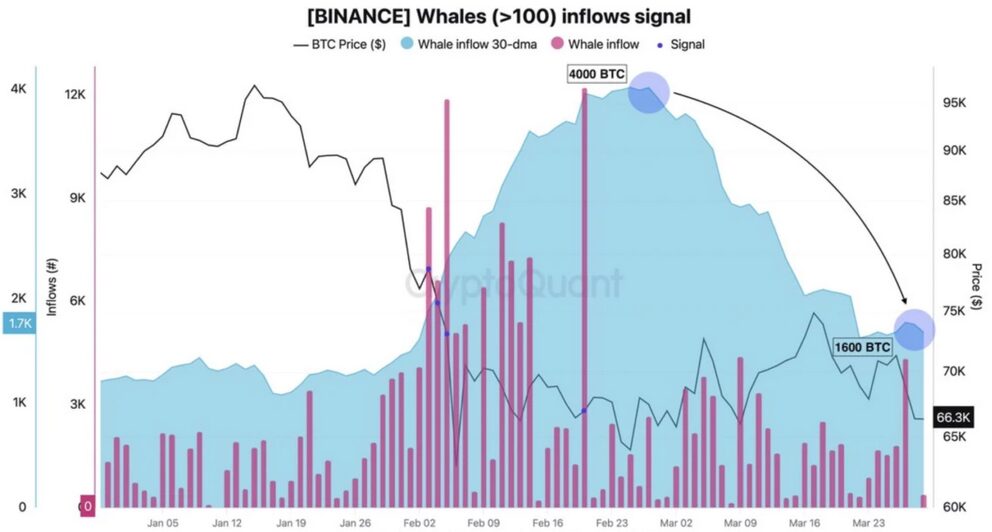
One of the clearest indicators of short-term pressure is the Exchange Whale Ratio—a metric that tracks the proportion of large transactions flowing into exchanges.
An increase in this ratio typically implies that large holders (“whales”) are moving Bitcoin onto exchanges, often with the intent to sell. In low-liquidity environments, such behavior can significantly impact price, amplifying volatility and suppressing upward movement.
Recent data shows a noticeable rise in this ratio, aligning closely with Bitcoin’s inability to sustain rallies. This suggests that whales are actively distributing into strength, effectively capping price advances.
However, it is critical to understand that whale selling does not necessarily indicate bearish long-term sentiment. In many cases, it reflects profit-taking, portfolio rebalancing, or tactical positioning.
3. Corporate Accumulation: The Silent Absorption of Supply
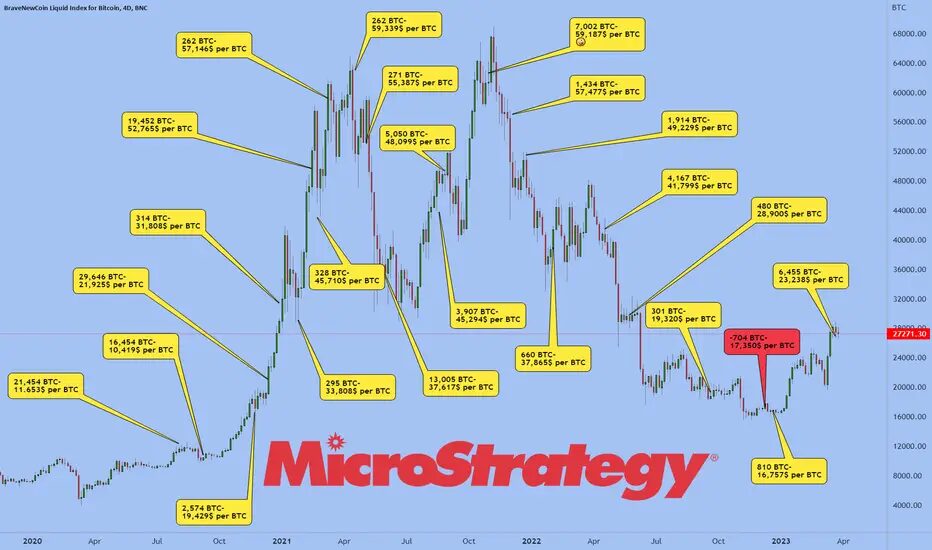
While whales dominate short-term flows, a fundamentally different force is shaping the long-term market: corporate accumulation.
In Q1 2026 alone, publicly listed companies accumulated approximately 62,000 BTC. This is not speculative flow—it is verifiable through filings and disclosures. At the center of this movement is MicroStrategy (often branded as Strategy), which continues to raise capital via equity and debt markets to purchase Bitcoin.
This approach introduces a new paradigm:
- Bitcoin as a corporate treasury reserve asset
- Accumulation funded through financial engineering (debt/equity issuance)
- Long-term holding with minimal intention to sell
Unlike traditional long-term holders, these entities operate with structured capital strategies. Their purchases are not reactive to short-term price movements but are part of a broader balance sheet transformation.
This creates structural demand—a persistent bid that absorbs supply regardless of market noise.
4. ETF Flows: Rotation Without Conviction

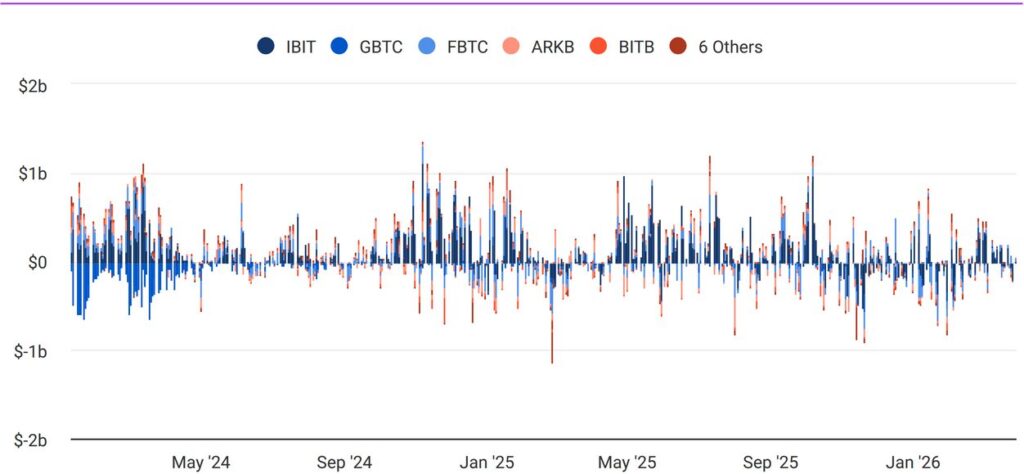
Institutional investors, often viewed as a unified force, are in reality fragmented.
Bitcoin ETFs—particularly those issued by BlackRock and legacy products like Grayscale—show a pattern of rotation rather than net inflow.
Capital has been shifting:
- From higher-fee, legacy products (e.g., GBTC)
- To lower-cost, more efficient vehicles (e.g., IBIT)
This movement creates the illusion of activity, but in reality, net new capital entering Bitcoin via ETFs remains limited.
As a result:
- ETFs are not currently a strong driver of price appreciation
- Institutional conviction appears cautious or neutral
- The market lacks a unified directional push from large funds
5. A Fragmented Market Structure
The Bitcoin market today is not a single cohesive system—it is a multi-layered structure with conflicting incentives:
Short-Term Layer
- Dominated by whales and traders
- High activity on exchanges
- Focused on liquidity, volatility, and tactical positioning
Mid-Term Layer
- ETFs and institutional allocators
- Currently neutral, driven by rotation rather than accumulation
Long-Term Layer
- Corporations accumulating Bitcoin
- Structural, persistent demand
- Supply absorption independent of short-term price
Retail Layer
- Net sellers in aggregate
- Often reacting to volatility and uncertainty
This fragmentation explains why price action appears inconsistent. Each group operates under different time horizons and motivations, leading to a market that lacks clear direction in the short term but is undergoing deep structural change.
6. The Transition Thesis: Not Weakness, But Transformation
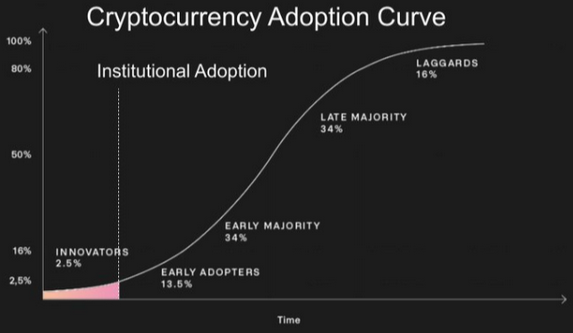
The most important insight is this: Bitcoin is not weak—it is transitioning.
The apparent lack of upward momentum is the result of:
- Short-term selling pressure (whales, retail)
- Offset by long-term accumulation (corporations)
- Neutralized by institutional indecision (ETF rotation)
This creates a temporary equilibrium where price stagnates, even as underlying supply dynamics tighten.
Historically, such phases often precede significant re-pricing events. When structural buyers continue to absorb supply while weaker hands exit, the market gradually shifts toward scarcity.
Over time, this can lead to:
- Reduced circulating supply
- Increased price sensitivity to demand shocks
- Stronger foundations for sustained bull markets
7. Practical Implications for Crypto Investors and Builders
For readers seeking new crypto assets, revenue opportunities, and practical blockchain applications, this evolving structure carries important implications:
1. Look Beyond Price
Price alone is no longer a sufficient indicator. Understanding who is buying and why is critical.
2. Follow Structural Demand
Corporate accumulation represents a durable trend. Projects that align with institutional and corporate use cases may benefit from similar dynamics.
3. Expect Volatility in Transition Phases
Fragmented markets tend to produce choppy price action. This is not necessarily bearish—it is transitional.
4. Identify Emerging Narratives
The shift toward Bitcoin as a treasury asset may extend to:
- Other cryptocurrencies
- Tokenized assets
- Stablecoin-based corporate finance
Conclusion: A Market Redefined by Its Participants
Bitcoin’s current market cannot be understood through traditional bullish or bearish frameworks. Instead, it must be viewed through the lens of participant transformation.
Whales are selling. Retail investors are cautious. ETFs are indecisive. But corporations are buying—and doing so with conviction and structure.
This duality creates tension in the short term, but also lays the groundwork for a fundamentally different market in the long term.
The key takeaway is simple yet profound:
Bitcoin is not failing to rise—it is changing hands.
And in that transition lies the foundation for its next phase.
