
Key Takeaways :
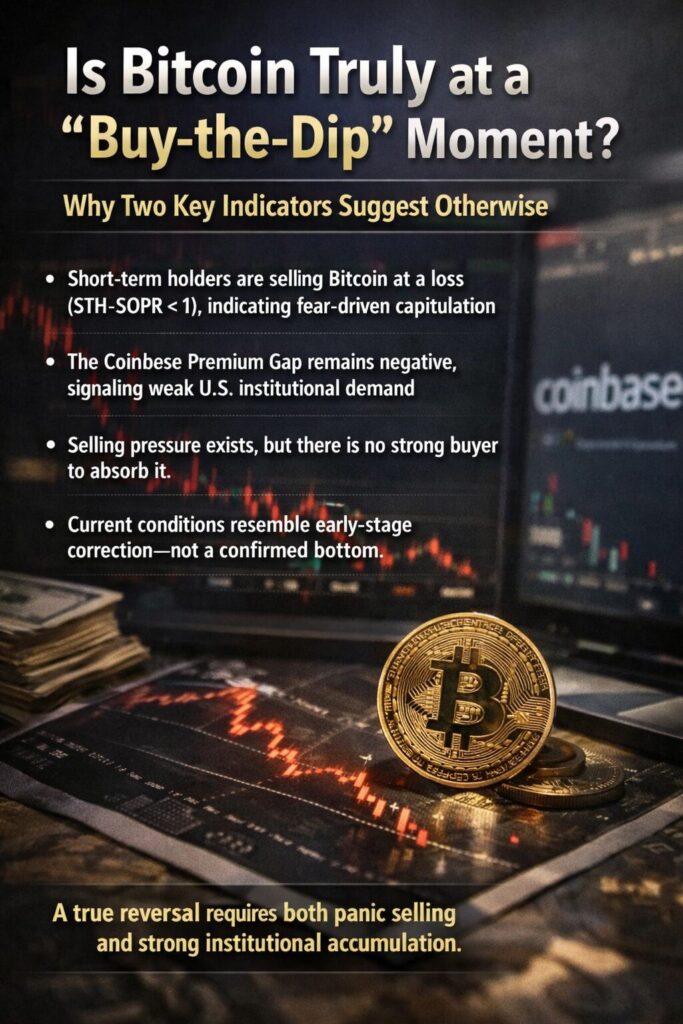
- Short-term holders are selling Bitcoin at a loss (STH-SOPR < 1), indicating fear-driven capitulation
- The Coinbase Premium Gap remains negative, signaling weak U.S. institutional demand
- Selling pressure exists, but there is no strong buyer to absorb it
- Current conditions resemble early-stage correction—not a confirmed bottom
- A true reversal requires both panic selling and strong institutional accumulation
1. A Critical Turning Point for Bitcoin
The current state of the cryptocurrency market—particularly Bitcoin—raises a fundamental question: Are we witnessing a bottom, or is this merely a continuation of a broader correction?
Bitcoin, often quoted around key psychological levels (e.g., $60,000–$70,000 in recent cycles), has entered a phase of uncertainty. While retail investors often interpret price dips as buying opportunities, professional and institutional participants rely heavily on on-chain indicators to validate such assumptions.
Among the most reliable tools in this regard are:
- STH-SOPR (Short-Term Holder Spent Output Profit Ratio)
- Coinbase Premium Gap
When analyzed together, these indicators provide a deeper understanding of market structure—not just price direction.
2. Understanding STH-SOPR: The Psychology of Weak Hands
The STH-SOPR metric reflects whether short-term holders—typically those holding Bitcoin for less than 155 days—are selling at a profit or a loss.
- Above 1.0 → Selling at profit (bullish confidence)
- Below 1.0 → Selling at loss (panic or capitulation)
Currently, STH-SOPR is fluctuating below 1.0, meaning that a significant portion of short-term holders are exiting their positions at a loss.
What does this mean?
This behavior is commonly associated with:
- Fear-driven selling
- Loss of short-term conviction
- Market cleansing of “weak hands”
Historically, such conditions have often appeared during the early stages of bottom formation, but not necessarily at the final bottom.
STH-SOPR Trend (Below 1.0 Indicates Loss Selling Phase)
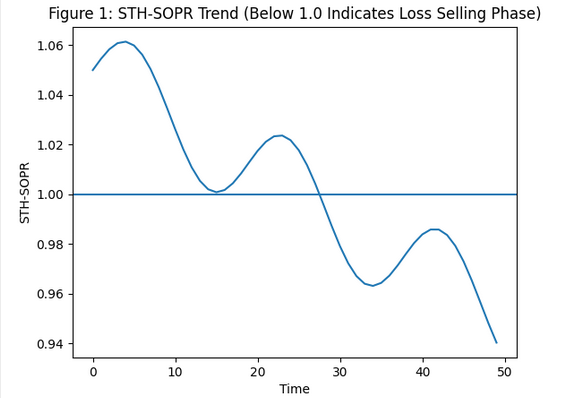
(Suggested visualization: line chart showing SOPR crossing below 1.0 threshold)
3. Coinbase Premium Gap: The Missing Institutional Demand
While retail capitulation is occurring, the second key metric tells a very different story.
The Coinbase Premium Gap measures the price difference between Coinbase and other global exchanges such as Binance.
- Positive Premium → Strong U.S. buying demand (often institutional)
- Negative Premium → Weak demand or selling pressure
At present, the Coinbase Premium Gap remains firmly negative.
Why is this critical?
The U.S. market—especially post-ETF approval cycles—has become a dominant force in Bitcoin price movements. Institutional flows, including hedge funds and asset managers, often enter through Coinbase due to regulatory familiarity.
A negative premium suggests:
- Lack of aggressive institutional accumulation
- Absence of “strong hands” stepping in
- Weak support at current price levels
Coinbase Premium Gap (Negative Zone Indicates Weak U.S. Demand)
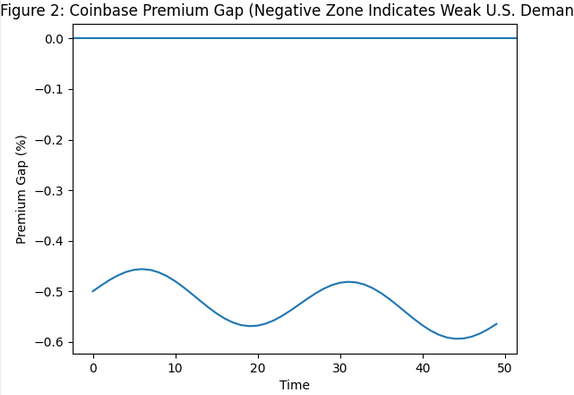
(Suggested visualization: bar chart or line graph showing sustained negative premium)
4. The Structural Imbalance: Selling Without Buyers
When combining both indicators, the current market structure becomes clearer:
- Short-term holders are selling at a loss
- Institutional demand is not absorbing the supply
This creates a supply-demand imbalance, where selling pressure exists but lacks sufficient counterforce.
Why this matters
A true market bottom typically forms when:
- Panic selling reaches its peak
- Strong buyers step in to absorb supply
At present, only the first condition is met.
This suggests that the market is still in a distribution or correction phase, rather than a confirmed accumulation phase.
5. Historical Context: What a True Bottom Looks Like
Looking back at previous Bitcoin cycles:
Typical bottom formation includes:
- SOPR dipping below 1.0 (capitulation phase)
- Coinbase Premium turning positive (institutional entry)
- Volume expansion on accumulation
- Price stabilization with higher lows
In contrast, today’s environment lacks:
- Sustained positive premium
- Clear institutional inflows
- Strong price support levels
6. The Role of Institutional Capital in Modern Crypto Cycles
The structure of the Bitcoin market has evolved significantly.
In earlier cycles (2013–2017), retail investors dominated price movements. However, since 2020 and especially after the introduction of Bitcoin ETFs, institutional capital has become the primary driver.
This shift means:
- Bottoms are less likely to form without institutional participation
- On-chain metrics tied to institutional behavior are more critical than ever
- Retail-only rallies are less sustainable
Therefore, the absence of U.S.-led demand is not a minor signal—it is a major structural warning.
7. Broader Market Trends Supporting This View
Recent developments across the crypto market further reinforce this cautious outlook:
1. ETF Flow Volatility
Bitcoin ETF inflows have shown inconsistency, indicating that institutional conviction is not yet stable.
2. Macro Uncertainty
Global interest rates, liquidity tightening, and geopolitical risks continue to suppress risk-on assets, including Bitcoin.
3. Rotation into Altcoins
Selective capital rotation into altcoins (e.g., AI-related tokens, L2 ecosystems) suggests fragmented liquidity rather than broad market strength.
8. What Needs to Change for a Bullish Reversal?
For Bitcoin to transition from correction to recovery, the following conditions are critical:
1. Coinbase Premium Turns Positive
This would signal renewed U.S. demand and institutional accumulation.
2. SOPR Recovery Above 1.0
Indicates that sellers are once again realizing profits, reflecting improved market confidence.
3. Volume Expansion on Upward Moves
Confirms that price increases are supported by real demand.
9. Strategic Implications for Investors
For investors seeking new opportunities, the current environment requires caution.
Short-Term Strategy
- Avoid aggressive “bottom catching”
- Monitor on-chain indicators rather than price alone
- Focus on risk management
Mid-to-Long Term Strategy
- Accumulate gradually during confirmed structural shifts
- Watch for institutional entry signals
- Diversify into emerging sectors with real utility
10. Conclusion: Not a Bottom—Yet
The current Bitcoin market presents a nuanced picture.
While fear-driven selling suggests that a bottoming process may have begun, the absence of institutional demand indicates that the process is incomplete.
In simple terms:
Selling pressure exists—but there is no strong buyer yet.
Until the Coinbase Premium turns positive and demand visibly absorbs supply, Bitcoin is likely to remain in a corrective phase rather than entering a full recovery.
For investors, patience and disciplined analysis remain the most valuable assets in this stage of the cycle.
