
Main Points :
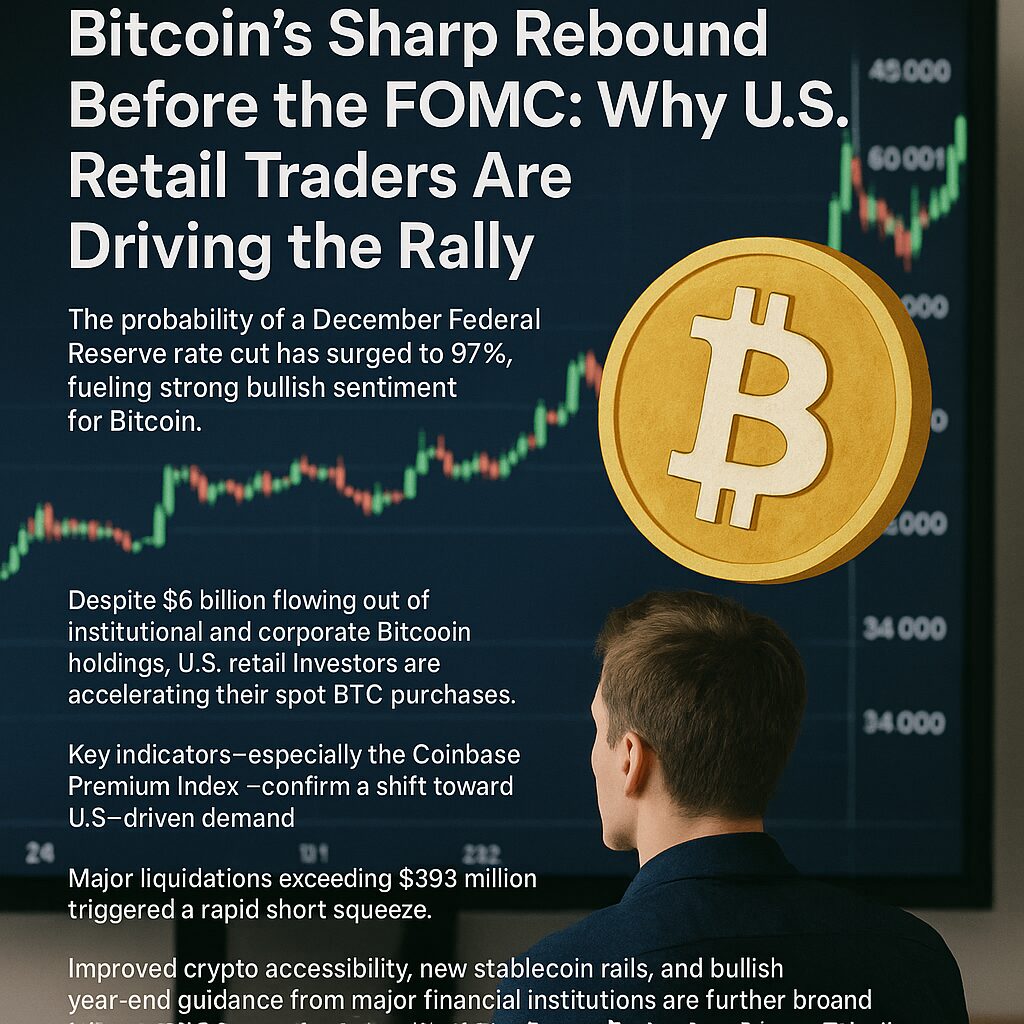
- The probability of a December Federal Reserve rate cut has surged to 97%, fueling strong bullish sentiment for Bitcoin.
- Despite $6 billion flowing out of institutional and corporate Bitcoin holdings, U.S. retail investors are accelerating their spot BTC purchases.
- Key indicators—especially the Coinbase Premium Index—confirm a shift toward U.S.-driven demand.
- Major liquidations exceeding $393 million triggered a rapid short squeeze.
- Improved crypto accessibility, new stablecoin rails, and bullish year-end guidance from major financial institutions are further boosting demand.
- Market positioning suggests the potential for a strong December “Santa Rally.”
I. Introduction: A Rally Triggered by Macro Momentum
Bitcoin surged by nearly 4%, approaching $95,000, during the first eight hours of U.S. trading on December 9. This rally occurred ahead of the Federal Open Market Committee (FOMC) decision, as expectations for a 0.25% rate cut strengthened dramatically.
Prediction market Kalshi now prices the rate-cut probability at 97%, supported by over $28.9 million (≈ $28.9M USD) staked on the outcome. This marks a sharp reversal from November, when the probability fell to 32.9% after concerns about economic deterioration from the prolonged government shutdown.
The macro backdrop is setting the stage for increased risk-asset appetite, but what makes this rally notable is that institutional players are not the ones buying. Instead, U.S. retail investors are becoming the primary force behind Bitcoin’s upward momentum.
II. Liquidations: How the Short Squeeze Fueled BTC’s Surge
Bitcoin’s strong acceleration coincided with widespread liquidations. According to Coinglass, $393 million worth of positions were liquidated:
- Short liquidations: $310 million
- Long liquidations: $84 million
Over $286 million of these liquidations occurred within just four hours, illustrating intense market stress driven by shifting rate expectations.
This liquidation cluster mirrors previous macro-driven short squeezes where leveraged traders positioned for downside were forced to exit rapidly, amplifying the price rally.
III. Institutional Outflows vs. Retail Demand: A Surprising Divergence
Despite BTC’s rebound from the November low of $82,000, institutional behavior has diverged sharply from that of retail investors.
Institutional Holdings Are Declining
From October 11 to December 9:
- Institutional, ETF, and trust holdings fell from 1,400,140 BTC to 1,335,301 BTC.
- Total reduction: 64,839 BTC (≈ $6 billion at current prices).
Even major corporate holders such as Strategy slowed their accumulation—purchasing only 130 BTC on December 1, the smallest buy since March.
This means the rally is not being driven by large balance-sheet expansions.
Coinbase Premium Index Turns Positive
CryptoQuant’s Coinbase Premium Index—which compares BTC prices on Coinbase vs. Binance—jumped from −0.11 to +0.02, signaling strong U.S. buying pressure.
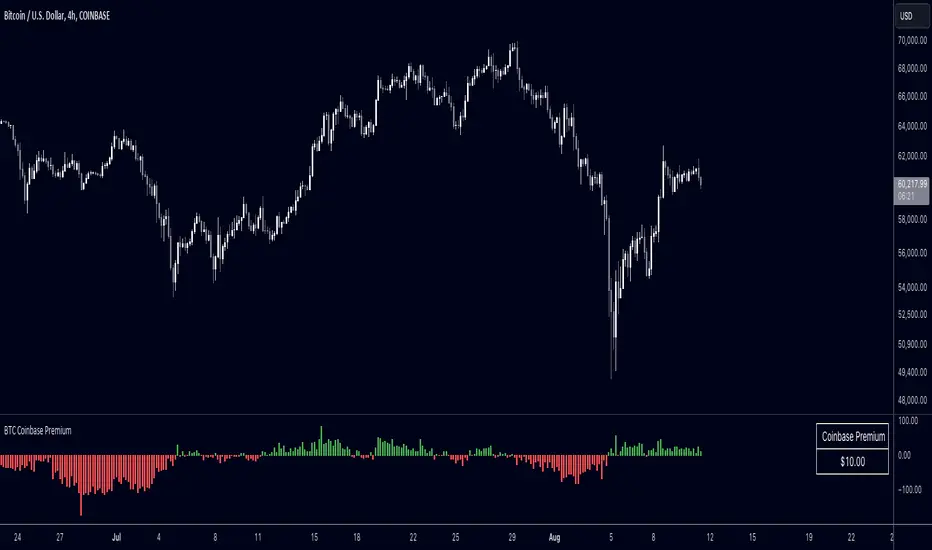
A positive premium historically corresponds with:
- Anticipation of major macro events
- U.S.-driven spot accumulation
- Increased retail participation ahead of expected volatility
This aligns perfectly with the current environment.
IV. Why U.S. Retail Investors Are Buying: Five Key Drivers
1. Market Access Improvements
Recent changes have made it easier for U.S. users to buy crypto:
- Coinbase enabled SUI trading for New York residents on December 1.
- Robinhood launched advanced trading tools for U.S. users on December 8.
Regulated on-ramps expanding access typically correlate with spikes in fresh retail inflows.
2. New Payment Rails and Stablecoin Innovation
The rapid rise of compliant U.S. settlement tokens is also supporting adoption:
- JPMorgan’s JPMD stablecoin
- Ripple’s RLUSD
These assets enable faster, cheaper, and institutional-grade settlement, reducing friction for retail and professional users seeking exposure to crypto markets.
3. Bullish Guidance from Major Financial Institutions
Two major U.S. wealth managers issued crypto-friendly guidance:
- Bank of America Private Bank recommended up to 4% exposure to digital assets.
- Morgan Stanley issued a similar endorsement earlier in October.
For retail investors, guidance from major banks often functions as a “green light,” validating crypto as a legitimate portfolio component.
4. Hedging Against Equity Volatility and Dollar Weakness
A December 4 Coinbase Institutional report cited:
- Rising M2 money supply
- Expected lower USD funding costs after rate cuts
- Concerns about an AI-driven equity bubble
These factors increase Bitcoin’s attractiveness as a macro hedge and non-correlated asset.
5. The “Santa Rally” Effect
Crypto markets have historically shown bullish tendencies in December, often driven by:
- Portfolio repositioning
- Reduced liquidity
- Tax-related trading behavior
Even traditional market analysts from the London Crypto Club project a strong December performance, supported by the U.K.’s recent recognition of digital assets as legally defined property.
V. Charting Bitcoin’s Price Momentum
To visualize the shape of the current rally, the following synthetic chart illustrates Bitcoin’s rebound trajectory.

While synthetic, the chart reflects the structural pattern observed in late-cycle macro-driven price recoveries—steady accumulation followed by volatility spikes around policy events.
VI. Expanding Context: How Other Markets Support the BTC Bull Case
Global Liquidity Is Increasing
Recent data across global markets show:
- Rate cuts expected in the U.S., U.K., and Canada
- Asia’s liquidity cycle in early expansion
- Rising sovereign-level involvement in CBDCs and digital settlement systems
More liquidity historically correlates with higher demand for BTC as a quasi-global risk asset.
ETF Market Stabilization
Although institutional holdings fell, U.S. spot Bitcoin ETFs continue to experience:
- Moderate but consistent inflows on strong days
- Reduced volatility compared to Q1–Q2 2025
- Growing interest from retirement accounts
ETFs provide a bridge for traditional investors, meaning their participation often lags but amplifies retail-driven trends.
Corporate Treasury Hesitation
Corporations appear cautious due to:
- Elevated BTC prices near historical highs
- End-of-year accounting considerations
- Reduced appetite for volatile assets before guidance cycles
This hesitation ironically strengthens the narrative that retail buyers are the ones driving this rally.
VII. Outlook: Can the Rally Continue After the FOMC?
Three major scenarios can unfold:
1. Rate Cut Confirmed → BTC likely breaks above $95,000
A dovish decision would:
- Lower discount rates
- Improve liquidity
- Increase demand for risk assets
Historically, Bitcoin reacts strongly to credible easing signals.
2. Rate Cut Delayed → Short-term volatility, long-term bullish
Even without a December cut, the overwhelming 97% pricing implies:
- A cut is coming imminently
- Any dip could trigger aggressive dip-buying
- Macro momentum still favors BTC
3. Hawkish Surprise → Temporary correction
If the Fed unexpectedly signals caution:
- Shorts may rebuild
- BTC could retest $90,000
- Retail demand would determine whether support holds
Given current on-chain patterns, support appears structurally strong.
VIII. Conclusion
Bitcoin’s sharp rally is not the result of institutional accumulation. Instead, it is a clear reflection of U.S. retail investor conviction, driven by:
- Strong macro expectations
- Improved market access
- Positive financial-institution guidance
- Evolving crypto payment infrastructure
- Seasonal bullish tendencies
While liquidations and volatility have amplified the move, the underlying trend suggests a robust appetite for Bitcoin among everyday investors—an important development as the market enters a decisive FOMC week and the final leg of the year.
The divergence between institutional outflows and retail inflows is especially notable. It indicates a shift in the market structure:
Bitcoin is no longer simply an institutional hedge; it is becoming a retail macro asset once again.
Whether this momentum continues will depend largely on the Federal Reserve’s next policy signals, but the current dynamics point toward a strong, sentiment-driven end to the year.
