
Key Points :
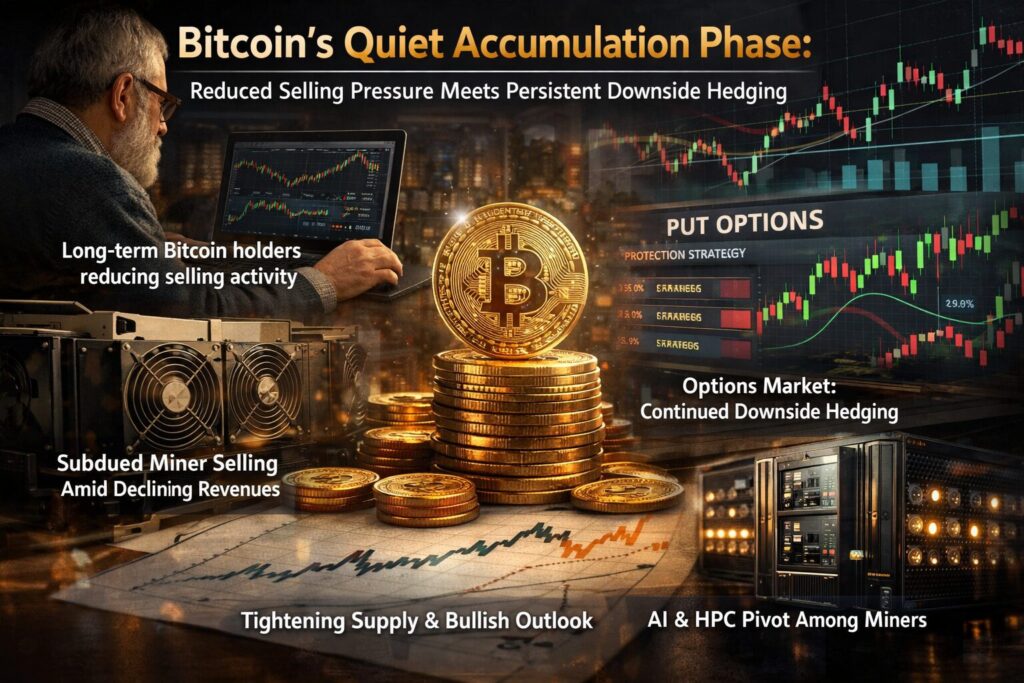
- Long-term Bitcoin holders are reducing selling activity across all age cohorts
- Miner selling pressure remains subdued despite declining revenues
- Options markets signal continued downside hedging and cautious sentiment
- Structural supply tightening may indicate mid-to-long-term bullish potential
- AI/HPC pivot among miners introduces a new macro dynamic in Bitcoin economics
1. Declining Sell Pressure from Long-Term Holders Signals Structural Strength
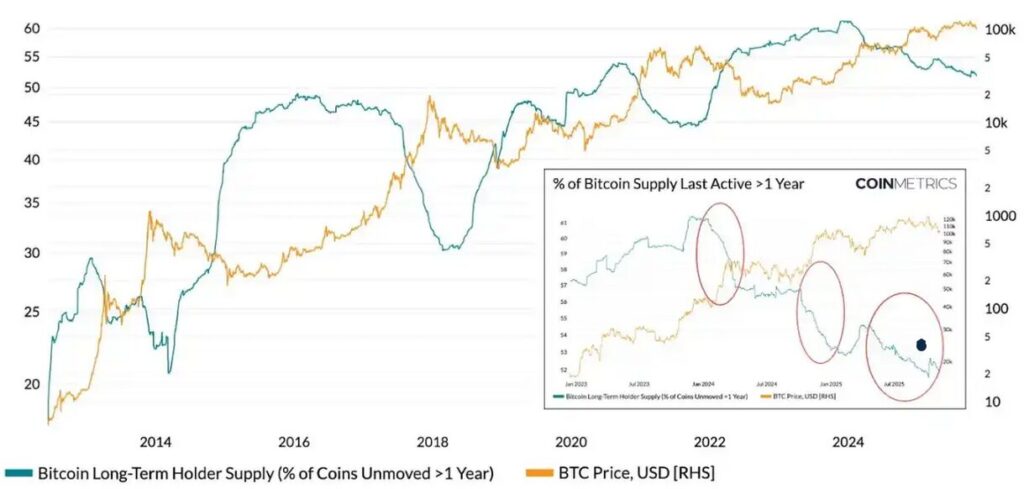
Recent analysis from VanEck highlights a notable shift in Bitcoin market dynamics: long-term holders are increasingly choosing not to sell. Across all holding periods—from one year to over a decade—on-chain data shows a consistent decline in transfer volume.
This trend is critical. Historically, reduced movement from long-term holders—often referred to as “strong hands”—has preceded major bullish cycles. These participants tend to accumulate during uncertainty and distribute during euphoric peaks. Their inactivity, therefore, suggests conviction rather than complacency.
At the same time, the proportion of “active supply” (coins recently transacted) has declined from 31% to 30%. While this may appear marginal, in Bitcoin’s tightly constrained supply environment, even small shifts can have outsized price implications. A declining active supply suggests that fewer coins are available for trading, effectively tightening liquidity.
From an investment standpoint, this aligns with a classic supply squeeze narrative. When combined with even modest demand increases—such as ETF inflows or institutional accumulation—price appreciation can accelerate rapidly.
2. Miner Behavior: Selling Slows Despite Economic Pressure
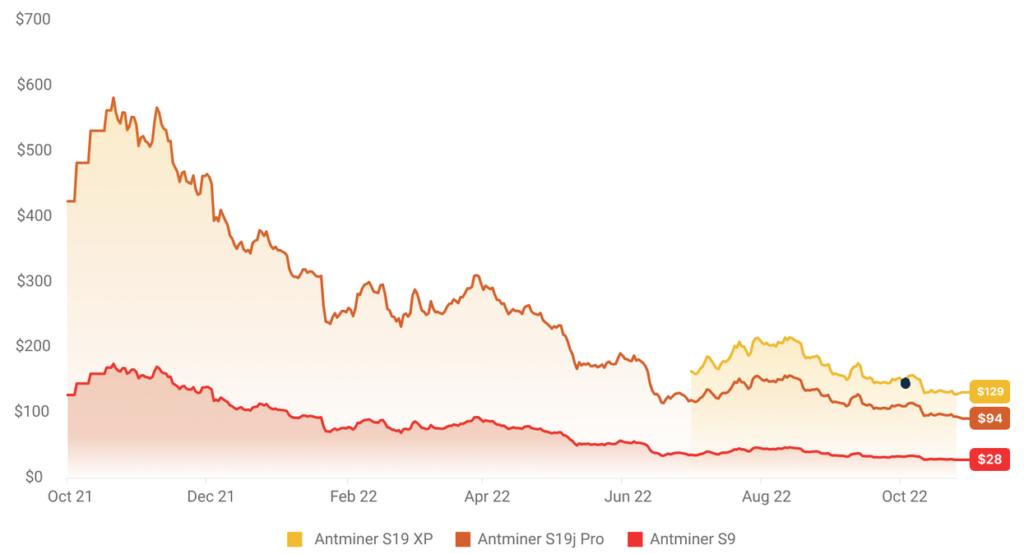
Bitcoin miners, traditionally a major source of sell pressure, are also showing restraint. Over the past month, miner revenues have dropped by approximately 11%, while mining-related equities have declined around 7%. Under normal circumstances, such economic stress would trigger increased selling.
However, this time is different.
On-chain data shows that miner transfers to exchanges have increased by only about 1%. This suggests that miners are not aggressively liquidating their holdings, despite reduced profitability. Instead, many appear to be holding onto their Bitcoin, potentially anticipating higher future prices.
Yet, this restraint comes with a caveat. Mining operations incur significant fiat-denominated costs—electricity, hardware, labor. If Bitcoin prices remain suppressed for an extended period, miners may be forced to liquidate holdings to maintain operations. This could introduce delayed sell pressure into the market.
Interestingly, total miner reserves have been gradually declining since late 2020. Current holdings stand at approximately 684,000 BTC, representing a slight year-over-year decrease. Given that roughly 164,000 BTC were mined during this period, it implies that miners have effectively sold all newly minted coins.
This reflects a structural shift: miners are no longer net accumulators—they are becoming operational sellers.
3. The AI Pivot: A New Economic Model for Miners
A major emerging trend is the strategic pivot of mining companies toward AI and high-performance computing (HPC).
Following the Bitcoin Halving 2024, block rewards were cut in half, significantly compressing miner margins. In response, several major players are diversifying their business models.
Companies like Bitdeer have reportedly liquidated Bitcoin holdings to fund expansion into AI infrastructure. Others, such as Core Scientific and Marathon Digital, are restructuring operations to support data center services for AI workloads.
This shift is profound. It transforms miners from purely Bitcoin-dependent entities into hybrid infrastructure providers. In doing so, it reduces their reliance on BTC price cycles and introduces new revenue streams.
However, it also introduces new risks and dynamics. If mining firms increasingly prioritize AI over Bitcoin accumulation, their role as long-term holders may diminish, potentially altering supply dynamics over time.
4. Options Market Signals: Persistent Caution Beneath the Surface
Despite constructive signals from on-chain data, derivatives markets tell a more cautious story.
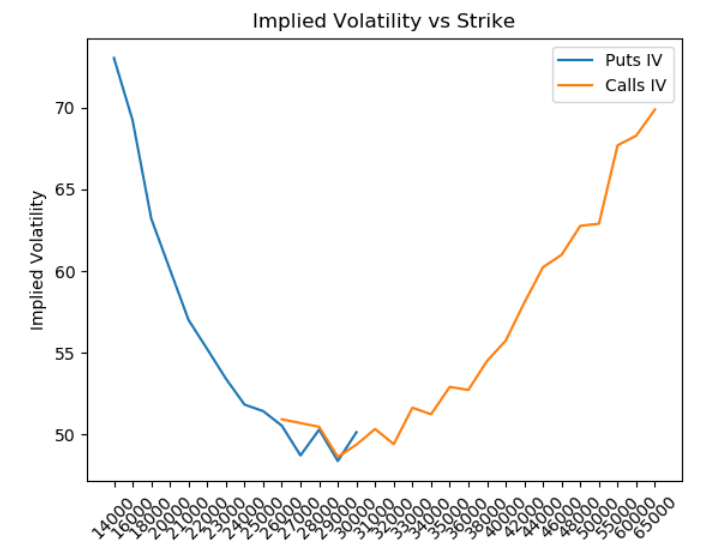
The put/call open interest ratio—a key indicator of market sentiment—currently stands at 0.77. This is one of the highest levels observed since the China Bitcoin Mining Ban 2021.
A higher ratio indicates stronger demand for downside protection. In other words, traders are actively hedging against potential price declines.
This divergence between spot and derivatives markets is not uncommon. On-chain data often reflects longer-term investor behavior, while options markets capture short-term risk sentiment.
In the current environment, it suggests that while long-term participants are accumulating, short-term traders remain cautious—perhaps due to macroeconomic uncertainty, interest rate expectations, or regulatory developments.
5. Market Interpretation: Compression Before Expansion?
Taken together, these signals point to a market in transition.
On one hand, reduced selling pressure from long-term holders and miners suggests a tightening supply environment. On the other hand, persistent hedging activity indicates that participants are not yet ready to fully embrace a bullish narrative.
This combination often precedes volatility expansion.
Historically, Bitcoin has exhibited periods of low activity and compressed volatility before entering strong directional moves. The current environment—characterized by low sell pressure but high defensive positioning—could represent such a phase.
For investors seeking new opportunities, this presents a nuanced landscape:
- Accumulation strategies may benefit from current price stagnation
- Yield strategies (e.g., options selling) could capitalize on elevated hedging demand
- Infrastructure plays (AI-integrated mining firms) offer exposure beyond BTC price
6. Strategic Implications for Crypto Investors and Builders
For those exploring new crypto assets, revenue streams, or practical blockchain applications, several implications emerge:
Supply-Side Tightening as a Core Thesis
Reduced activity among long-term holders reinforces Bitcoin’s scarcity narrative. Projects that integrate Bitcoin as collateral or settlement layers may benefit from this dynamic.
Miner Evolution as an Investment Theme
The convergence of crypto mining and AI infrastructure opens new hybrid investment opportunities. This trend may extend to other proof-of-work ecosystems.
Derivatives Market as a Signal Layer
Monitoring options markets provides early warning signals for volatility shifts. Integrating derivatives data into trading strategies can enhance risk management.
Macro Awareness Remains Essential
Despite strong fundamentals, macro factors—interest rates, liquidity, regulation—continue to influence short-term price action.
Conclusion
Bitcoin’s current market phase is defined by contradiction: strengthening fundamentals alongside persistent caution.
Long-term holders are holding tighter than ever. Miners, despite economic pressure, are not rushing to sell. Supply is quietly contracting.
Yet, the market remains on guard. Options traders are hedging. Volatility is subdued. Sentiment is cautious.
This is not a euphoric bull market—nor is it a capitulation phase.
Instead, it is a period of strategic positioning.
For investors and builders alike, this environment rewards patience, data-driven decision-making, and a willingness to look beyond short-term noise. The next major move—whether up or down—will likely emerge from this tension between conviction and caution.
