
Key Points :
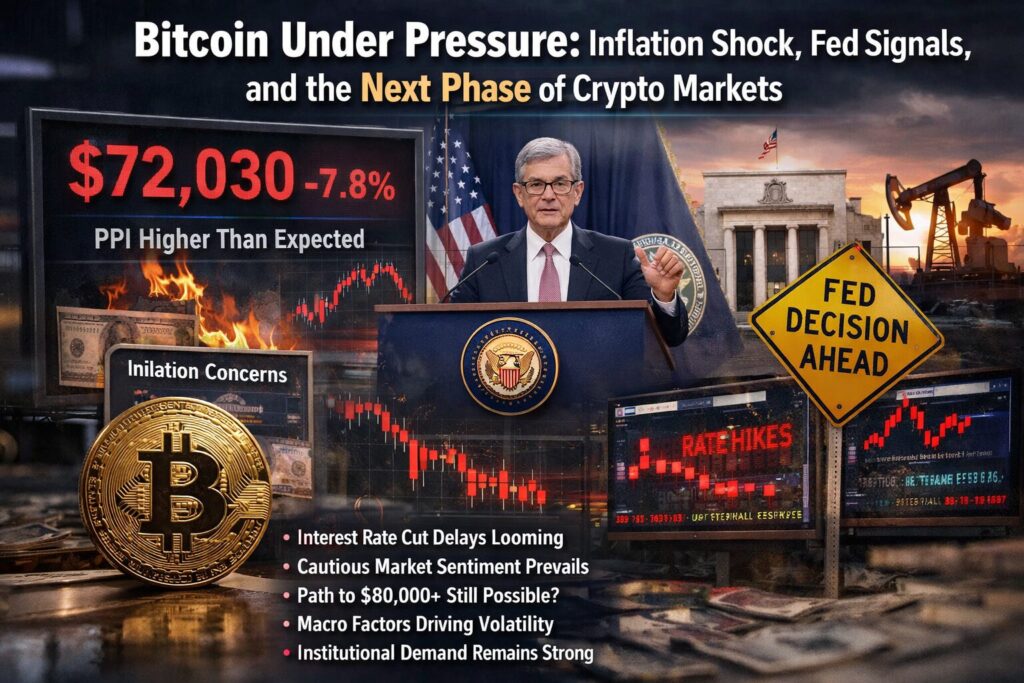
- Bitcoin fell to around $72,000 after U.S. PPI data came in hotter than expected
- Persistent inflation is delaying expectations for interest rate cuts in 2026
- The upcoming FOMC decision and Powell’s tone are major short-term catalysts
- Market sentiment remains cautious, with traders leaning risk-off
- Despite short-term weakness, some analysts still see a path toward $80,000+
- Macro conditions (rates, liquidity, oil prices) are dominating crypto price action
- Structural demand for Bitcoin remains intact amid institutional adoption
1. Inflation Shock Sends Bitcoin Lower
Bitcoin’s recent drop to approximately $72,000 reflects a growing tension between macroeconomic data and crypto market expectations. The trigger this time was the U.S. Producer Price Index (PPI), which exceeded forecasts significantly, reinforcing concerns that inflation remains persistent in 2026.
The latest figures showed a 0.7% month-over-month increase and a 3.4% year-over-year rise, both substantially above expectations of 0.3% and 3.0%, respectively. This data suggests that upstream inflationary pressures are not easing as quickly as markets had hoped.
In practical terms, PPI matters because it signals future consumer price inflation. When production costs rise, companies often pass those costs downstream. For crypto markets, this translates into a critical implication: central banks are less likely to ease monetary policy.
Bitcoin reacted immediately. As traders digested the implications, selling pressure intensified, particularly around key technical levels. The $72,000 range emerged as a psychological and structural support zone, but the broader tone shifted toward caution.
2. Why the Federal Reserve Matters More Than Ever
The timing of the PPI release—just hours before a Federal Reserve (FOMC) meeting—amplified its impact. While markets broadly expect no immediate rate change, the real focus lies in the forward guidance.
Chair Jerome Powell’s language will determine whether the Fed maintains a hawkish stance or signals any openness to future easing. In a high-liquidity asset class like crypto, this nuance matters more than the actual rate decision.
Historically, Bitcoin has shown strong sensitivity to interest rate cycles:
- Low rates → Increased liquidity → Bullish crypto
- High rates → Tight liquidity → Bearish pressure
With inflation proving sticky, the Fed is under pressure to keep rates elevated. This creates a structural headwind for Bitcoin and other risk assets.
Moreover, rising oil prices are complicating the picture. Energy costs feed directly into inflation metrics, making it harder for the Fed to justify rate cuts. As noted by market participants, the macro environment is currently the dominant force shaping crypto trends.
3. Risk-Off Sentiment Dominates Ahead of FOMC
Leading into the FOMC decision, traders are clearly shifting into a risk-off posture. This is visible in both price action and positioning.
From a technical perspective, Bitcoin is struggling below key resistance levels on higher timeframes. Some analysts argue that the market remains in a short-term bearish structure, especially if support zones fail to hold.
The cautious tone is not irrational. In uncertain macro conditions, preserving capital becomes more important than chasing upside. Traders are reducing leverage, tightening stop-losses, and waiting for clarity.
This behavior reflects a broader trend: crypto is no longer isolated from traditional finance. Instead, it is increasingly integrated into global macro flows, reacting to the same drivers as equities and commodities.
4. Diverging Views: Bearish Pressure vs. Bullish Structure
Despite the current weakness, the market is far from unanimous in its outlook.
Bearish Case
Some traders highlight:
- Failure to break key resistance levels
- Weak momentum on higher timeframes
- Risk of revisiting lower support zones
From this perspective, Bitcoin could continue to consolidate or even decline further if macro conditions worsen.
Bullish Case
Others maintain a more optimistic view:
- The recent drop is seen as a healthy correction, not a reversal
- Bitcoin has shown strong performance earlier in the month
- Structural demand remains robust
There is still a credible path toward $80,000 and beyond, particularly if macro conditions stabilize or improve.
Importantly, both views can coexist. Markets often move in cycles where short-term weakness coexists with long-term strength.
5. Macro Is Now the Dominant Narrative in Crypto
One of the most important takeaways from this situation is the shift in crypto market drivers.
In earlier cycles, Bitcoin was largely driven by internal narratives:
- Halving cycles
- Retail speculation
- Exchange-driven liquidity
Today, the landscape is different. The key drivers include:
- Central bank policy
- Inflation data
- Institutional flows
- Global liquidity conditions
This transition reflects the maturation of the crypto market. Bitcoin is increasingly treated as a macro asset, similar to gold or tech stocks.
For investors, this means that understanding crypto now requires understanding macroeconomics.
6. Institutional Demand Still Provides a Floor
Despite short-term volatility, one critical factor remains supportive: institutional adoption.
Large financial players continue to allocate capital to Bitcoin through:
- Spot ETFs
- Custodial services
- Treasury diversification strategies
This creates a structural bid under the market. While prices may fluctuate due to macro conditions, long-term demand is becoming more stable.
Additionally, Bitcoin’s narrative as a store of value remains relevant, particularly in an environment of persistent inflation and currency debasement.
7. What This Means for Crypto Investors and Builders
For readers interested in new crypto assets, revenue opportunities, and practical blockchain applications, the current environment offers several key insights:
1. Macro Awareness Is Essential
Crypto is no longer a purely technical or narrative-driven market. Monitoring inflation, interest rates, and central bank policy is now critical.
2. Volatility Creates Opportunity
Short-term corrections often provide entry points for long-term investors. However, timing and risk management are crucial.
3. Diversification Beyond BTC
While Bitcoin remains the anchor asset, opportunities are emerging in:
- Layer 1 and Layer 2 ecosystems
- Real-world asset (RWA) tokenization
- Stablecoin infrastructure
- DeFi yield strategies
4. Focus on Utility
Projects with real-world use cases—payments, compliance, liquidity infrastructure—are more likely to sustain value in a macro-driven environment.
This aligns closely with the evolving direction of the industry, where practical blockchain applications are gaining priority over speculative hype.
8. Insert Figure (Chart 1): BTC Price Reaction to PPI Shock
[BTC price chart showing drop to $72,000 after PPI release]
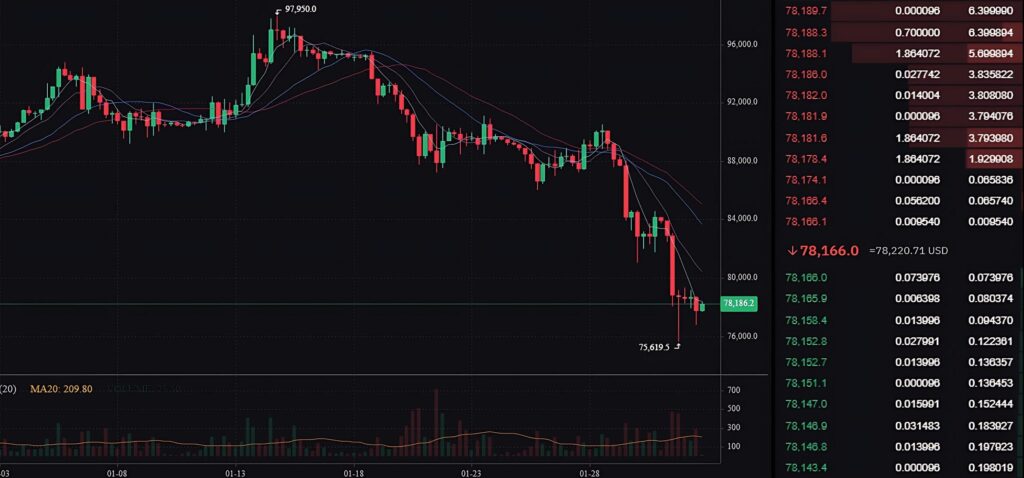
Description:
A 4-hour BTC/USD chart highlighting the sharp decline following the PPI announcement, with key support and resistance levels marked.
9. Insert Figure (Chart 2): U.S. PPI Trend vs Expectations
[Bar chart comparing expected vs actual PPI values]
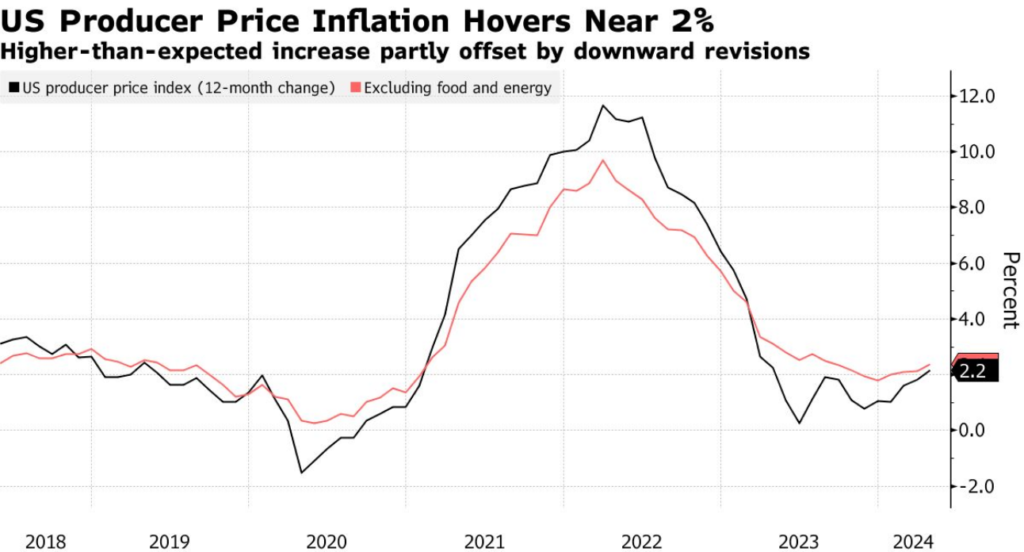
Description:
A comparative chart showing forecasted vs actual PPI data, emphasizing the inflation surprise.
10. Insert Figure (Chart 3): Interest Rates vs Bitcoin Trend
[Overlay chart of Fed rates and BTC price over time]
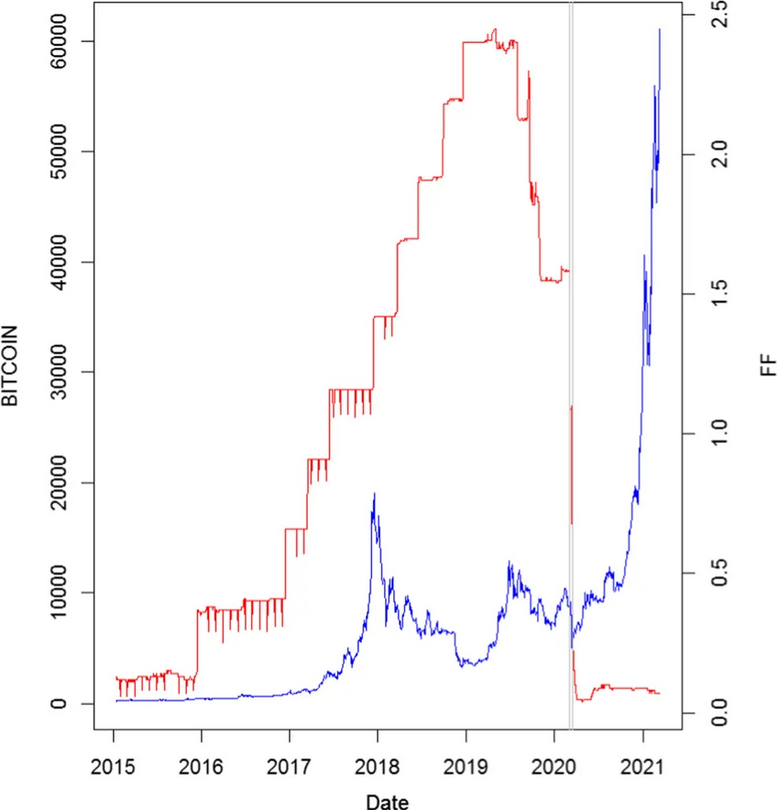
Description:
A macro overlay showing how Bitcoin trends correlate with interest rate cycles.
Conclusion
Bitcoin’s drop to $72,000 following stronger-than-expected inflation data highlights a fundamental shift in the crypto market. No longer isolated, Bitcoin now moves in tandem with macroeconomic forces—particularly interest rates and liquidity conditions.
The immediate outlook remains uncertain. The Federal Reserve’s stance will likely dictate short-term direction, and traders are right to remain cautious. However, beneath this volatility lies a more resilient structure.
Institutional adoption, growing real-world use cases, and the maturation of the crypto ecosystem continue to support long-term growth. For investors and builders alike, the key is to adapt: understand macro trends, manage risk, and focus on sustainable opportunities.
The current phase is not merely a challenge—it is a transition toward a more integrated and sophisticated financial system where crypto plays a central role.
