

Main Points :
- Bitcoin briefly broke below $90,000 amid renewed U.S. selling pressure, highlighting persistent market volatility.
- Liquidations remain stable, suggesting investors are waiting for clearer direction rather than exiting aggressively.
- Over 35,000 BTC (≈ $3.15 billion) left exchanges over the last two weeks, implying increasing accumulation and supply tightening.
- ETF and corporate treasury holdings now exceed exchange-held BTC, marking a structural shift toward long-term storage.
- Ethereum shows similar supply contraction, with exchange balances at a 10-year low.
- The combination of thin year-end liquidity and accelerating supply withdrawal may set conditions for a strong trend once direction is established.
Introduction: A Market Searching for Direction
Bitcoin’s dip below $90,000 early Monday during the U.S. trading session reignited discussion about market fragility, investor positioning, and structural liquidity heading into the final weeks of the year. Even as Asia showed strength, briefly pushing BTC above $92,000, the Wall Street open triggered renewed selling pressure, sending prices lower and creating uncertainty about the next major directional move.
This dynamic environment is not simply about intraday volatility—it reflects deeper structural changes in how Bitcoin supply is distributed across exchanges, ETFs, and long-term holders. With over 35,000 BTC leaving exchanges in just two weeks, market participants are increasingly asking: Is this a warning sign of weakening liquidity or a bullish signal of quiet accumulation?
This article synthesizes the source content, incorporates recent insights from other market analyses, and evaluates how supply dynamics, investor sentiment, and macro trends may influence Bitcoin’s trajectory. The goal is to provide practical perspectives for readers interested in new digital assets, revenue opportunities, and real-world blockchain applications.
1. Price Volatility Returns as U.S. Markets Apply Downward Pressure
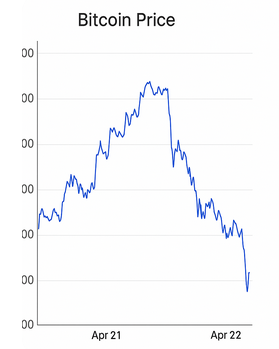
Bitcoin’s failure to retest its year-to-date open near $93,500 highlights persistent resistance at higher levels. Technical analysts such as Michaël van de Poppe noted that although altcoins showed pockets of strength, Bitcoin encountered a “harsh rejection” at critical resistance.
Van de Poppe emphasized the significance of the $86,000 support level. If Bitcoin maintains this region, he expects a new higher low—a constructive sign for continuation. However, a breakdown would likely trigger a sweep of lower liquidity levels, potentially creating a sharper retracement before stabilization.
This aligns with current macro conditions:
- The U.S. market remains sensitive to interest rate expectations.
- Investors are cautious ahead of inflation data releases.
- Institutions show growing BTC adoption, but inflows remain irregular.
The combination creates a choppy landscape where price surges struggle to sustain momentum.
2. Liquidations Remain “Surprisingly Calm” Despite Price Swings
QCP Capital, a leading digital asset trading firm, pointed out that overall crypto liquidations—around $330 million in the last 24 hours—remain “relatively mild.” This stability demonstrates that:
- Traders are not excessively leveraged.
- Many participants are waiting for a clear breakout or breakdown.
- Sentiment is characterized by caution rather than panic or euphoria.
In other words, despite the price volatility, the market lacks the aggressive positioning typically associated with sharp trend reversals.
This environment often precedes decisive moves: either a breakout driven by renewed buying interest or a correction triggered by macro shifts.
3. Massive Exchange Outflows Signal Tightening Supply
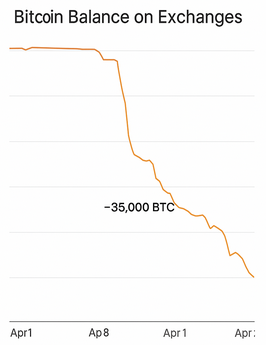
While price is oscillating within a wide range, on-chain data reveals a powerful underlying trend: BTC is rapidly exiting exchanges.
Glassnode data shows:
- 35,000 BTC withdrawn from exchanges over the last two weeks
- Equivalent to roughly $3.15 billion at an average price of ~$90,000
- One of the strongest multi-week withdrawal periods of the year
QCP Capital highlights that this trend is not isolated:
- Bitcoin ETF holdings continue to rise
- Corporate treasuries—including MicroStrategy—are accumulating aggressively
- Long-term holder supply is at or near all-time highs
This withdrawal suggests reduced availability of BTC for trading and selling, increasing the likelihood of supply shocks if demand rises.
4. ETFs and Treasuries Now Hold More BTC Than Exchanges
A major structural milestone was reached:
ETF + Corporate Treasury holdings now exceed the total BTC stored on centralized exchanges.
This represents a remarkable shift in Bitcoin’s market structure:
What it means for investors:
- More BTC is locked in long-term storage, reducing liquidity available for traders.
- Price becomes more sensitive to incremental demand increases.
- Exchange sell pressure weakens, while institutional buy pressure strengthens.
- Market cycles may become sharper and more momentum-driven.
This development also indicates that Bitcoin is evolving into a mature macro asset—more aligned with long-term investment behavior than speculative retail trading.
5. Ethereum Mirrors Bitcoin’s Supply Contraction
Ethereum shows similar tightening dynamics:
- Exchange balances are at a 10-year low
- Staking continues to absorb circulating ETH
- Institutional interest—particularly around ETH ETFs—is rising
- Layer-2 ecosystem activity maintains strong demand for gas fees
This dual contraction of BTC and ETH supply creates conditions where liquidity becomes thin, especially near year-end when trading desks reduce activity.
Thin liquidity often amplifies both downside wicks and upside rallies.
6. MicroStrategy and Corporate Accumulation Reinforce Long-Term Demand
MicroStrategy recently added 16,024 BTC (~$1.44 billion at ~$90k average), further tightening supply. This follows their consistent acquisition strategy spanning multiple years.
Corporate BTC accumulation has several market consequences:
- Strengthens Bitcoin’s status as a balance-sheet reserve asset
- Adds predictable, recurring institutional demand
- Reduces circulating supply available on exchanges
- Encourages other firms to explore BTC treasury strategy
This trend has accelerated in 2024–2025 as inflation concerns persist globally.
7. Market Liquidity Is Thinning Into Year-End
QCP Capital noted that Sunday’s price movements revealed just how “thin” the market has become. Factors include:
- Reduced institutional activity near holidays
- Lower market depth on both orderbook sides
- High concentration of BTC in long-term storage
- Growing retail hesitation at high price levels
Thin liquidity does not necessarily predict direction—but it does predict volatility.
Investors should expect sudden moves, larger wicks, and short-lived breakouts until market depth normalizes.
8. What This Means for New Crypto Opportunities
Readers seeking new digital asset projects, income streams, or practical blockchain applications should consider the following implications:
A. Supply tightening increases upside opportunity
When supply drops faster than demand, assets become more sensitive to incremental buying.
Tokens with growing adoption and decreasing circulating supply (L2 tokens, staking assets, real-world asset protocols) may benefit.
B. Exchange balance trends are key indicators
Sustained BTC and ETH outflows historically correlate with mid-to-long-term bullish cycles.
C. Volatility creates short-term trading opportunities
For traders, thin liquidity environments often create profitable ranges for:
- Mean-reversion strategies
- Volatility breakout trades
- Basis trading in futures markets
D. Real-world blockchain usage continues expanding
Across enterprise, payments, Web3 identity, and asset tokenization, blockchain adoption has accelerated, driving demand for underlying assets beyond speculation.
Conclusion: A Market Waiting for Its Next Catalyst
Bitcoin’s brief slip below $90,000 reflects surface-level volatility, but beneath the price action lies a deeper structural transformation: supply is tightening at a pace not seen in years. Exchanges are losing BTC to long-term holders, ETFs, and corporate treasuries. Ethereum is experiencing parallel contraction. Investors remain cautious but engaged, and liquidations are controlled.
This market is coiling.
Whether the next major move is upward or downward will depend on macroeconomic catalysts, but the long-term trajectory remains shaped by one undeniable fact: the freely tradable supply of Bitcoin and Ethereum continues to shrink.
When demand returns—even modestly—the market may not have enough liquidity to absorb it quietly.
