

Key Takeaways :
- Bitcoin fell to around $83,000, marking a two-month low amid synchronized sell-offs across global macro assets.
- Extreme volatility in gold and silver shocked markets, reinforcing Bitcoin’s growing linkage to macro liquidity cycles.
- Massive liquidations exceeding $500 million accelerated downside pressure in crypto markets.
- The upcoming monthly close is shaping up as a decisive moment that could define Bitcoin’s medium-term trend.
- For investors seeking new crypto assets, yield opportunities, and practical blockchain use cases, this reset may create selective entry points rather than signaling the end of the cycle.
1. Bitcoin’s Drop to $83,000: A Macro-Driven Shock, Not an Isolated Crypto Event
Bitcoin’s decline to roughly $83,156 on Thursday was not an isolated crypto-specific collapse. According to data cited by Cointelegraph using TradingView, Bitcoin recorded its lowest level in nearly two months, falling close to 6% intraday.
What makes this move significant is not merely the price level itself, but the broader context. Bitcoin sold off in tandem with equities and precious metals, assets that are traditionally considered very different in risk profile and investor base. This synchronization strongly suggests that the driver was macro liquidity stress rather than a fundamental breakdown in Bitcoin’s network or adoption metrics.
From a practical investment perspective, this distinction matters. When Bitcoin sells off due to internal crypto failures—such as protocol exploits, regulatory bans, or exchange collapses—the recovery path can be long and uncertain. By contrast, macro-driven drawdowns often resolve once volatility subsides and capital reallocates.
2. Liquidations Amplify the Move: How Leverage Turned Volatility into a Cascade
One of the defining features of this sell-off was the speed at which it unfolded. Within just four hours, more than $500 million in leveraged crypto positions were liquidated, according to data from CoinGlass.
These forced liquidations occurred after Bitcoin failed to hold its year-opening price level and nearby moving averages—technical zones closely watched by systematic traders and algorithmic strategies. Once these supports gave way, cascading stop-outs and margin calls accelerated the decline.
For readers interested in yield generation through derivatives, liquidity provision, or structured products, this episode is a reminder of a critical reality: leverage is not merely a tool for amplification; it is also a liquidity accelerant. When volatility spikes, leverage transforms ordinary price movements into nonlinear events.
This dynamic is not unique to crypto. It mirrors what has long been observed in FX carry trades, commodity futures, and even U.S. Treasury basis trades. Bitcoin, increasingly integrated into global capital markets, is now behaving accordingly.
3. Gold’s Sudden Crash: Why Precious Metals Dragged Bitcoin Down
(Gold Price Volatility Chart)
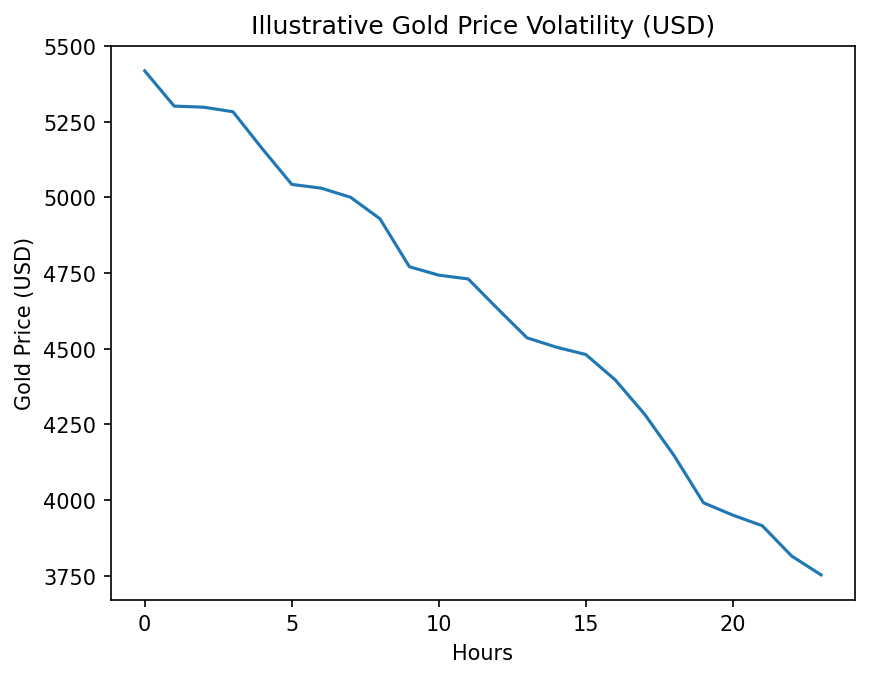
Earlier the same day, gold briefly surged to an all-time high near $5,600 before plunging by roughly $400 within 30 minutes. Silver followed a similarly erratic trajectory. According to analysts, the total value erased from precious metals during this brief window exceeded Bitcoin’s entire market capitalization.
This is where the narrative becomes especially important for long-term crypto observers.
Gold and silver are traditionally seen as safe havens. Their sudden collapse shocked traders precisely because such assets are not supposed to move this way. As crypto educator and Coin Bureau CEO Nick Pakrin noted, “Gold and silver don’t usually behave like this. This is crazy.”
The implication is not that gold has lost its role—but that investors are scrambling for liquidity. In moments of systemic stress, even insurance assets get sold to cover margin calls elsewhere. Bitcoin, increasingly held by the same institutions trading macro assets, gets pulled into the same vortex.
For blockchain practitioners, this reinforces a crucial lesson: Bitcoin is no longer merely an alternative asset; it is part of the global liquidity stack.
4. Bitcoin vs. Gold: Short-Term Correlation, Long-Term Divergence
(Bitcoin Price Volatility Chart)
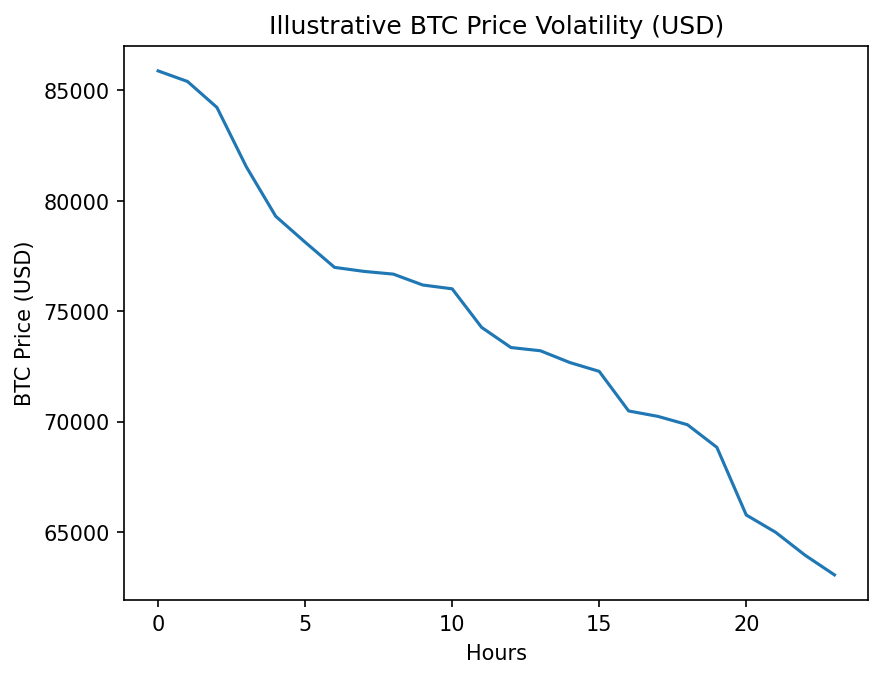
While Bitcoin and gold fell together in this episode, many market participants caution against over-interpreting short-term correlations.
Crypto trader and analyst Michaël van de Poppe argued that Bitcoin’s weakness below $84,000 represents a liquidity-driven dip rather than a structural failure. He emphasized that once precious metals stabilize, Bitcoin may regain relative strength.
From a strategic standpoint, this view aligns with how institutional portfolios are increasingly constructed. Gold often functions as insurance, while Bitcoin is increasingly treated as asymmetric upside exposure to monetary instability and technological disruption.
When forced selling hits, both can fall. But when markets normalize, Bitcoin’s reflexivity—driven by halving cycles, ETF inflows, and on-chain scarcity—can reassert itself faster than traditional hedges.
5. The Monthly Close: Why $87,500 Has Become a Psychological Battleground
Beyond intraday volatility, analysts are now focused on the monthly candle close, a timeframe that long-term trend followers consider decisive.
Market analytics firm Material Indicators highlighted that Bitcoin is once again testing one of the most critical support zones on the chart. Co-founder Keith Alan warned that failing to close the month above the year’s opening price—around $87,500—could push Bitcoin into what he calls a “Bearadise,” a prolonged bearish regime.
Conversely, reclaiming that level before month-end could restore confidence among swing traders, systematic funds, and even conservative allocators watching from the sidelines.
For readers evaluating timing entries into new crypto assets, this reinforces a disciplined approach: price matters, but timeframe alignment matters even more.
6. Whale Behavior and Market Structure: Suppression or Stabilization?
Prior to the sell-off, reports emerged suggesting that large, unidentified “whales” were using exchange order books to suppress upward price movement. Whether intentional manipulation or simply strategic liquidity provision, the effect was the same: upside momentum stalled.
In traditional finance, such behavior would resemble market makers dampening volatility near key expiries or reporting dates. In crypto, where transparency is partial and regulation uneven, these dynamics are more visible—and more controversial.
For builders and operators in the blockchain space, this underscores the importance of market microstructure literacy. Price is not just a function of adoption narratives; it is shaped daily by liquidity, leverage, and strategic positioning.
7. What This Means for Investors Seeking Yield and Real-World Use Cases
For investors hunting the next opportunity, moments like this are uncomfortable—but often fertile.
Historically, periods following sharp liquidations have produced:
- Attractive entry points in high-quality altcoins with real revenue models
- Improved yields in DeFi lending and liquidity protocols as risk premiums rise
- Renewed interest in blockchain infrastructure plays tied to compliance, payments, and settlement
The key is selectivity. Not all crypto assets benefit from macro resets. Those tied to practical use cases—payments, tokenized assets, regulated stablecoins, and settlement layers—tend to recover faster than purely speculative narratives.
8. Conclusion: A Stress Test, Not a Death Sentence
Bitcoin’s slide to $83,000 is best understood as a stress test of its integration into global markets, not a repudiation of its long-term thesis.
The violent moves in gold and silver reveal deeper anxieties about currency credibility, liquidity, and systemic risk. Bitcoin, now woven into this fabric, reacts accordingly—but also retains unique properties that traditional assets lack.
For investors and builders focused on new crypto assets, sustainable yield, and real-world blockchain applications, this episode should be seen as a recalibration. Volatility has flushed excess leverage, reset expectations, and clarified which narratives are durable.
The coming monthly close will be pivotal. But regardless of the immediate outcome, Bitcoin’s role as both a risk asset and a monetary alternative continues to evolve—bringing with it new challenges, and new opportunities, for those prepared to navigate them.
