
Main Points :
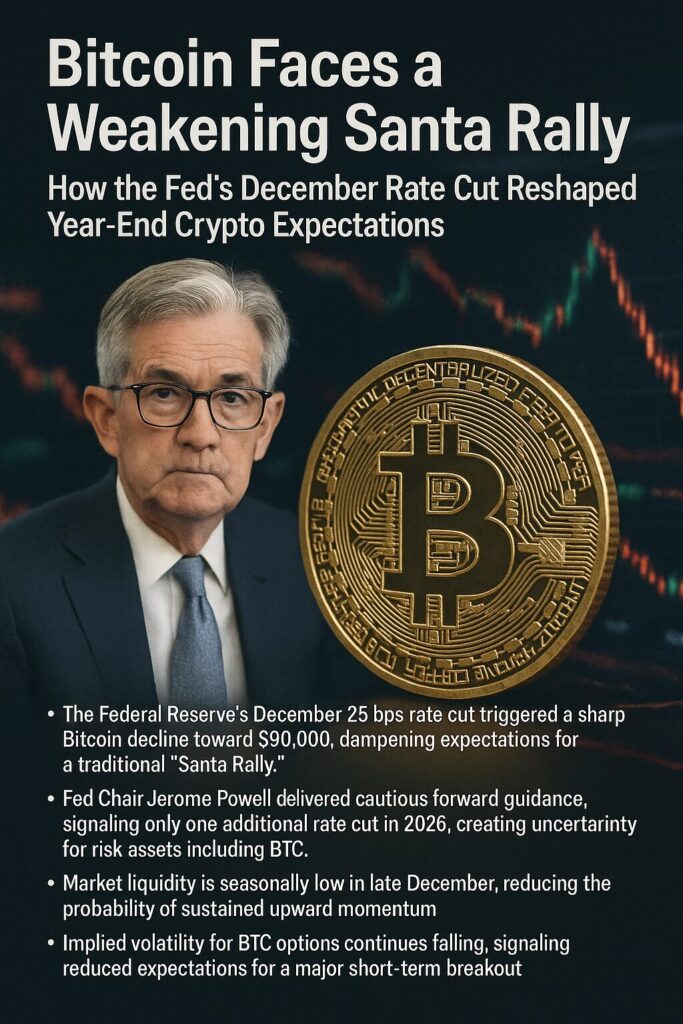
- The Federal Reserve’s December 25 bps rate cut triggered a sharp Bitcoin decline toward $90,000, dampening expectations for a traditional “Santa Rally.”
- Fed Chair Jerome Powell delivered cautious forward guidance, signaling only one additional rate cut in 2026, creating uncertainty for risk assets including BTC.
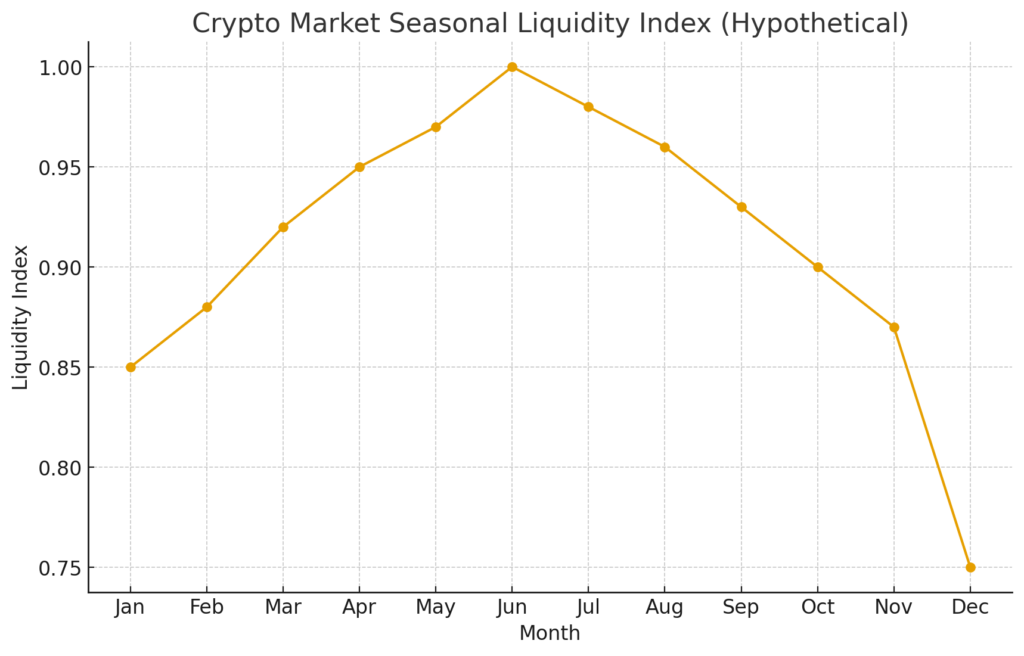
- Market liquidity is seasonally low in late December, reducing the probability of sustained upward momentum.
- Implied volatility for BTC options continues falling, signaling reduced expectations for a major short-term breakout.
- Only ~24% probability remains for BTC to reclaim and hold $100,000 by Christmas, with larger bullish positioning shifting into early 2026.
- Despite short-term weakness, Fed reserve-management purchases and neutral policy stance could support crypto markets into early 2026.
Introduction: A Rate Cut That Didn’t Bring a Rally
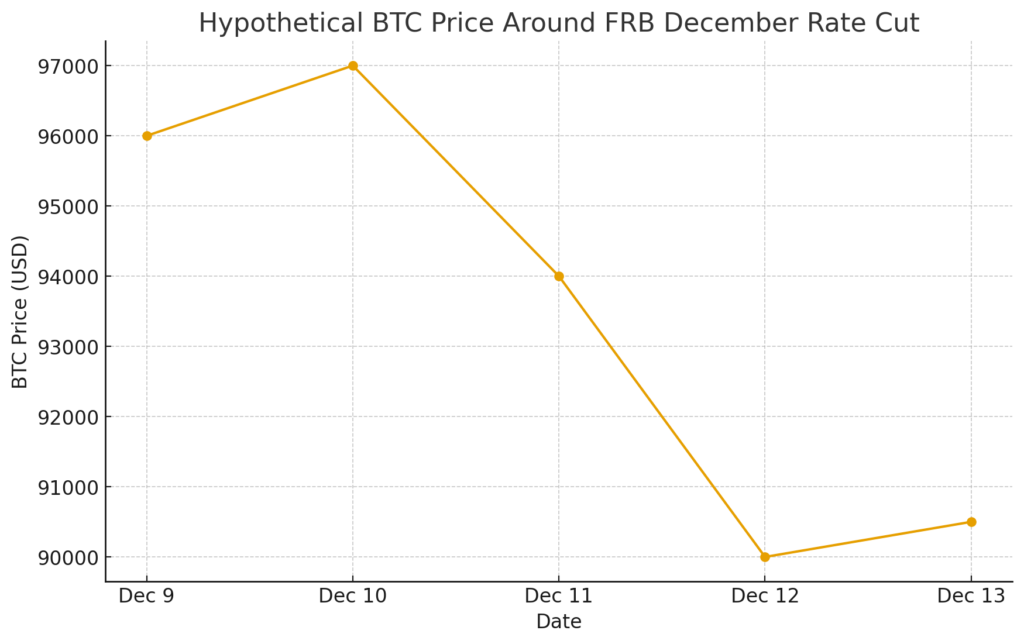
For many crypto investors, December historically brings a sense of optimism. The phenomenon known as the “Santa Rally”—a late-December rise in asset prices—has often included Bitcoin in recent years. Yet 2025 has taken a different turn. After the U.S. Federal Reserve implemented its widely expected 25 bps rate cut on December 11, Bitcoin did not surge. Instead, it declined sharply to around $90,000, erasing its pre-meeting gains.
Investor sentiment shifted as the market interpreted Powell’s tone as cautious rather than supportive, particularly given the Fed’s projection of just one additional rate cut in 2026. This signaled that inflation and labor-market concerns remain unresolved, creating an atmosphere of uncertainty across risk assets.
Before diving deeper into market mechanics, here is a visual representation of how Bitcoin price reacted around the Fed decision:
Fed’s December Decision: A Shift Toward Neutral, Not Dovish
Powell’s Message to the Market
In his press statement, Fed Chair Jerome Powell emphasized slowing labor-market conditions as justification for easing policy. Yet he also stressed:
- decisions will remain data-dependent,
- risks for both unemployment and inflation remain tilted upward, and
- policy is now within the “neutral range.”
Notably, the committee maintained expectations of only one rate cut in 2026—the same outlook from September’s projections. This was interpreted as a sign that the Fed is not beginning a deep easing cycle, but rather making a tactical adjustment amid economic cooling.
A Divided Committee Signals Uncertainty
The vote split of 9–3, the most divided since 2019, underscored how difficult the current macro environment has become. Several analysts noted that this level of disagreement is itself a bearish signal for risk assets, suggesting that policymakers lack confidence about the trajectory of inflation and growth.
Market Reaction: Risk Assets Pull Back
Following the announcement:
- equities saw muted or slightly negative performance;
- Bitcoin fell rapidly toward $90,000;
- implied volatility in BTC options dropped, indicating lower expectations for short-term rallies.
Crypto markets, which thrive on clear liquidity trends, were left without a strong directional signal.
Is the Santa Rally Dead for 2025?
What Analysts Are Saying
Coin Bureau co-founder Nick Paklin commented that while the rate cut was less hawkish than feared, the combination of dissenting votes and the limited 2026 easing outlook “adds new uncertainty to risk assets.”
He concluded this is not sufficient to trigger a Bitcoin Santa Rally.
Seasonal Liquidity: The Biggest Headwind
According to Adam Chu of Greeks.Live, the second half of December is the weakest liquidity period of the entire year for crypto markets. Factors include:
- Christmas and New Year holidays
- reduced institutional trading activity
- settlement cycles and accounting cutoffs
As liquidity dries up, large moves become difficult to sustain, making a Santa Rally statistically unlikely.
Implied Volatility Continues to Decline
Option markets show falling implied volatility, reflecting:
- reduced expectations of sharp price increases,
- lower demand for short-dated call options,
- confidence that major bullish catalysts lie after December, not within it.
This volatile-compression environment historically correlates with sideways price action.
Probability of Bitcoin Returning to $100,000 in December
Deribit’s research head Sean Dawson estimates only a 24% probability that Bitcoin will reclaim and remain above $100,000 by Christmas. Traders have shifted their bullish exposure toward March 2026, with heavy call-option accumulation at strike levels:
- $130,000
- $180,000
This positioning reveals a strong long-term bullish bias—but not for December.
Investor Takeaway
Short-term weakness does not invalidate the broader bull market. Instead, it suggests investors now view 2026 as the true inflection point, not the 2025 holiday season.
Fed Reserve-Management Purchases: Quiet but Important
Alongside the rate cut, the Fed announced plans to purchase $40 billion in Treasury bills over a 30-day window beginning December 12. Officials stressed this is not Quantitative Easing (QE), but is instead aimed at maintaining sufficient banking-system reserves.
Yet analysts note:
- reserve increases indirectly improve market liquidity,
- a neutral policy stance combined with reserve support may benefit crypto markets heading into early 2026.
Kraken’s Matt Howells-Barbee stated that this combination could help sustain crypto valuations even if December remains flat.
Wider Market Context: What Other Sites Are Reporting
In addition to the domestic Fed narrative, recent global developments reported by Bloomberg, The Block, and other outlets help explain today’s market sentiment:
1. ETF Flows Remain Strong but Slowing
U.S. Bitcoin ETFs continue attracting inflows, but the pace has moderated since October. This cooling investor enthusiasm aligns with the weakening December rally expectations.
2. Asia Institutional Trading Is Expected to Rise in Q1 2026
Japan and South Korea have recently relaxed rules on institutional crypto exposure. Analysts expect a significant inflow wave in early 2026, not December, further reinforcing the timing shift.
3. Miner Selling Pressure Continues
Several mining companies are liquidating more BTC to strengthen their balance sheets before year-end. This introduces additional downward pressure on prices.
4. Liquidity from Stablecoin Supply Remains Mixed
USDT supply is stable, but USDC has seen mild contraction this month. A flat stablecoin base usually correlates with slower BTC momentum.
What This Means for Investors Seeking New Crypto Opportunities
Readers focused on finding promising digital assets, new income streams, or practical blockchain applications should interpret the current environment as follows:
Short-Term Outlook (December)
- Expect low volatility and range-bound movement.
- A major rally is unlikely due to liquidity constraints.
- Rapid price surges are improbable unless unexpected macro data intervenes.
Medium-Term Outlook (Early 2026)
- Fed reserve-management operations may expand liquidity.
- Institutional flows from Asia may accelerate.
- Options markets imply strong confidence in higher BTC valuations by March.
Long-Term Opportunity
The shift toward 2026 being the next high-volatility cycle offers time for:
- accumulating undervalued altcoins,
- positioning for upcoming blockchain-infrastructure breakthroughs,
- exploring yield-generating decentralized finance (DeFi) products that benefit from reduced volatility.
For investors searching for “the next opportunity,” the pause in December momentum is not a setback—it is a window to prepare.
Conclusion
Bitcoin’s decline from above $95,000 to around $90,000 following the Fed’s December rate cut reflects a market recalibrating its expectations. Rather than initiating a Santa Rally, Powell’s cautious stance triggered uncertainty, leading traders to shift focus toward 2026.
Seasonal liquidity weakness, falling implied volatility, and divided committee voting all suggest that 2025’s year-end rally is unlikely to materialize. However, the underlying bullish structure remains intact. Reserve-management purchases and global institutional developments hint at a strong setup for early 2026.
For forward-looking investors, this period should be seen as a strategic accumulation phase. The biggest opportunities—whether in Bitcoin, emerging altcoins, or blockchain-driven revenue models—appear positioned not for December, but for the coming year.
