

Main Points :
- Bitcoin is trading below $90,000, with market participants sharply divided on its short-term direction.
- Some traders expect a relief rally toward $98,000–$100,000 before any major downturn.
- Others warn of a potential retracement toward the $70,000–$72,000 demand zone.
- On-chain data shows increasing Bitcoin inflows to Binance, raising short-term downside concerns.
- Technical indicators such as RSI divergence, moving averages, and Elliott Wave structures are shaping trader expectations.
- For long-term investors and blockchain practitioners, volatility presents both risk and opportunity.
1. Bitcoin Enters a High-Stakes Consolidation Phase
Bitcoin (BTC) entered the weekend trading around $88,000, hovering within a narrow range as traders braced for renewed volatility around the weekly close. According to data from Cointelegraph Markets and TradingView, BTC/USD has spent more than eight consecutive days fluctuating within a roughly $5,000 range, a classic sign of market compression.
Historically, such extended periods of low volatility often precede sharp directional moves. The key question facing the market now is whether Bitcoin will break upward into a renewed bullish phase—or downward into a deeper correction.
This uncertainty has led to a clear split among traders, analysts, and on-chain observers.
2. Bullish Camp: “A Relief Rally Is Coming Within Days”
Expectations of a Short-Term Breakout
Crypto analyst and entrepreneur Ted Pillows believes Bitcoin is on the verge of a relief rally. Posting on X, he argued that BTC could climb toward $98,000–$100,000 before entering any broader corrective phase.
His analysis focuses on higher-timeframe technical indicators, particularly the Relative Strength Index (RSI) on the weekly chart. Pillows compares the current bearish RSI divergence with a similar pattern observed during Bitcoin’s 2021 bull-market peak.
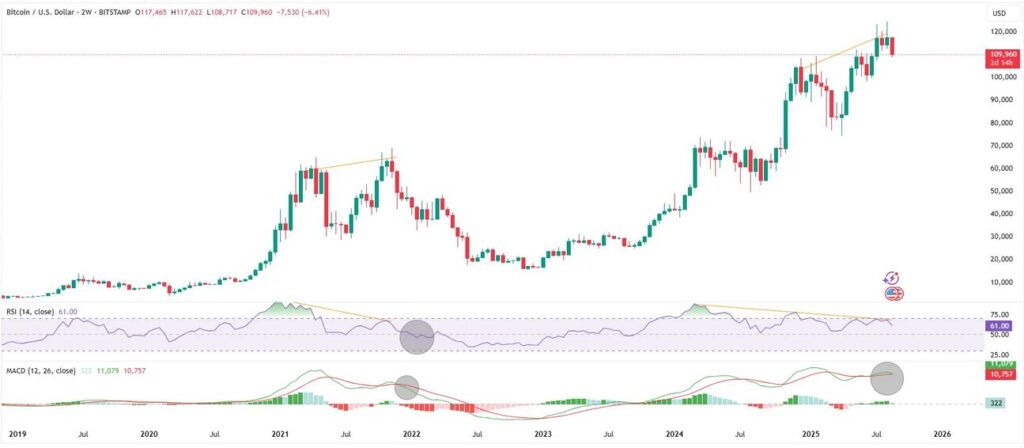
While bearish divergence often signals weakening momentum, Pillows notes that in previous cycles Bitcoin still managed one final upward leg before a significant downturn.
Moving Averages as a Critical Battleground
Another key technical factor is the relationship between the 100-week Exponential Moving Average (EMA) and the 100-week Simple Moving Average (SMA). Pillows warns that if buying pressure fails to prevent a bearish crossover, history suggests a 40–50% drawdown within 4–6 weeks.
However, until such a crossover is confirmed, bullish traders argue that Bitcoin still has room to surprise to the upside.
3. Momentum Traders: “The Correction Is Already Over”
Trader Captain Faibik shares a more optimistic near-term outlook. According to his analysis, Bitcoin’s recent pullback has already completed its corrective phase.
Using an eight-hour BTC/USDT chart, he predicts a breakout within days, followed by a surge of FOMO-driven entries. However, he cautions that late entrants chasing momentum may face poor risk-reward conditions.
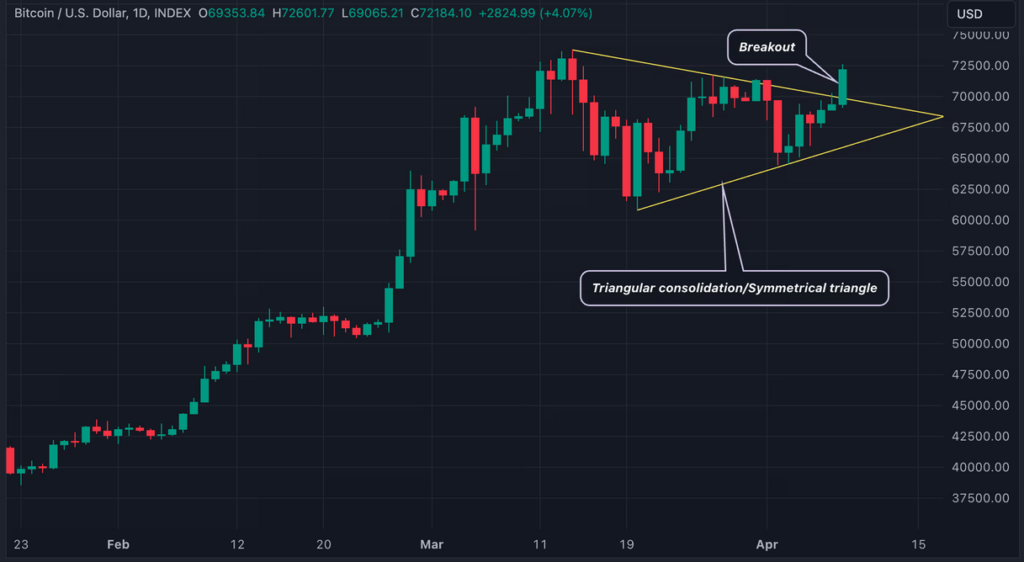
This perspective is common among short-term momentum traders, who view the current range as an accumulation zone rather than a distribution phase.
4. Elliott Wave Outlook: A Path to $150,000?
Another bullish scenario comes from Korinek Trades, who applies Elliott Wave Theory to Bitcoin’s macro structure.
According to this model, Bitcoin is forming the final leg—Wave 5—of a larger impulsive move. If this interpretation holds, BTC could push to a new all-time high, with an ambitious upside target of $150,000.
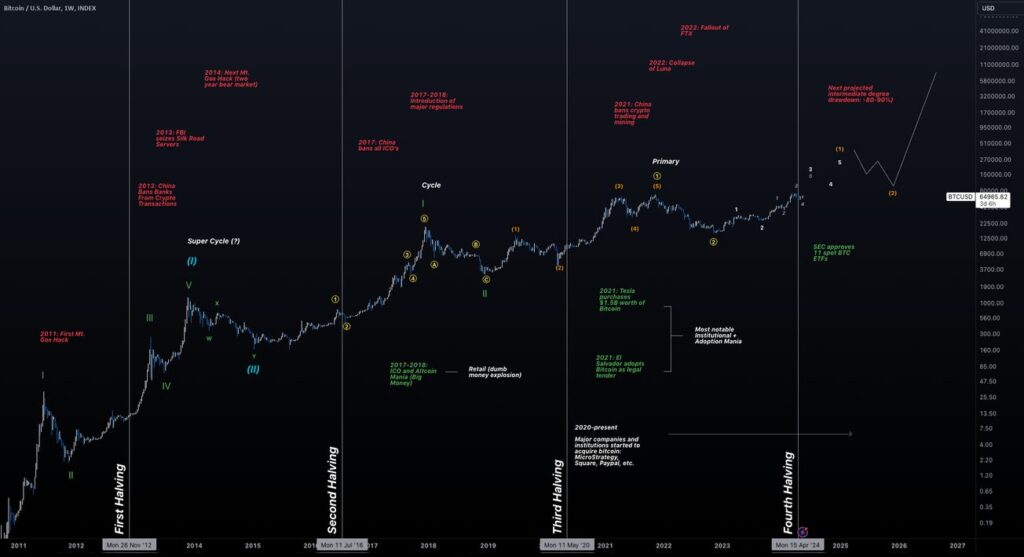
Elliott Wave projections are inherently subjective, but they remain popular among traders seeking to frame price action within broader psychological cycles.
5. Bearish Case: A Return to the $70,000 Demand Zone
On-Chain Data Raises Red Flags
While technical traders debate chart patterns, on-chain analysts are focusing on capital flows. According to data from CryptoQuant, Bitcoin remains structurally vulnerable in the short term.
A key concern is the increasing amount of BTC being transferred to Binance. Historically, rising exchange inflows often precede selling pressure, as traders move assets to centralized platforms in preparation for liquidation.
Why $70,000–$72,000 Matters
CryptoQuant contributor CryptoOnchain identifies $70,000–$72,000 as the next major high-demand zone. This level corresponds to a previous all-time high and represents a region where stronger spot buying interest is expected to emerge.
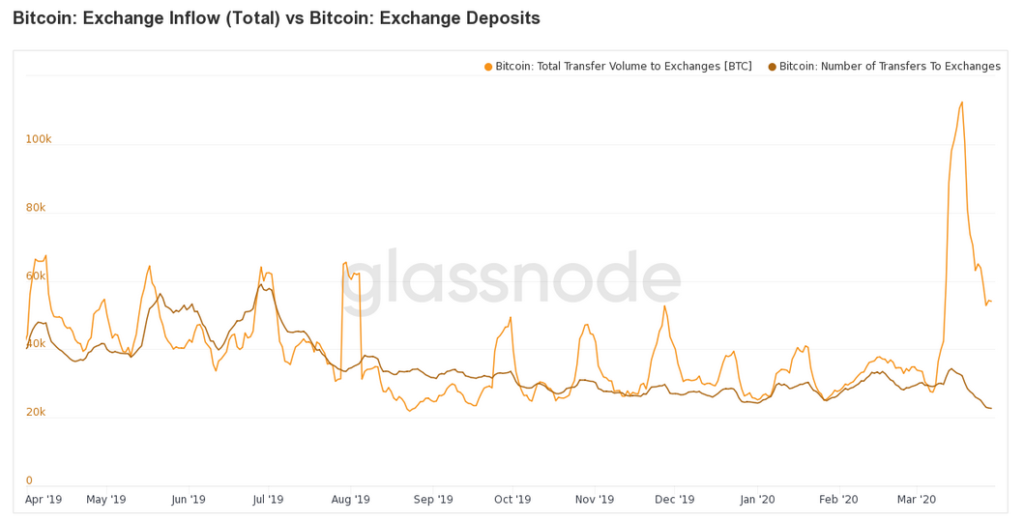
According to this view, the combination of technical breakdown below $90,000 and approximately $1.4 billion worth of BTC inflows to Binance significantly increases the probability of a deeper retracement.
6. Market Psychology: Volatility as a Feature, Not a Bug
The current divergence in outlook highlights a fundamental truth about Bitcoin markets: volatility is intrinsic.
For traders, volatility creates opportunity—but also risk. For long-term investors and blockchain practitioners, it provides a stress test of conviction, infrastructure, and strategy.
Importantly, such periods often separate speculative participants from those focused on long-term adoption, utility, and capital efficiency.
7. Implications for Investors and Blockchain Practitioners
From a practical standpoint, this environment encourages disciplined positioning:
- Risk Management: Volatility underscores the importance of position sizing and liquidity planning.
- Infrastructure Readiness: For exchanges, wallets, and payment platforms, sharp price moves test operational resilience.
- Strategic Accumulation: Long-term participants may view deeper pullbacks as opportunities rather than threats.
- Hedging and Yield Strategies: Sophisticated players increasingly combine spot exposure with derivatives, staking, or yield-bearing instruments.
For those seeking the “next revenue source,” Bitcoin’s role as collateral, settlement asset, and liquidity backbone continues to expand—even during price corrections.
8. Conclusion: A Market at an Inflection Point
Bitcoin currently stands at a crossroads. One path leads to a renewed push toward six-figure prices, fueled by momentum, narrative, and late-cycle enthusiasm. The other leads to a retracement toward $70,000, where stronger structural demand may reassert itself.
Both scenarios are plausible—and neither invalidates Bitcoin’s broader role in the evolving digital asset ecosystem.
For market participants, the key is not predicting the future with certainty, but preparing for multiple outcomes. In that sense, Bitcoin’s present volatility is not a warning sign, but a reminder of why it remains one of the most compelling—and demanding—assets in modern finance.
