

Main Points :
- Bitcoin appears to be entering a late-stage bearish consolidation rather than a renewed sell-off.
- On-chain data suggests capitulation driven by new whales may have largely played out.
- Short-term holders are still realizing losses, but without accelerating panic.
- Demand remains weak, shifting market focus from “who is selling” to “who will accumulate next.”
- The next major move depends on whether structurally strong buyers step in during this stagnation phase.
1. Market Context: A Late-Stage Bearish Consolidation
The current Bitcoin market environment can best be described as a late-phase bearish consolidation. While the dominant trend remains weak, the character of price action has shifted meaningfully. Instead of aggressive, one-directional selling, Bitcoin is now moving sideways with declining downside momentum.
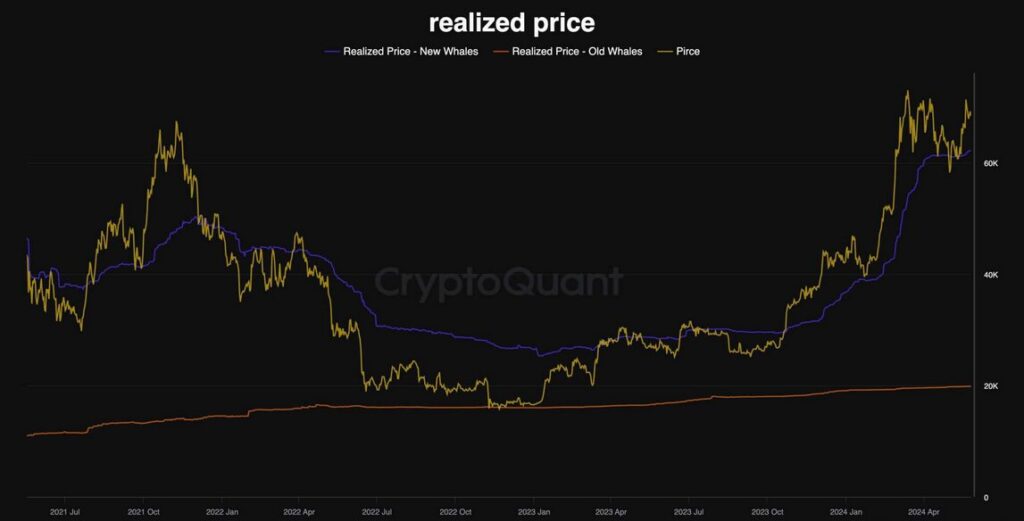
From a structural perspective, this phase typically emerges after a market has already absorbed a large portion of forced selling. Historically, Bitcoin has entered deeply “oversold” territory only a handful of times. On-chain records suggest that this has occurred approximately six times across Bitcoin’s entire trading history.The recent decline from roughly $124,000 to $84,000 fits this pattern. The drawdown was not primarily driven by retail panic but rather by new whale cohorts realizing large losses. This distinction is critical: losses realized by large, recently established holders often represent a form of market cleansing rather than the start of a prolonged downward spiral.
[Chart of Bitcoin price vs. realized losses by new whale cohorts]
2. New Whales and the Anatomy of Capitulation
One of the most striking features of the recent downturn has been the role played by so-called “new whales.” These are large holders who accumulated Bitcoin relatively recently, often near local or cycle highs.
On-chain realized loss metrics show a sharp spike in losses attributable to these participants during the decline from $124,000. Importantly, however, the magnitude of these realized losses has peaked and begun to flatten. This plateau strongly suggests that the most intense phase of capitulation may already be behind us.
Capitulation does not necessarily mark an immediate bottom, but it often signals that the market has absorbed the worst of emotionally driven selling. Once these actors exit their positions, the remaining supply tends to be held by participants with stronger balance sheets, longer time horizons, or lower cost bases.
In previous cycles, similar dynamics preceded extended periods of consolidation rather than immediate reversals. This aligns closely with the current market structure.
3. Short-Term Holders: Losses Without Panic
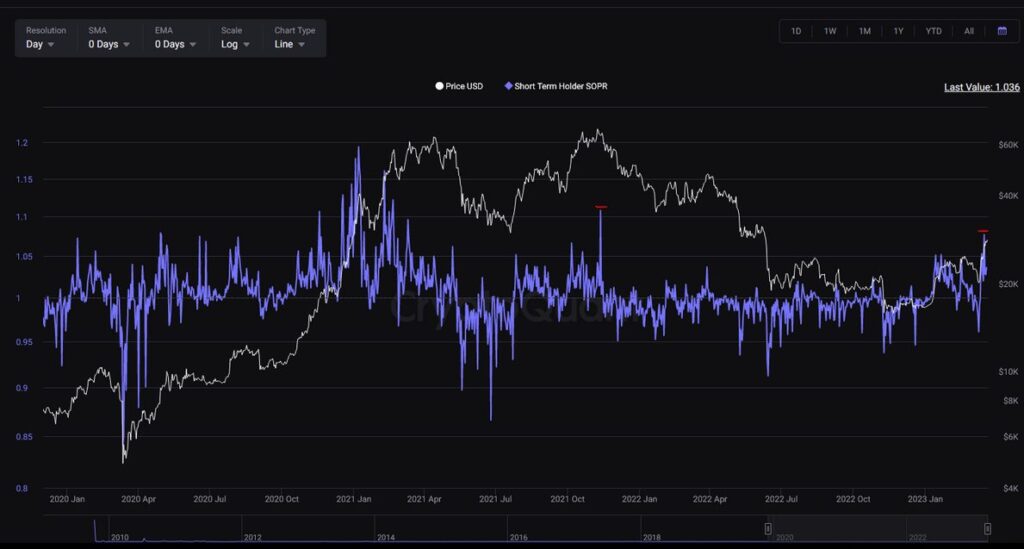
Short-term holders (STHs) remain under pressure. The Spent Output Profit Ratio (SOPR) for short-term holders has stayed below 1, indicating that coins are still being sold at a loss.
However, the key observation is not that losses exist — but that they are not accelerating.
In earlier bearish phases, declining SOPR values were often accompanied by cascading liquidations and forced selling events. At present, SOPR remains depressed but relatively stable. This suggests that while some holders continue to capitulate, the pool of sellers willing or forced to sell at a loss is shrinking.
This dynamic produces a temporary supply-demand standoff: sellers are exhausted, but buyers are not yet confident enough to step in aggressively.
[Short-term holder SOPR trend with historical comparison]
4. Demand Remains Fragile
Despite easing sell-side pressure, demand remains notably weak.
Market sentiment indicators continue to reflect caution. The widely referenced Fear & Greed Index currently sits near 29, placing sentiment firmly in the “Fear” zone. While this is an improvement from extreme fear levels, it is far from signaling broad-based confidence.
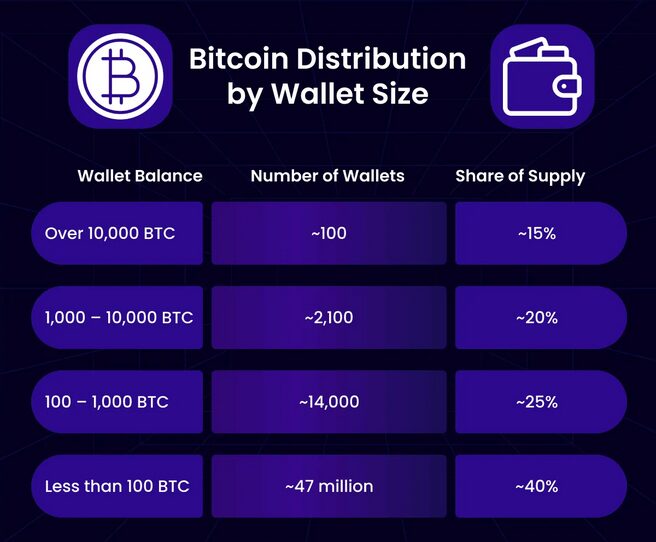
On-chain wallet data further supports this view. The number of wallets holding 1 BTC or more has declined, suggesting that smaller holders continue to exit or consolidate. At the same time, wallets with larger balances have shown a modest increase in total Bitcoin holdings.
This implies that redistribution is occurring — from smaller, more reactive participants to larger, more patient ones. Such redistribution phases are often a prerequisite for longer-term recoveries, but they do not guarantee immediate price appreciation.
[Wallet distribution changes by BTC balance cohort]
5. From “Who Is Selling?” to “Who Will Buy?”
As selling pressure subsides, the central market question changes.
Earlier in the downturn, investors focused on identifying the next source of selling: miners, leveraged funds, retail traders, or new whales. Today, that focus has shifted toward identifying the next class of buyers.
Potential candidates include:
- Long-term holders re-accumulating after tax-loss harvesting.
- Institutional allocators gradually rebuilding exposure.
- Corporate treasuries seeking diversification amid fiat uncertainty.
- Sovereign or quasi-sovereign entities experimenting with digital reserves.
None of these groups has yet emerged as a dominant force. Until one does, Bitcoin is likely to remain range-bound.
6. Broader Macro and Structural Considerations
Beyond on-chain metrics, the broader macro environment continues to influence Bitcoin demand.
High real interest rates and persistent global liquidity constraints reduce speculative appetite. At the same time, Bitcoin’s role as a long-term hedge against monetary debasement remains intact, particularly for investors with multi-year horizons.
This tension — short-term liquidity pressure versus long-term monetary skepticism — helps explain the current stalemate. Markets are waiting for either:
- A catalyst that reignites demand, or
- A renewed shock that forces another wave of selling.
At present, neither appears imminent.
7. Alternative Scenario: When This View Breaks
While the base case favors consolidation, risks remain.
If short-term holder losses begin accelerating again — particularly in the absence of new demand — the consolidation phase could stretch into a prolonged downturn. Similarly, a sharp deterioration in macro conditions or regulatory shocks could reignite fear-driven selling.
In such scenarios, current assumptions would need to be revisited promptly.
8. Conclusion: A Market Waiting for Conviction
Bitcoin is no longer in free fall. Selling pressure has eased, capitulation appears to be largely complete, and supply is increasingly held by stronger hands. Yet demand remains hesitant.
This places the market in a waiting phase — not for the next seller, but for the next buyer with sufficient conviction to absorb supply and redefine momentum.
For investors and builders focused on long-term value creation, this phase is less about price prediction and more about understanding structural shifts in ownership, liquidity, and conviction. History suggests that such periods often sow the seeds of the next major trend — but patience is required.
