

Main Points :
- Bitcoin has fallen approximately 13% in February, trading within a narrow $66,000–$69,000 range without a decisive breakout.
- The Fear and Greed Index has dropped to 9, signaling “Extreme Fear,” while exchange reserves have increased by over 30,000 BTC in the past 30 days.
- Prediction markets show growing caution about a strong monthly close, although most participants still expect BTC to remain above $60,000.
- Institutional commentary, including remarks from Goldman Sachs’ CEO, reflects ongoing regulatory uncertainty.
- Despite bearish sentiment, real-world adoption continues to expand, with Lightning Network monthly volume surpassing $1 billion.
- On-chain liquidity positioning suggests traders are prepared for volatility rather than long-term holding.
- The final direction of February will likely depend on regulatory clarity and exchange reserve trends.
1. Price Action: Stalled Below $70,000
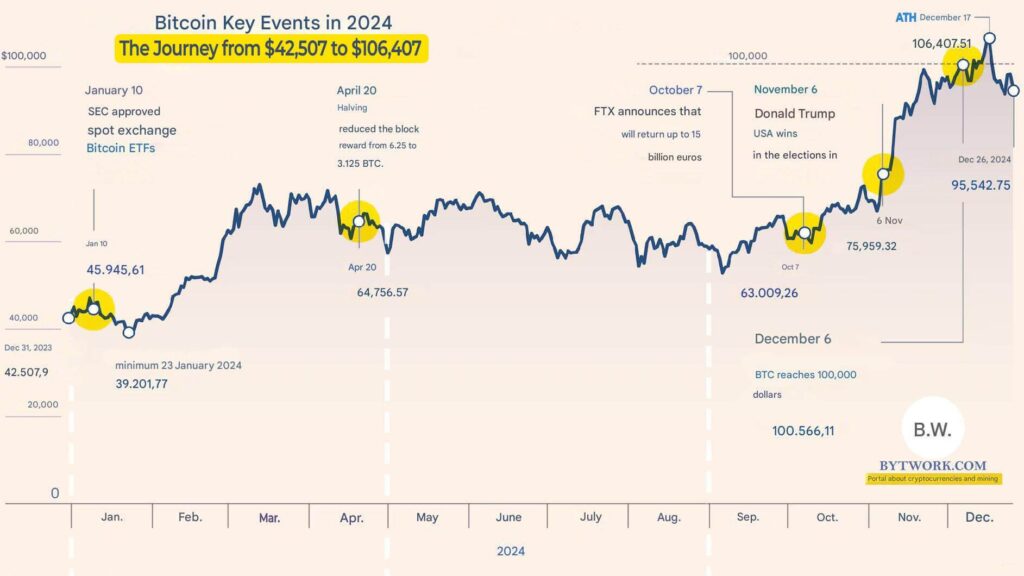
Bitcoin began February near $76,974 but has since declined by roughly 12.9%, recently trading around $67,018. The market is currently confined to a tight 4% range between $66,000 and $69,000. While volatility has moderated compared to January’s turbulence, there is no clear technical breakout signal above the psychologically significant $70,000 level.
From a structural standpoint, this consolidation reflects a market caught between macro caution and residual bullish positioning. The failure to reclaim $70,000 has reinforced it as a near-term resistance zone. Each attempt to approach that level has met supply pressure, suggesting traders are using strength to de-risk rather than accumulate aggressively.
For investors seeking new crypto assets or yield opportunities, such compression phases often precede larger directional moves. Historically, Bitcoin does not remain in narrow volatility bands for long. The question is whether the eventual breakout will favor recovery or extend February’s drawdown.
2. Sentiment Collapse: Fear and Greed at 9
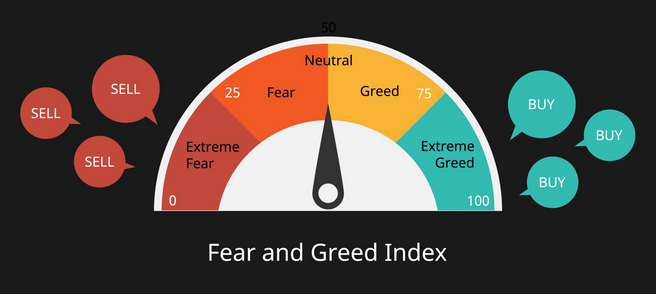
According to Alternative.me’s Fear and Greed Index, Bitcoin sentiment has fallen to 9 on a scale of 0 to 100, categorizing the market in “Extreme Fear.” At the beginning of the month, the index stood at 20. The rapid deterioration reflects rising anxiety over regulatory developments and institutional hesitation.
Such extreme fear levels historically create asymmetric conditions. While panic can accelerate selloffs, deep fear has also marked medium-term bottoms in previous cycles. However, sentiment alone is insufficient; it must align with liquidity conditions and structural demand.
The current psychological environment suggests traders are defensive. Risk appetite is muted. Market participants are less willing to chase upside momentum, which partly explains the lack of breakout above $70,000.
3. Exchange Reserves Surge: Liquidity Over Conviction
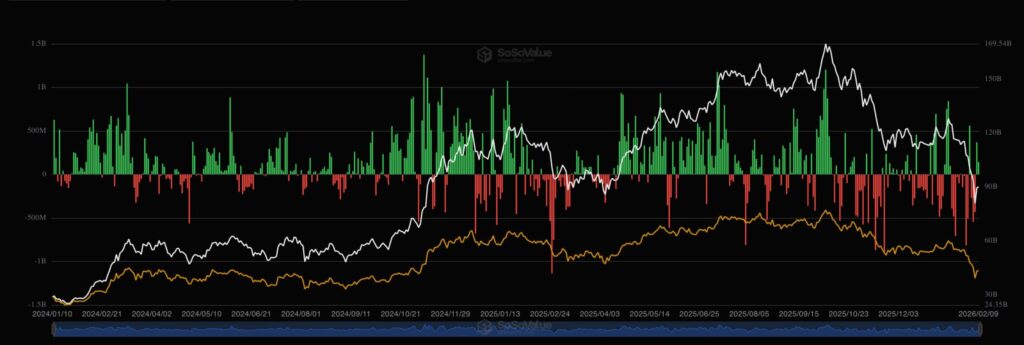
On-chain data from CryptoQuant indicates exchange reserves increased from 2,718,534 BTC on January 19 to approximately 2,747,816 BTC on February 19—an addition of more than 30,000 BTC in one month.
Rising exchange balances typically signal that holders are moving coins to trading venues, often in preparation for selling or short-term positioning. This is not inherently bearish, but it implies liquidity readiness rather than long-term conviction.
In contrast, strong bull markets are characterized by declining exchange balances, as investors withdraw assets to cold storage. The current pattern aligns more with tactical trading than strategic accumulation.
For institutional operators and treasury managers, this metric deserves close monitoring. If exchange balances begin declining sharply, it may signal renewed confidence. Until then, downside risk remains credible.
4. Institutional Tone: Cautious Exposure
Recent comments from Goldman Sachs CEO David Solomon confirmed the firm maintains Bitcoin exposure but keeps it limited due to regulatory uncertainty. This reflects broader institutional caution amid evolving U.S. crypto market structure legislation.
Regulatory ambiguity does not eliminate institutional demand, but it tempers aggressive capital deployment. For sophisticated investors, regulatory clarity acts as a volatility catalyst. A clear legislative framework could rapidly shift institutional flows from defensive to expansionary.
This dynamic is critical for February’s trajectory. A sudden positive regulatory development could invalidate current bearish positioning.
5. Prediction Markets: Probability Skews Lower
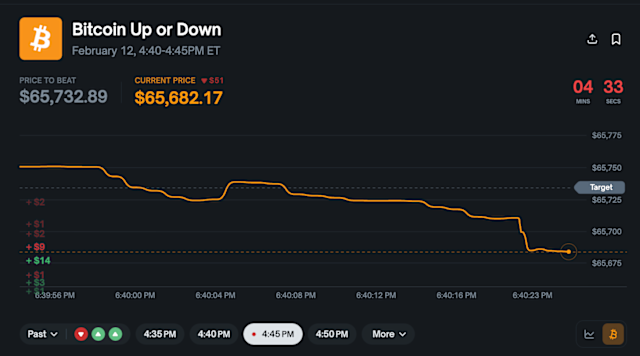
Prediction markets such as Polymarket show over $82 million wagered on Bitcoin’s February closing price. At the time of writing:
- The highest probability outcome (25%) is BTC closing above $60,000.
- The probability of closing above $75,000 has dropped to 15%, down from 20.1% 24 hours earlier.
This shift suggests optimism for a strong rebound is fading. However, the base case remains above $60,000, implying markets are cautious but not catastrophic.
Prediction markets often capture collective psychology faster than spot markets. The decline in upside probability reflects deteriorating confidence in a late-month rally.
6. Fundamental Counterbalance: Lightning Network Adoption
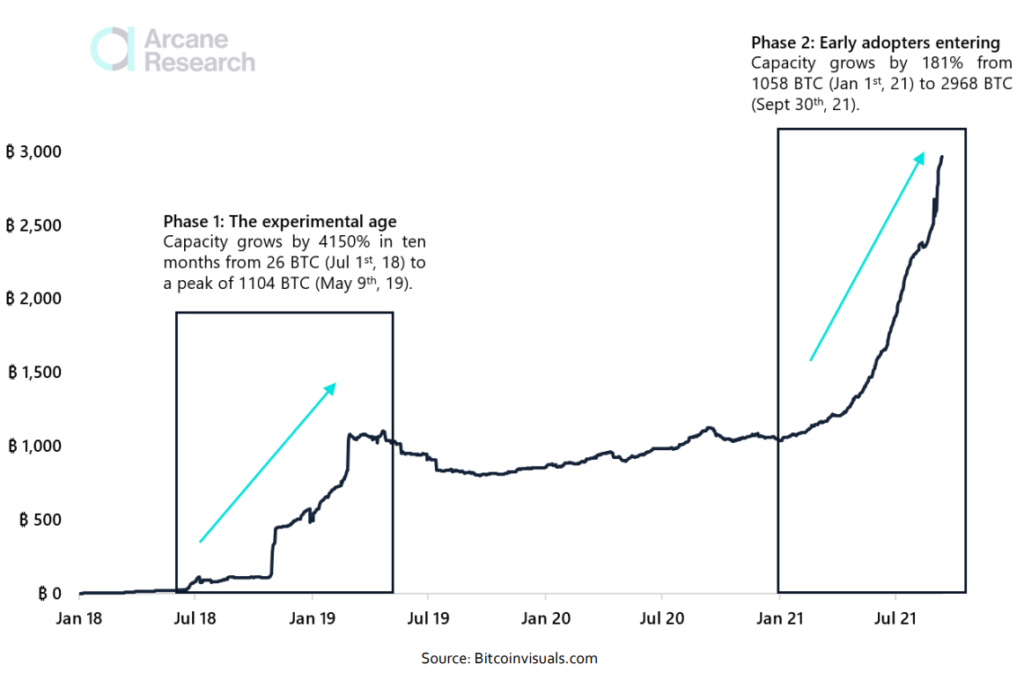
Despite bearish trading sentiment, real-world adoption continues expanding. Lightning Network monthly transaction volume has reportedly surpassed $1 billion, reflecting growing utility in payments and micropayments.
This matters because price cycles eventually anchor to utility growth. While speculative positioning may weaken temporarily, network usage provides structural support.
For readers interested in practical blockchain applications, Lightning represents one of Bitcoin’s most tangible scaling solutions. Growth in off-chain payment infrastructure enhances Bitcoin’s long-term value proposition beyond store-of-value narratives.
7. Scenario Analysis: What Happens Next?
Bearish Scenario ($60,000 Retest)
If exchange reserves continue rising and regulatory uncertainty persists, Bitcoin could retest the $60,000 level before month-end. Extreme fear combined with defensive liquidity positioning supports this risk.
Base Scenario ($60,000–$70,000 Range)
The most probable near-term outcome remains range-bound consolidation. Without a major catalyst, volatility compression may persist into early March.
Bullish Scenario ($75,000 Reclaim)
A regulatory breakthrough or institutional allocation announcement could trigger a short squeeze above $70,000, forcing rapid repositioning toward $75,000.
8. Implications for Crypto Investors and Builders
For those searching for new revenue streams or crypto opportunities:
- Volatility compression phases often provide strategic accumulation windows.
- Lightning Network growth suggests infrastructure-focused Bitcoin plays may outperform speculative narratives.
- Exchange reserve metrics should be integrated into risk dashboards.
- Institutional caution implies asymmetric upside if regulatory clarity improves.
In addition, altcoin rotation could accelerate if Bitcoin remains range-bound. Historically, capital seeks higher beta when BTC volatility declines.
9. Conclusion: Fear, Liquidity, and Utility Collide
Bitcoin stands at a crossroads with fewer than ten days left in February. Price consolidation, extreme fear, and rising exchange reserves point toward caution. Prediction markets reflect fading optimism for a strong rebound.
Yet beneath the surface, real adoption continues expanding, particularly via the Lightning Network. This divergence between sentiment and utility may define the next major move.
If regulatory clarity improves and exchange reserves stabilize, Bitcoin could reclaim momentum rapidly. If not, defensive positioning may dominate into March.
For strategic investors and blockchain operators, the key is not simply predicting direction but positioning for volatility. Bitcoin’s compression phase rarely lasts long.
